The explosion of low-Earth orbit (LEO) satellite mega-constellations for communications and Earth observation has forced a radical rethinking of traditional aerospace engineering. Where single, large satellites once had dedicated, heavy thermal control systems, modern smallsats and cubesats require ultra-compact, highly reliable, and mass-optimized thermal solutions that can withstand the violent thermal cycling of orbit (from -150°C in eclipse to +120°C in direct sunlight) for 5-7 year missions.
CSF35: The Structural Thermal Bus
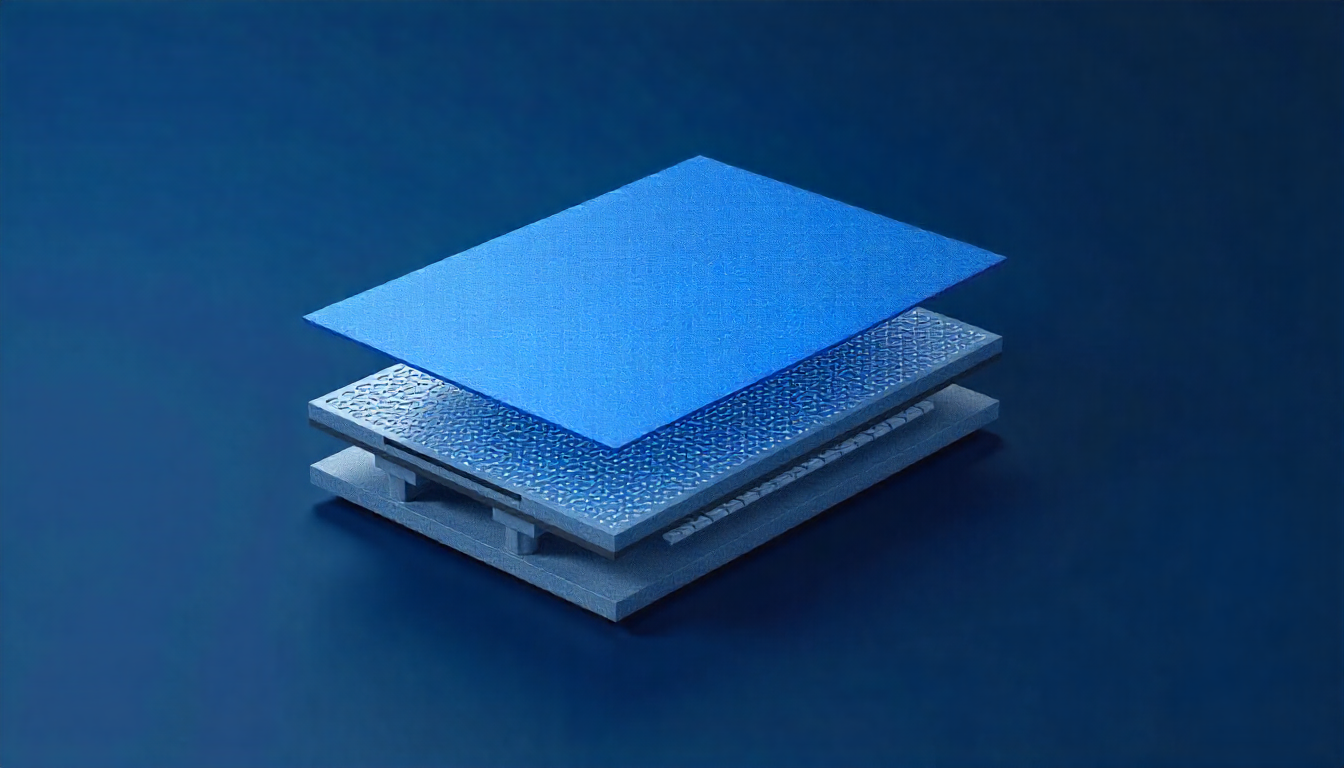
[Company Name]’s CSF35 carbon fiber thermal pad is emerging as a cornerstone technology in this new design philosophy. With 35W/m·K in-plane conductivity, it is being deployed not merely as an interface material, but as the primary structural thermal bus within satellite payloads. Engineers are embedding CSF35 layers directly into composite satellite panels, creating what they term “active skin” architectures.
Case Study: High-Throughput Communications Payload
For a prominent broadband constellation operator, the integration of CSF35 into their phased-array antenna modules solved a critical overheating issue. The GaN-based RF power amplifiers, packed densely behind the antenna face, created localized hot spots that degraded signal quality and risked premature failure. A traditional fix would involve adding bulky heat pipes and external radiators, consuming precious payload mass and volume.
The implemented solution layered CSF35 between the amplifier panel and the satellite’s aluminum honeycomb primary structure. This effectively turned the entire side panel into a massive, passive heat spreader.
Documented Results:
- Peak amplifier temperature reduced by 41°C, eliminating thermal throttling.
- System mass savings of 3.2 kg per satellite by removing conventional cooling hardware.
- Payload volume efficiency increased by 15%, allowing for either more amplifiers or a smaller satellite bus.
- Projected reliability (MTBF) for the payload increased by over 200% based on thermal stress modeling.
“The CSF35 material changes the satellite design equation,” stated [Name], VP of Engineering at [Satellite Manufacturer]. “It allows us to push power densities previously thought impossible for smallsats, directly translating to higher data throughput and competitive advantage. It’s becoming a ‘must-specify’ component for our high-performance designs.”
Market Impact
With over 50,000 new satellites projected for launch this decade, the demand for such high-reliability, mass-efficient thermal solutions is skyrocketing. [Company Name] has scaled production to support this new-space revolution, with the CSF series now flying on missions for over a dozen different satellite operators.