As 5G communication evolves into the millimeter-wave spectrum, the power density and heat flux of Massive MIMO Active Antenna Units (AAUs) have reached the limits of traditional cooling technologies. This paper systematically analyzes the unique advantages of carbon fiber anisotropic thermal pads in addressing the thermal management challenges of 5G mmWave GaN power amplifiers. It proposes an integrated design methodology based on thermo-electric-structural multiphysics coupling and validates its significant effectiveness in improving system reliability and energy efficiency through measured data.
Introduction: The Thermal Challenge of mmWave AAUs
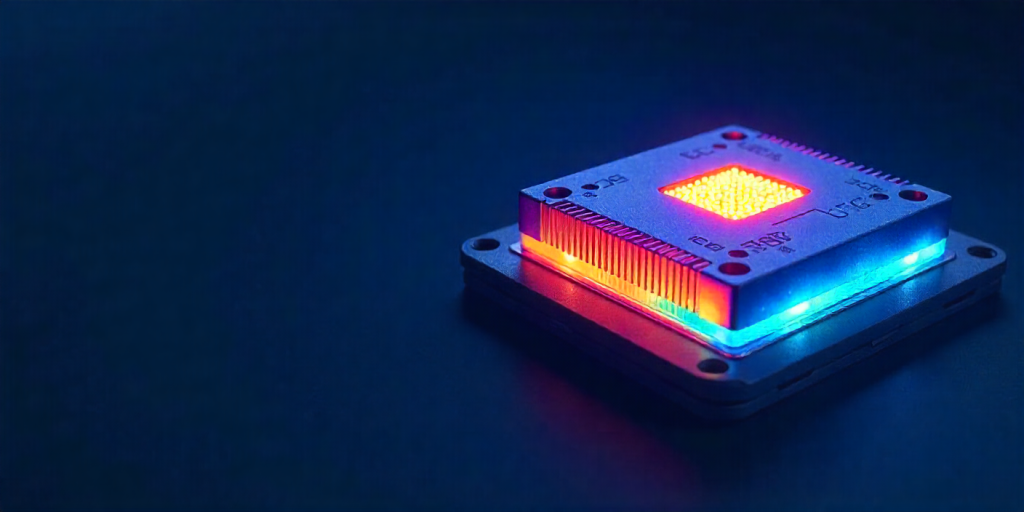
The deployment of fifth-generation mobile communication systems in the millimeter-wave spectrum (24-71 GHz) faces unprecedented thermal management pressures. In a typical 64-channel mmWave AAU, the power density of GaN power amplifiers can reach 15-20 W/cm², while the available cooling space inside the radome is often less than 5mm. Traditional thermal pads, due to their isotropic thermal conductivity, struggle to address this hotspot concentration effect in high-power-density packaging, leading to inter-channel temperature gradients exceeding 20°C, which severely impacts beamforming accuracy and amplifier efficiency.
Mechanism of Anisotropic Advantage in Carbon Fiber Pads
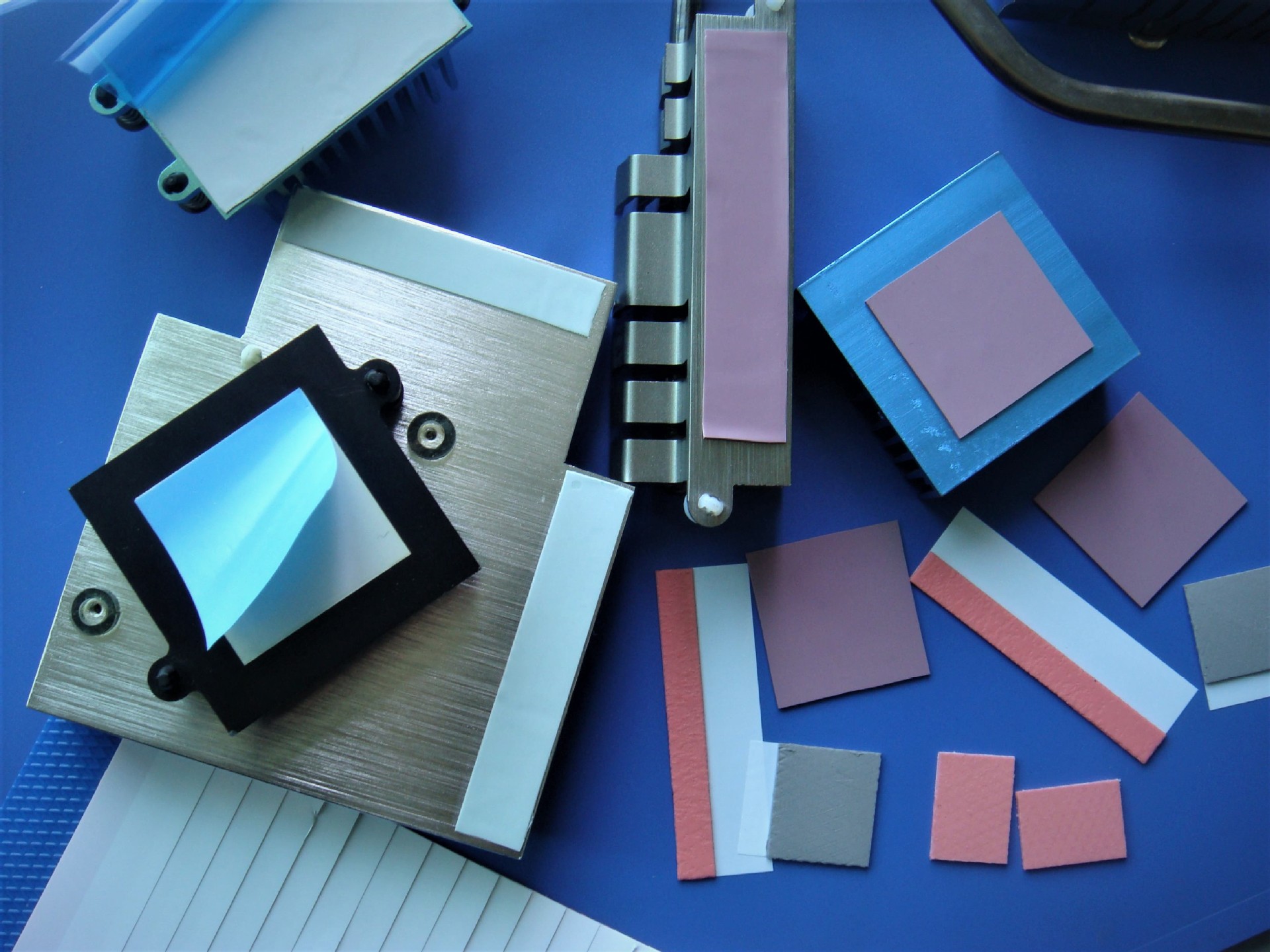
The core value of carbon fiber thermal pads lies in their unique property of significantly higher in-plane thermal conductivity compared to through-plane conductivity (typical values: in-plane 10-40 W/m·K, through-plane 1-3 W/m·K). In mmWave AAUs, this characteristic enables a triple optimization:
- Lateral Heat Spreading Effect: Rapidly diffuses point heat sources generated by GaN chips across the entire RF board plane, effectively eliminating crosstalk effects from local hotspots on adjacent channels.
- Thermal-Structural Co-Design: The enhanced mechanical properties of carbon fiber reinforcement (tensile strength >800 MPa) allow it to function as a structural reinforcement layer for mmWave antennas, simultaneously performing thermal management and mechanical support, realizing a lightweight AAU housing-integrated cooling solution.
- Integrated EMI Shielding: The conductive carbon fiber network provides 20-40 dB of electromagnetic shielding effectiveness, solving the challenge of co-optimizing electromagnetic compatibility and heat dissipation for high-frequency RF modules.
Design Optimization and Experimental Validation
Using a combined approach of finite element thermal simulation and physical testing, we optimized the design of a commercial 28GHz 64T64R AAU. After replacing traditional silicone pads with CSF25 carbon fiber pads:
- Hotspot temperature decreased from 118°C to 82°C (a 30.5% reduction)
- Maximum inter-channel temperature difference narrowed from 23°C to 7°C
- Power amplifier efficiency remained stable under continuous operation (fluctuation <2%)
- Overall system power consumption decreased by 8%, primarily due to improved efficiency from lower amplifier temperatures
Key Technical Parameter Comparison
| Parameter | Traditional Silicone Pad | Carbon Fiber Pad CSF25 |
|---|---|---|
| In-Plane Thermal Conductivity | 3 W/m·K | 25 W/m·K |
| Heat Spreading Efficiency | Low | High (5-8x faster) |
| Structural Reinforcement | None | 3x increase in flexural stiffness |
| EMI Shielding | None | 30 dB @ 28GHz |
| Long-Term Reliability | Potential pump-out/aging | Stable (CTE matched) |
Conclusion and Outlook
Carbon fiber anisotropic thermal pads provide a highly integrated thermo-electric-structural co-design solution for 5G mmWave AAUs. As 6G development moves toward the terahertz spectrum, three-dimensional heterogeneous integration thermal materials for sub-mmWave integrated circuits will become the next R&D focus. We recommend that AAU designers introduce such advanced thermal management materials during the early architecture phase to achieve simultaneous breakthroughs in power density and energy efficiency for next-generation communication equipment.