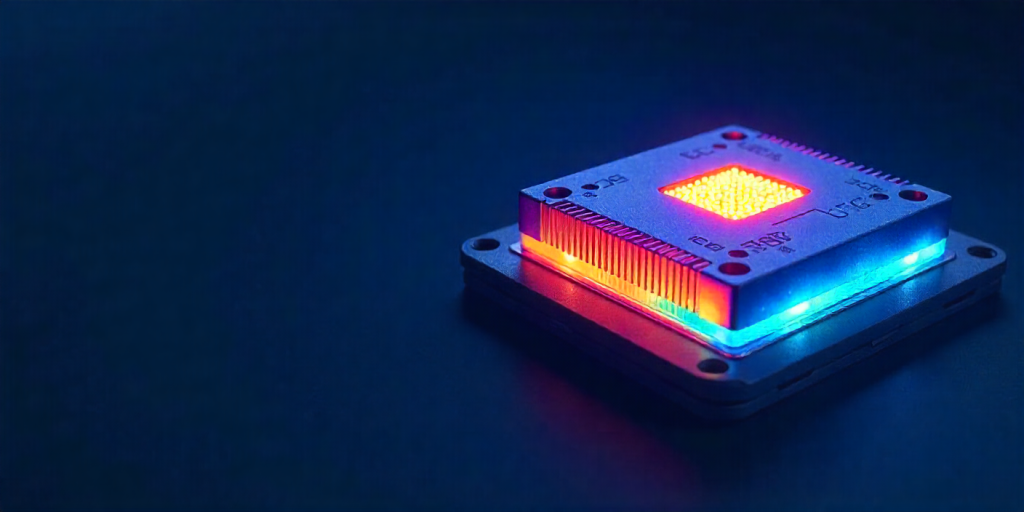
The path to commercial fusion energy is paved with extraordinary thermal challenges. Within devices like tokamaks and stellarators, plasma-facing components and diagnostic systems must survive intense neutron flux, powerful electromagnetic fields, and sudden, massive thermal loads during plasma pulses—all while providing precise data to control the reaction. Conventional materials often fail through thermal fatigue, outgassing, or loss of thermal performance under irradiation.
CSF40: Engineered for the Extreme
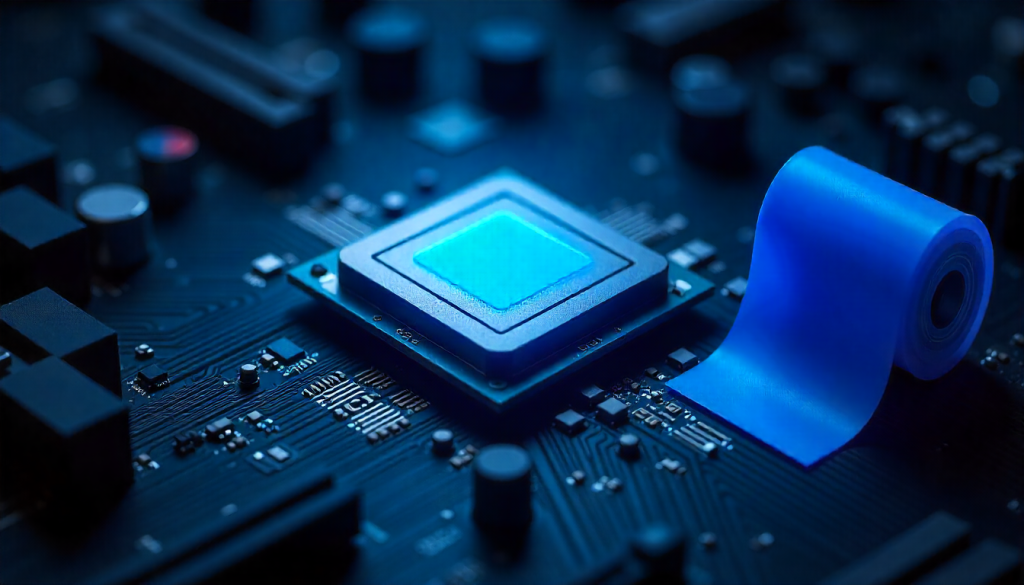
[Company Name] reveals that its CSF40 carbon fiber thermal pad, developed for the most demanding terrestrial applications, has been selected for critical subsystems within multiple public and private fusion research initiatives, including upgrades to the ITER project and several leading compact fusion ventures.
The material’s value lies in its unique combination of properties: 40W/m·K in-plane thermal conductivity, exceptional stability up to 800°C in inert atmospheres, and remarkable resistance to degradation under neutron and gamma irradiation due to its carbon-based composition.
Application Spotlight: Divertor Monoblock Heat Spreading
One of the most punishing environments in a tokamak is the divertor, which must handle heat fluxes exceeding 20 MW/m²—more than double the heat on a spacecraft entering a planet’s atmosphere. Here, CSF40 is being tested as a critical layer within tungsten monoblock units. Its role is to spread the intense, localized heat load from the plasma-facing surface across the entire backside of the monoblock, where it interfaces with actively cooled copper piping. This prevents localized melting and cracking, dramatically extending component lifespan.
Application Spotlight: Diagnostic Port Thermal Isolation
High-precision plasma diagnostics, such as Thomson scattering and interferometry systems, require optical ports with strict temperature uniformity to avoid lensing effects that distort measurements. CSF40 sheets are being used to create thermally “quiet” zones around these ports, isolating sensitive optics from the fluctuating temperatures of the vacuum vessel wall.
Expert Testimonial
“Reliable diagnostics are the eyes and ears of a fusion experiment,” explained Dr. [Name], Head of Engineering for [Private Fusion Company]. “The thermal stability offered by the CSF40 material directly translates to more accurate and consistent plasma measurements. This isn’t just an incremental improvement; it accelerates our entire experimental learning cycle by improving data quality. For the first time, we have a thermal interface material that meets the lifetime and performance requirements of a potential future fusion power plant.”
The Road to Fusion Power
As fusion research transitions from proving scientific feasibility to solving engineering-scale challenges, materials that can survive and function in the reactor environment are paramount. The successful deployment of CSF40 in these frontier applications validates its performance under the most extreme conditions on Earth and positions it as a key enabling material on the long road to clean, baseload fusion energy.