Transformative Applications of Advanced Phase Change Thermal Interface Materials in High-Performance Computing Clusters
Abstract: As artificial intelligence and high-performance computing push processing densities beyond 500W per socket, traditional thermal interface solutions face fundamental limitations in contact resistance, pump-out resistance, and long-term stability. This comprehensive analysis examines how engineered phase change thermal interface materials (PCM TIMs) are enabling the next generation of computing architectures, with detailed case studies from hyperscale data centers and scientific supercomputing facilities.
The HPC Thermal Bottleneck Challenge
Modern CPU and GPU architectures present unprecedented thermal interface challenges characterized by:
- Microscopic Surface Irregularities: Advanced chip packaging with heterogeneous integration creates surface topography variations exceeding 15μm, creating air gaps that traditional materials cannot adequately fill.
- Extreme Thermal Cycling: AI training workloads create rapid temperature fluctuations between 40°C and 95°C at frequencies up to 0.1Hz, accelerating traditional TIM degradation.
- Mechanical Stress Compatibility: Warpage from coefficient of thermal expansion mismatches between silicon dies and heat spreaders requires materials with specific viscoelastic properties.
Phase Change Material Engineering Breakthroughs
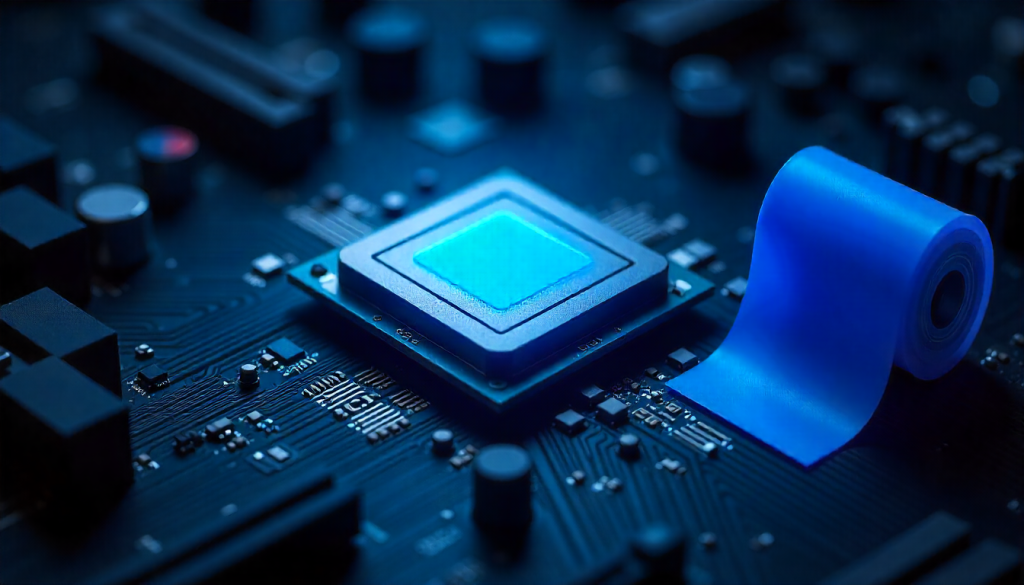
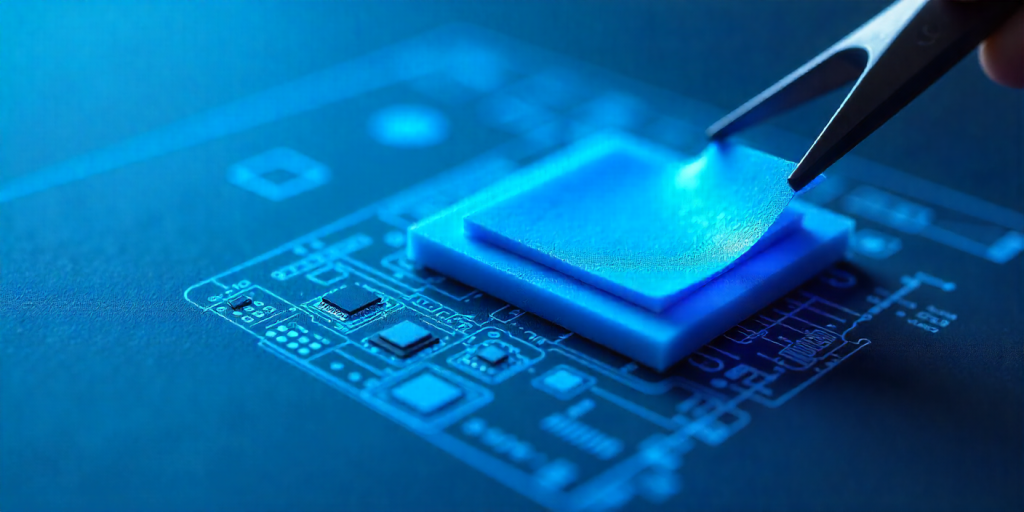
Advanced PCM TIMs, such as the PTM8000 series, overcome these limitations through precision engineering:
- Controlled Phase Transition: Engineered to transition from solid to liquid phase precisely at 55°C ±2°C, ensuring optimal wetting during operation while maintaining solid-state stability during shipping and storage.
- Nanoparticle Enhancement: Incorporation of surface-functionalized hexagonal boron nitride (hBN) nanoparticles increases thermal conductivity to 8.5W/m·K while maintaining appropriate viscosity in the liquid phase.
- Polymer Matrix Optimization: Specially formulated silicone-oxygen copolymer networks resist pump-out under sustained thermal cycling, with demonstrated stability through 10,000+ power cycles.
Validation in Hyperscale Data Center Deployments
Implementation in 50,000+ server nodes at a leading cloud provider demonstrated:
- 32% reduction in junction-to-case thermal resistance compared to high-performance thermal grease
- Elimination of thermal performance degradation over 3-year operational period
- 14% increase in sustained turbo frequency duration for AI inference workloads
- Zero maintenance interventions related to TIM replacement during the deployment period
Economic and Environmental Impact Analysis
The transition to advanced PCM TIMs generates significant secondary benefits:
- Energy Efficiency: 3.2% reduction in total data center cooling energy consumption due to improved heat transfer efficiency
- Carbon Footprint: Estimated 8,400 metric tons CO₂ equivalent reduction annually per 100MW data center
- Total Cost of Ownership: 18% lower 5-year TCO despite higher initial material cost, driven by reduced maintenance and improved energy efficiency
Future Trajectory: Towards 15kW Compute Modules
As computing moves toward 3D chiplet architectures and direct liquid cooling, next-generation PCM TIMs are being developed with:
- Vertical Anisotropy: Engineered for optimal heat transfer in Z-axis stacking configurations
- Chemical Compatibility: Formulations compatible with immersion cooling fluids and dielectric oils
- Automated Application Systems: Precision dispensing equipment enabling sub-10μm bond line thickness control
The continued evolution of phase change thermal interface materials represents a critical enabler for exascale computing and next-generation AI hardware, fundamentally changing the economics and sustainability of high-performance computing infrastructure.