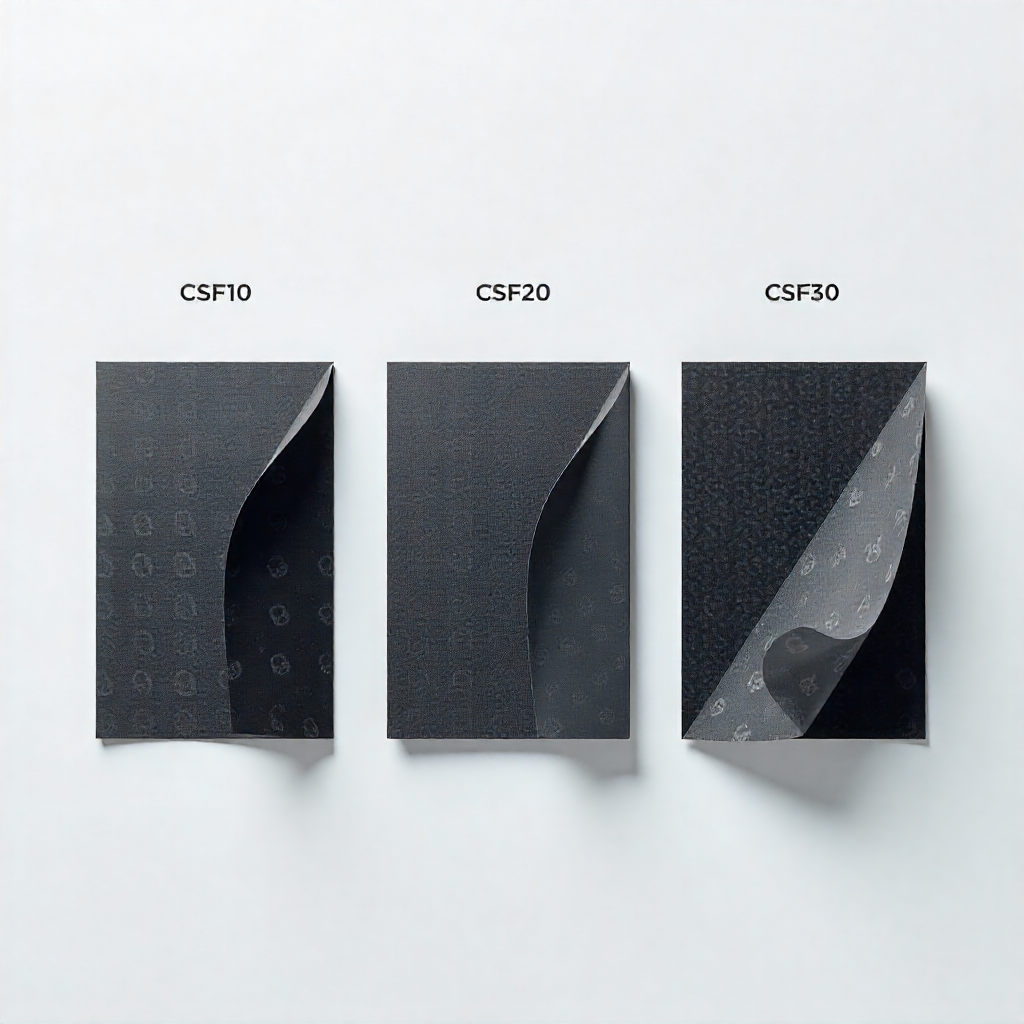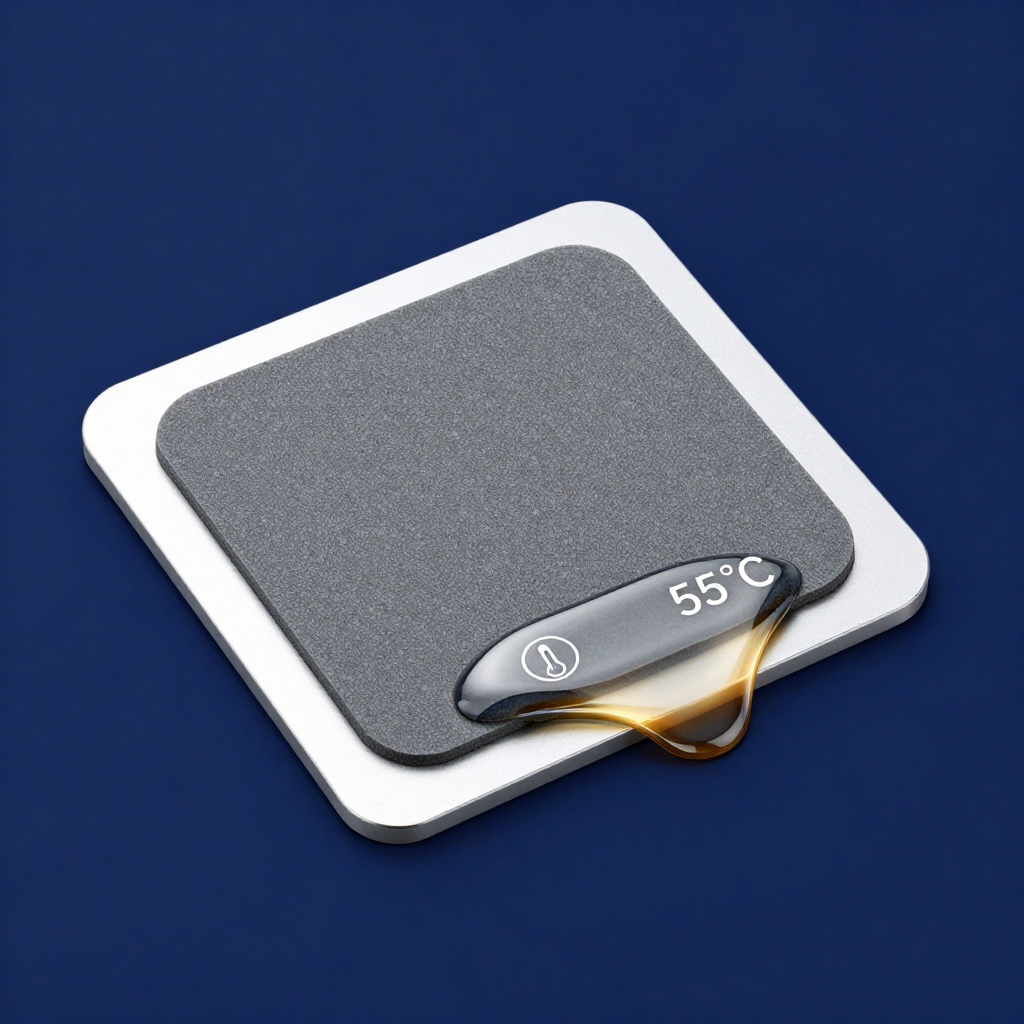
Silicone vs. Non-Silicone Phase Change Materials: A Technical Breakdown for Optimal Selection
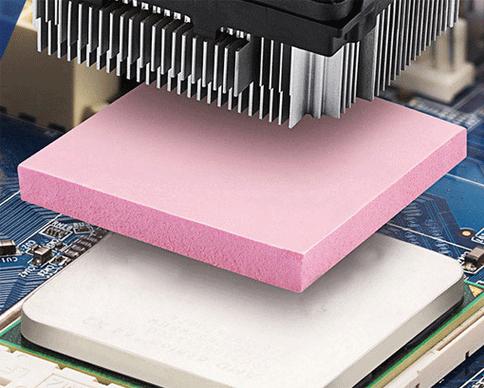
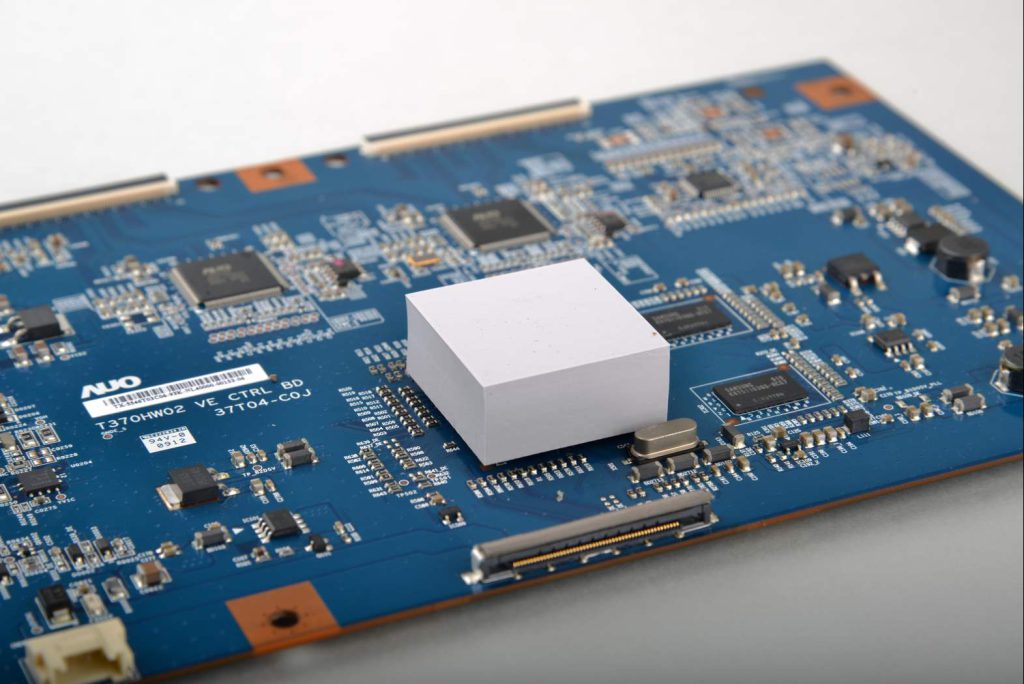
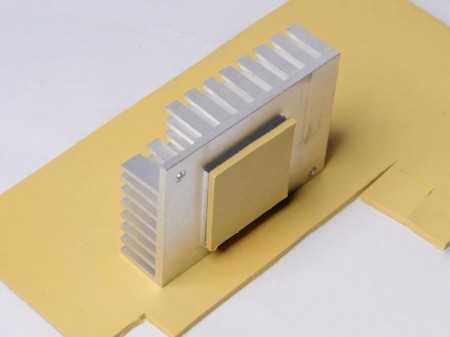
Selecting a phase change material goes beyond thermal specs. The polymer matrix—often silicone or a non-silicone alternative like polyolefin or acrylic—plays a critical role in long-term reliability and system compatibility. Understanding this choice is key for applications in optics, vacuum environments, or with sensitive coatings.
Silicone-Based Phase Change Materials (Common):
- Pros: Excellent flexibility across a wide temperature range, good inherent adhesion, and proven long-term stability in many environments.
- Cons: Potential for silicone vapor outgassing, which can condense on sensitive optical lenses or mirrors, and possible chemical migration that may affect certain plastics or coatings.
Non-Silicone Phase Change Materials (Specialized):
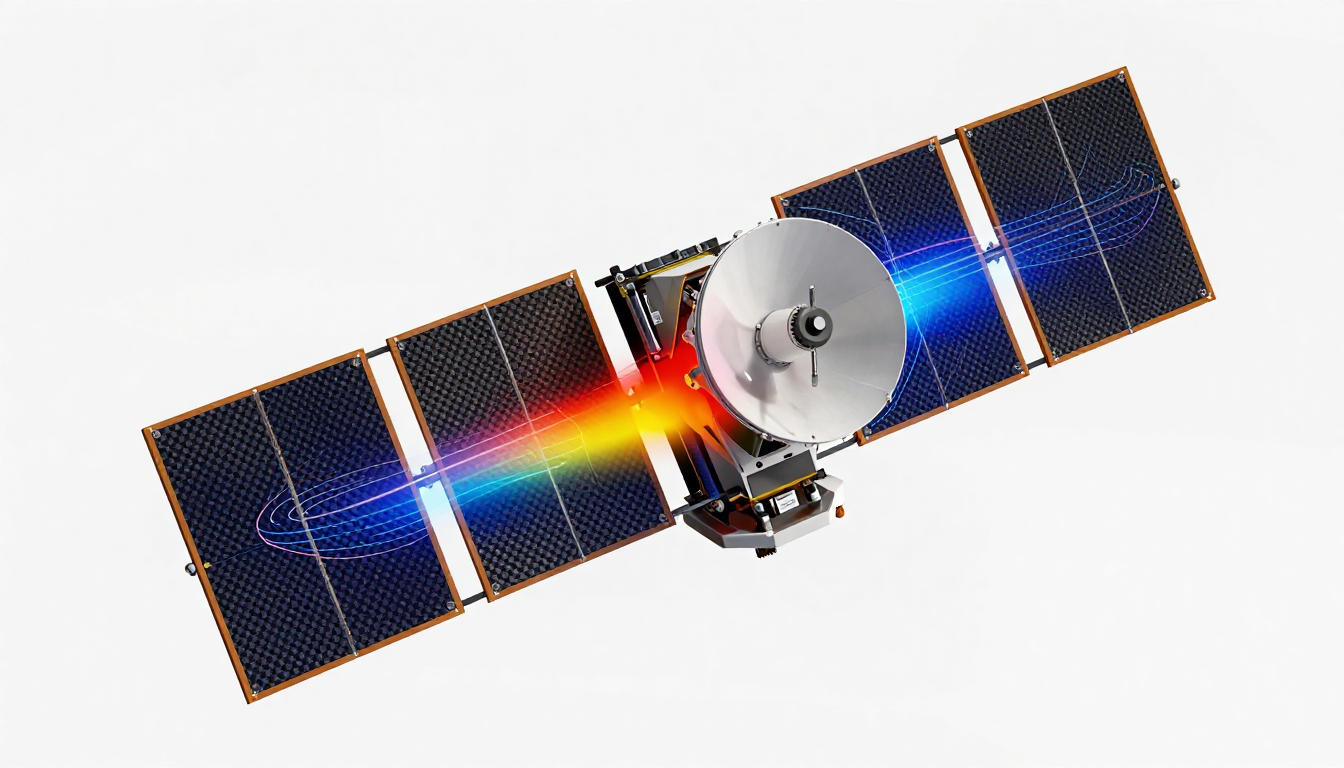
- Pros: Extremely low outgassing properties, making them ideal for vacuum chamber electronics or aerospace applications. They often have better chemical inertness with surrounding materials.
- Cons: May have a narrower optimal temperature range or different handling characteristics.
Key Selection Questions:
- Environment: Is the assembly in a sealed, vacuum, or optical system where outgassing is a critical failure mode?
- Adjacent Materials: Will the TIM be in contact with specific plastics, conformal coatings, or potting compounds that could be affected by silicone oil?
- Temperature Profile: Does the application require continuous operation above 150°C, where specialized non-silicone chemistries may be necessary?
Providing the right material options is part of our technical service. Whether your project requires the robust performance of a standard silicone-based phase change pad or the ultra-clean properties of a low-outgassing thermal interface solution, we can guide you to the correct choice.