More Than Just Heat: Can Your Thermal Pad Help with EMI Shielding?
Attract engineers tackling electromagnetic interference (EMI) in compact designs, positioning your material as a multi-functional solution for integrated design challenges.
Primary Keyword: EMI shielding thermal interface material
Long-tail Keywords:
- conductive thermal pad for RF interference reduction
- integrating thermal management and EMI gasket in one layer
- material selection for thermally conductive and electrically insulating pads
- solving thermal and EMI challenges in 5G mmWave devices
Content:
As electronic devices become faster and more densely packed, managing Electromagnetic Interference (EMI) is as critical as managing heat. A surprising question arises: could the thermal interface material play a dual role? The answer lies in understanding material composition.
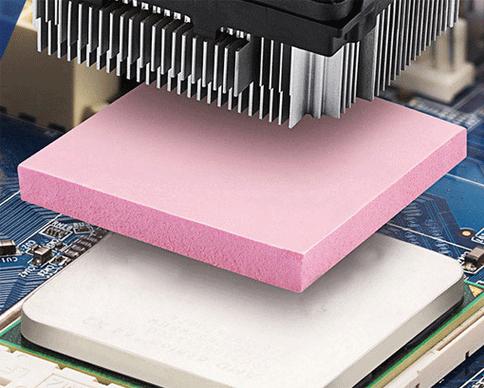
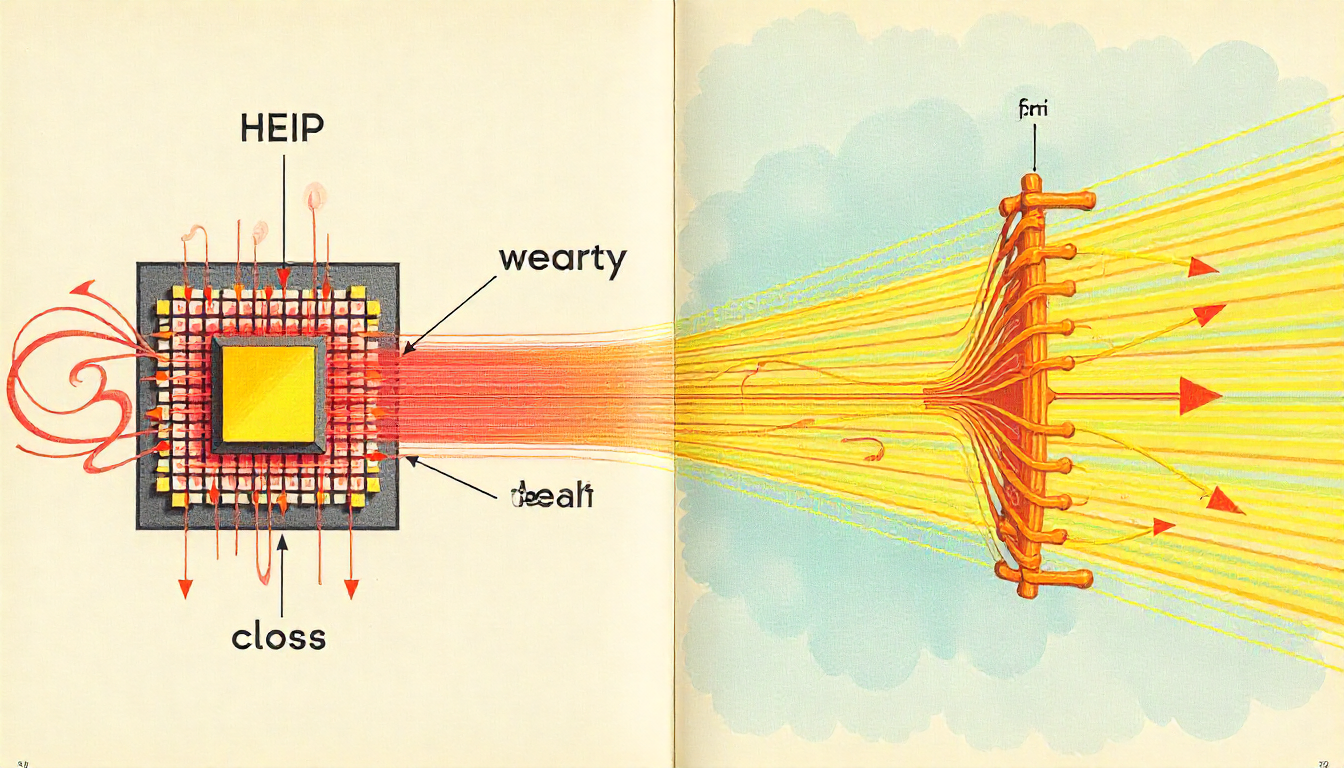
Standard thermal pads are electrically insulating—a safe choice to prevent short circuits. However, for applications where chassis grounding or shielding is needed, conductive thermal pads filled with particles like silver, aluminum, or nickel-coated graphite are used. These materials create a path for both heat and electrical current, helping to seal EMI leaks at the thermal interface between a component and the metal enclosure or heatsink.
Key Considerations for Dual-Function Materials:
- Trade-off Awareness: Highly conductive fillers boost thermal performance but also increase electrical conductivity and often cost. The ideal material achieves the necessary EMI attenuation and thermal transfer without over-engineering.
- Application Precision: Conductive pads must be placed with extreme care to avoid bridging circuits. Their use is typically reserved for specific grounding points or shielding lids, not as a universal TIM.
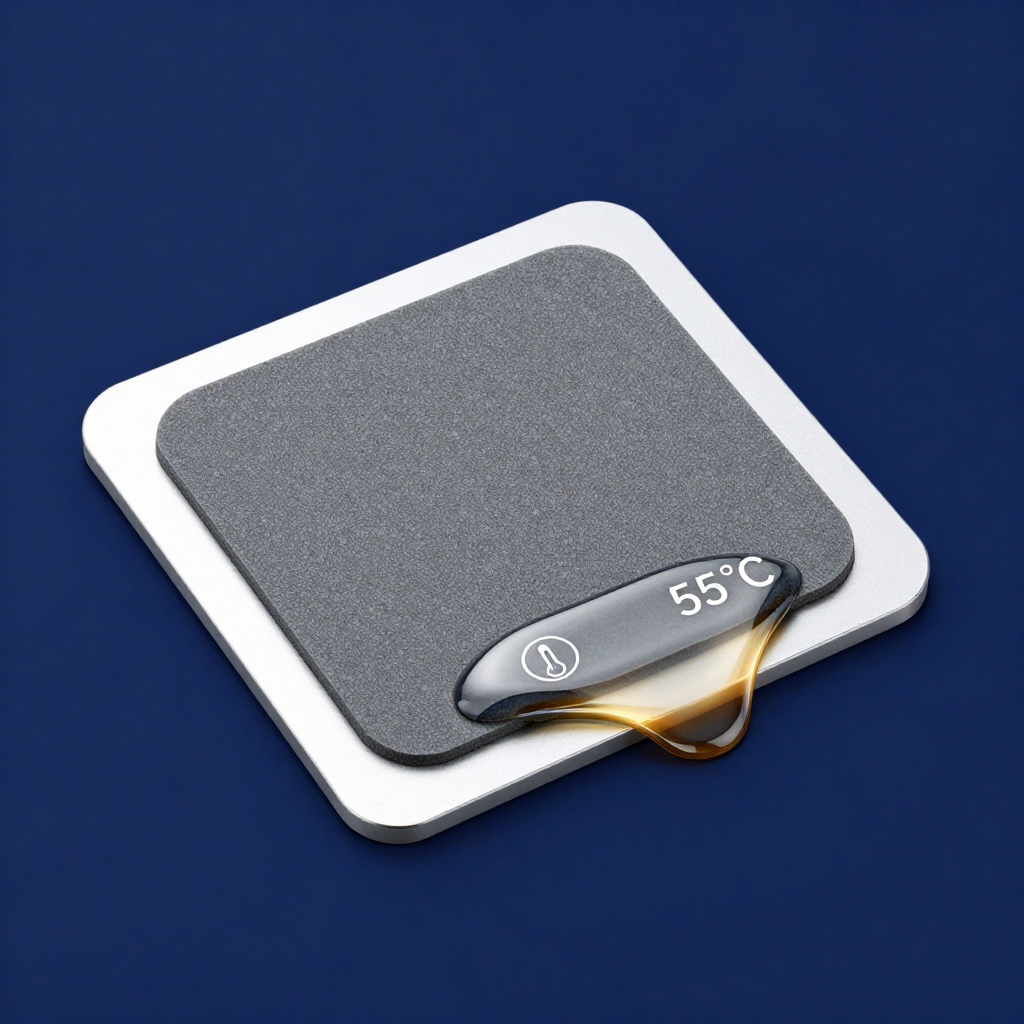
- The Phase Change Angle: While standard phase change pads are insulating, advanced formulations can incorporate conductive fillers. This creates a conformable, gap-filling material that manages heat and EMI simultaneously in a single assembly step—a powerful solution for compact 5G and RF modules.
When facing co-located thermal and EMI problems, consider a holistic material strategy. Ask your TIM supplier about options that address both physics challenges.