Optimizing Your SMT Line: The Impact of Thermal Pad Selection on Production Throughput
On the Surface Mount Technology (SMT) line, every second and every component placement counts. The choice between dispensing thermal grease and using pre-formed thermal pads has a profound impact on throughput, yield, and total applied cost.
The Throughput Equation:
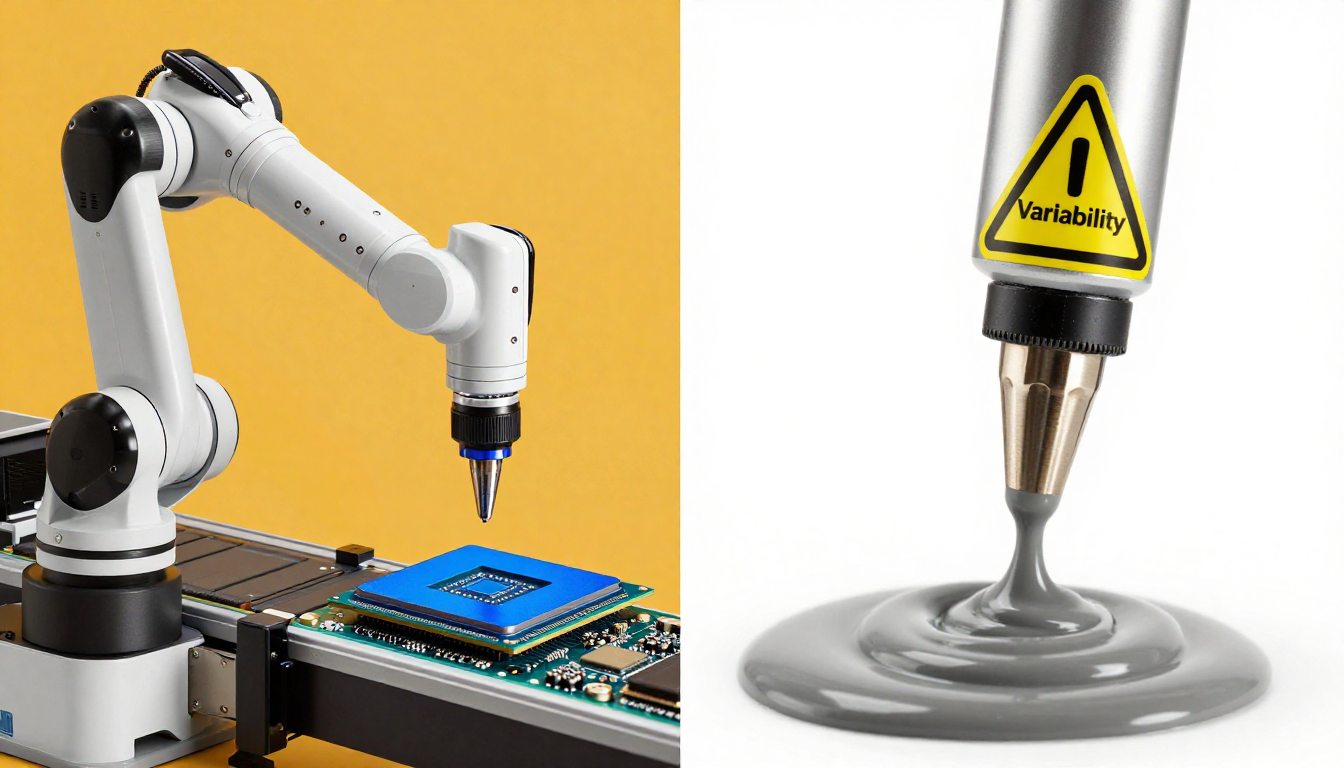
- Dispensing Grease: Requires precision programming, pump maintenance, and cure/settling time. It introduces variables—voids, bubbles, over-application—that can cause downstream rework.
- Pre-Cut Phase Change Pads: Can be integrated into automated pick-and-place processes just like any other component. A robotic arm places a perfectly measured amount of material every time, enabling a faster, more repeatable, and cleaner SMT assembly process.
Key Factors for Production Success:
- Carrier and Liner System: Pads must be supplied on reels or in stacked matrices compatible with your placement equipment. The liner should release cleanly without stretching or leaving residue.
- Tack and Dimensional Stability: The pad needs slight initial tack to stay in position before heating but must not be so sticky that it clogs feeders. It must also maintain its shape during handling.
- Reflow Compatibility: For in-line reflow, the material must withstand peak temperatures without degrading, sliding, or contaminating the oven. A phase change pad that only activates at higher operating temperatures is ideal here.
Optimizing for manufacturability isn’t just about the BOM cost. It’s about designing for seamless production. A reel-fed, SMT-ready thermal pad minimizes line complexity and maximizes output of reliable units.