Thermal Management for RF & mmWave: When Dielectric Properties Matter as Much as Conductivity
In high-frequency electronics, the Thermal Interface Material is not just a thermal pathway—it becomes part of the electromagnetic environment. A TIM with poor or unstable dielectric properties can detune circuits, absorb signal energy, and severely degrade the performance of RF power amplifiers, antenna modules, and mmWave ICs.
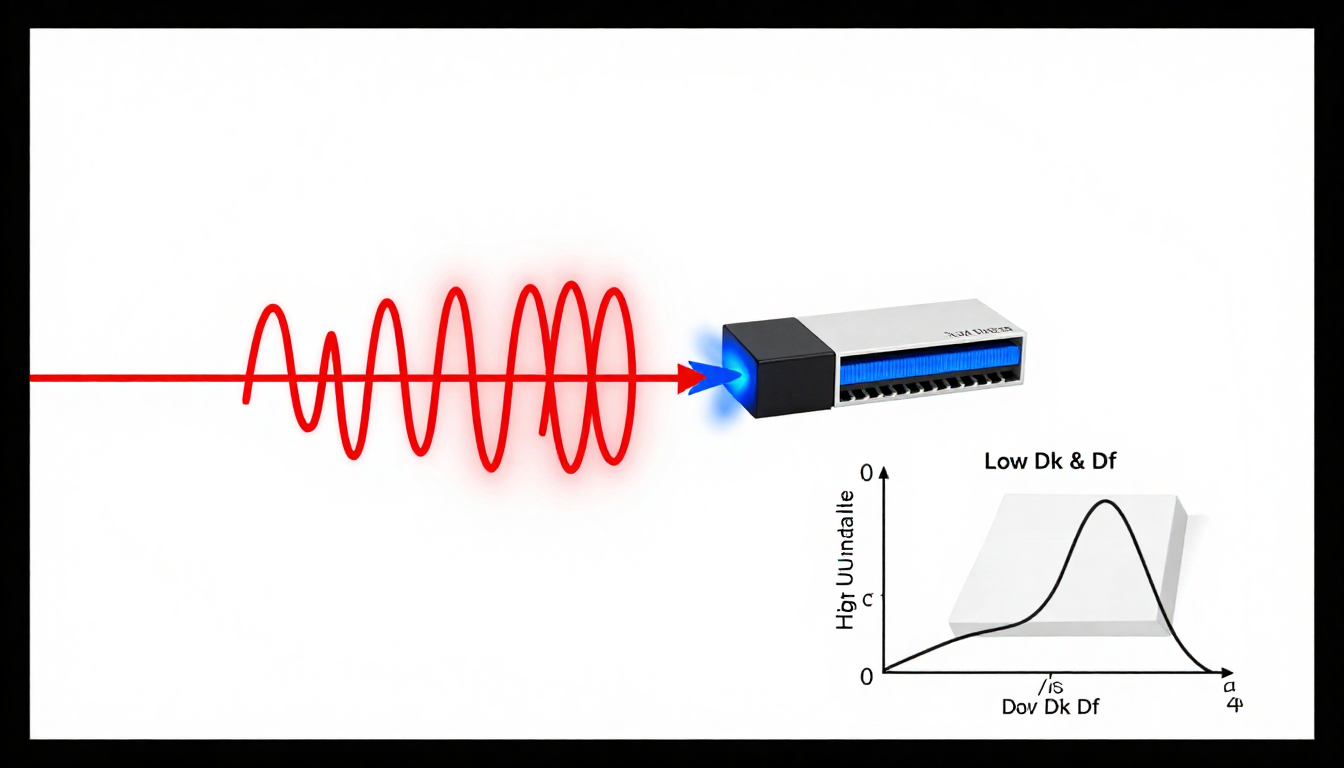
The Critical Electrical Parameters: Dk and Df
- Dielectric Constant (Dk or εr): This measures how much the material concentrates electric flux. A TIM with a high and variable Dk near a transmission line will change the effective impedance and phase velocity of the signal, causing mismatches and detuning. A low and stable Dk is essential.
- Dissipation Factor (Df or tan δ): This measures the material’s inherent signal loss. A high Df means the TIM converts RF energy into heat—ironically, heat you don’t want, as it represents lost signal power and reduced efficiency, especially critical in battery-powered devices and satellite payloads.
The Thermal-Electrical Co-Design Challenge:
The goal is a material that excels in both domains:
- High Thermal Conductivity to remove heat from the high-power RF transistor.
- Low and Stable Dk/Df to preserve signal integrity, even as the material’s temperature changes during operation.
Material Choices for RF Thermal Management:
Standard silicone pads filled with ceramic oxides often have acceptable Dk/Df. For the most demanding mmWave applications (e.g., >24 GHz), specialized low-loss thermoplastic or composite materials with filler types and dispersion engineered specifically for RF performance are required. The phase change behavior must also be evaluated for its impact on the dielectric properties.
Selecting a TIM for RF is a balancing act. We offer materials characterized not just for thermal performance, but with documented dielectric properties (Dk/Df) across frequency and temperature, enabling RF engineers to integrate thermal solutions without compromising the signal path that is the heart of their design.