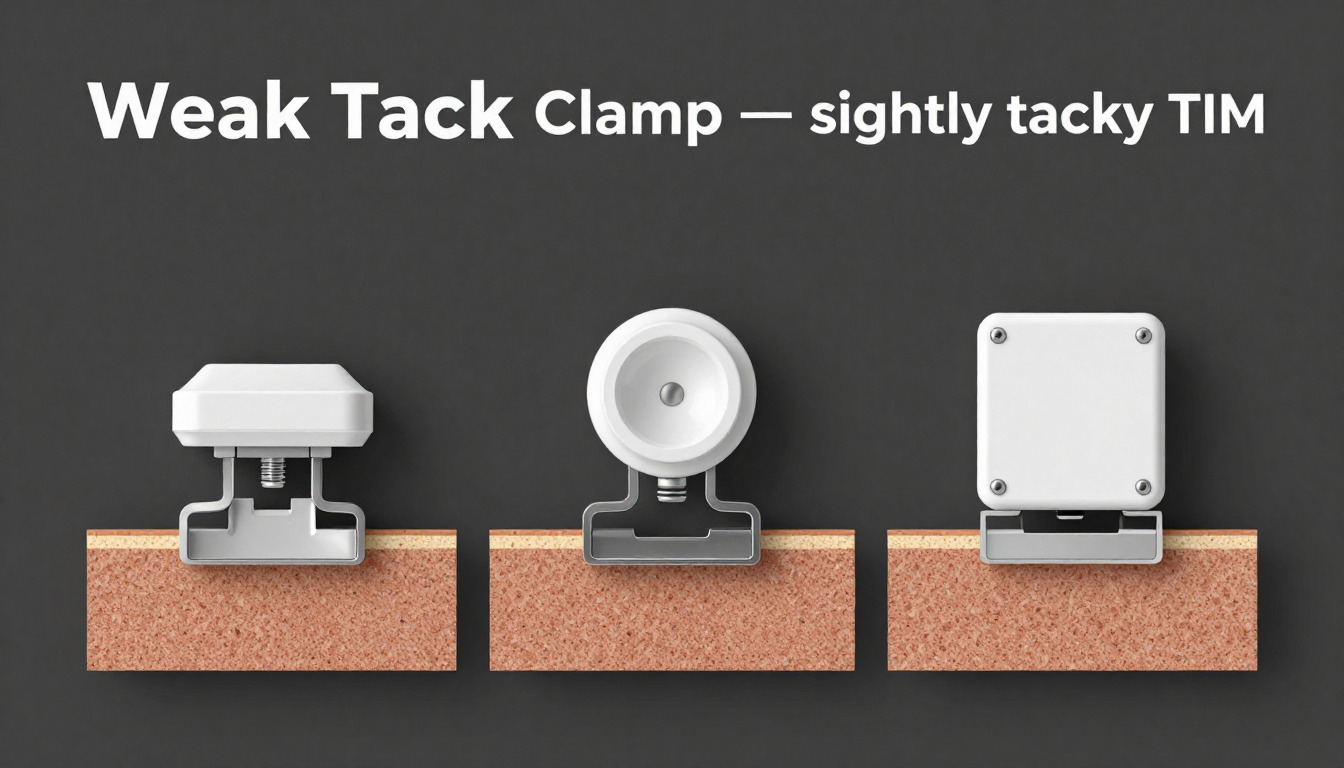
The Science of Stickiness: Optimizing TIM Adhesion for Reliable Yet Serviceable Bonds
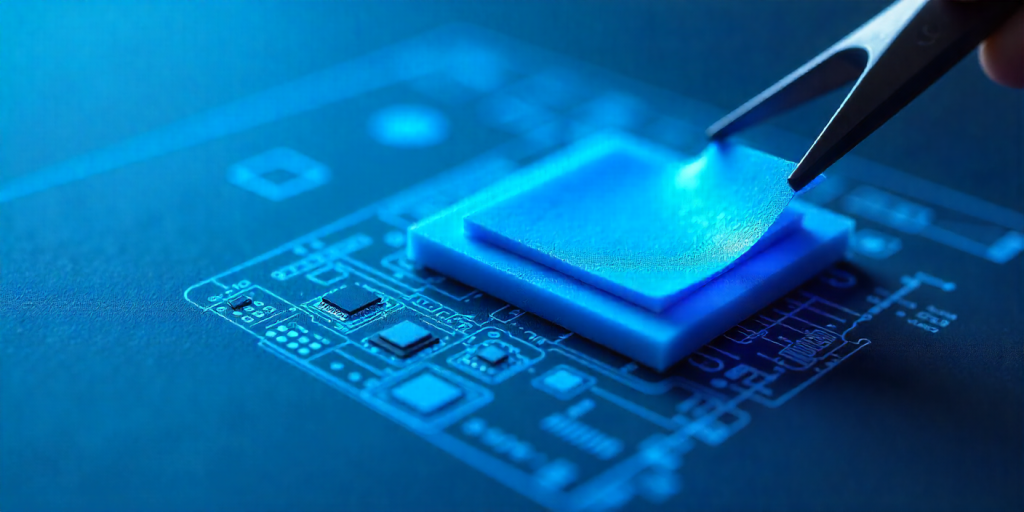
Adhesion is the silent partner to thermal conductivity in a Thermal Interface Material’s performance. Too weak, and the TIM may detach, creating an air gap. Too strong, and it becomes impossible to service, leading to component or PCB damage during repair. Achieving the right balance requires understanding the types of adhesion and their engineering trade-offs.
Adhesion Mechanisms in TIMs:
- Mechanical Interlocking: The TIM flows into microscopic pores and asperities on the mating surfaces. This is the primary bond for non-tacky phase change materials and greases, relying on external clamping force.
- Van der Waals Forces & Tack: These are weak intermolecular forces that give some pads their “initial grab” or tack at room temperature, helpful for pre-assembly positioning.
- Pressure-Sensitive Adhesive (PSA): A separate, viscoelastic adhesive layer laminated to the TIM. PSAs form a stronger bond through intimate contact and flow under light pressure, but can leave difficult-to-remove residue.
Engineering the Optimal Bond:
- For Permanent, High-Reliability Joints: A phase change material without PSA is often ideal. It relies on mechanical interlocking after phase change and system clamping force. It offers high thermal performance and resists pump-out, yet can be separated with moderate force after reheating.
- For Mounting Heatsinks or Shields: A TIM with a PSA backing provides a handling-strength bond without screws, useful for lightweight components. However, its thermal resistance is higher than a pure TIM, and removal often requires careful cleaning.
- The Serviceability Paradox: For field-repairable devices, the joint must survive vibration but yield to a technician’s tools. Solutions include releasable PSAs or designing the mechanical clamp to provide all the holding force, allowing a non-adhesive TIM to be used.
Quantifying and Specifying Adhesion:
Work with suppliers who can provide quantitative data:
- Peel Adhesion (N/mm): Measures force to remove a TIM at a 90° or 180° angle from a standard surface (e.g., stainless steel).
- Shear Adhesion (kPa): Measures resistance to sliding forces, critical for vertical mounting.
- Lap Shear Strength: Measures the strength of a bonded overlap joint.
Specifying the right adhesion profile prevents failures and enables your desired product lifecycle—from manufacturing to end-of-service.