Beyond the Solid-to-Liquid Shift: Engineering the Precise Viscosity-Temperature Profile of Phase Change TIMs
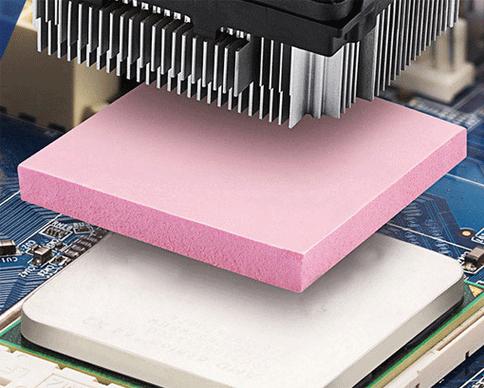
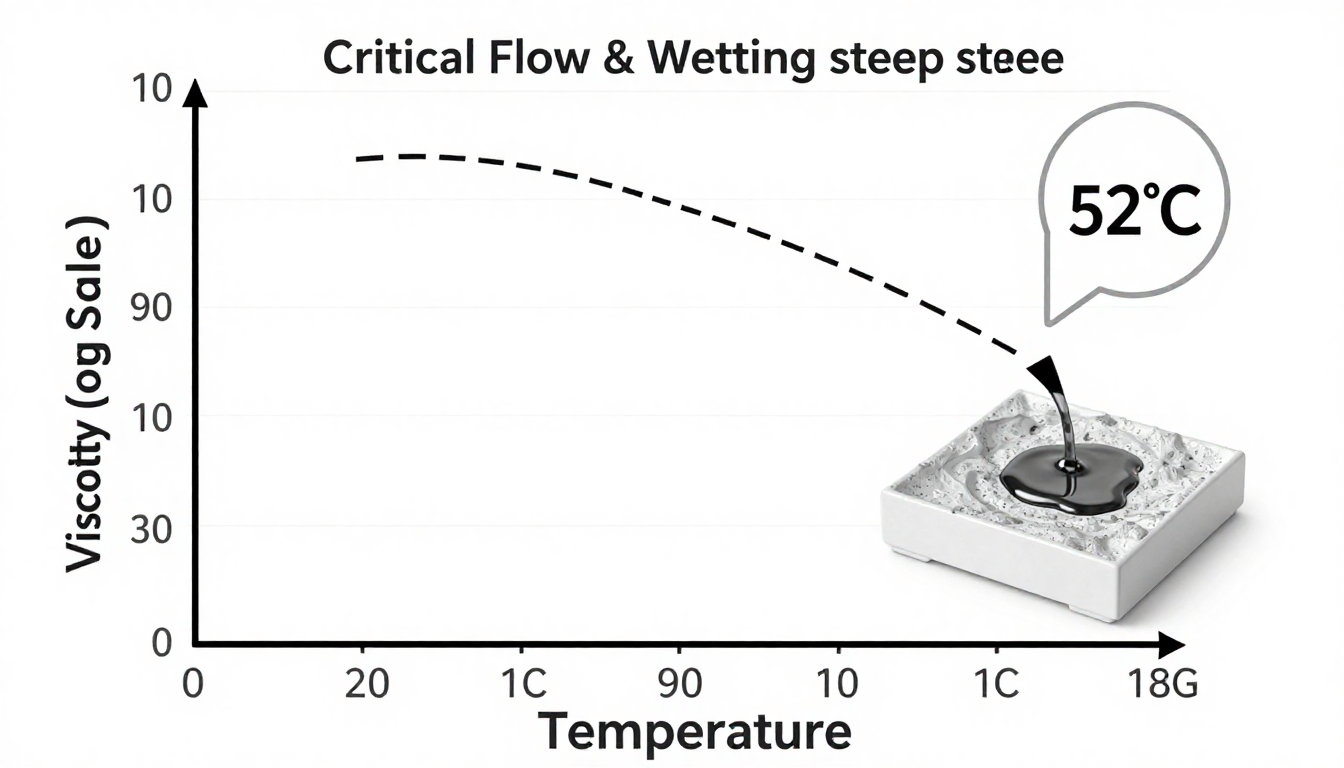
The defining characteristic of a phase change Thermal Interface Material (TIM) is not just its melting point, but its complete viscosity-temperature (η-T) profile. This rheological journey—from a handleable solid, through a precisely viscous flow state, to a stable quasi-solid—determines its success in application. Engineering this profile is key to solving niche assembly and performance challenges.
Decoding the η-T Curve for Application Success:
- Pre-Phase Change Handling (Room Temp to ~40°C): The material must have sufficient green strength and be non-tacky for clean robotic pick-and-place from reels or waffle packs.
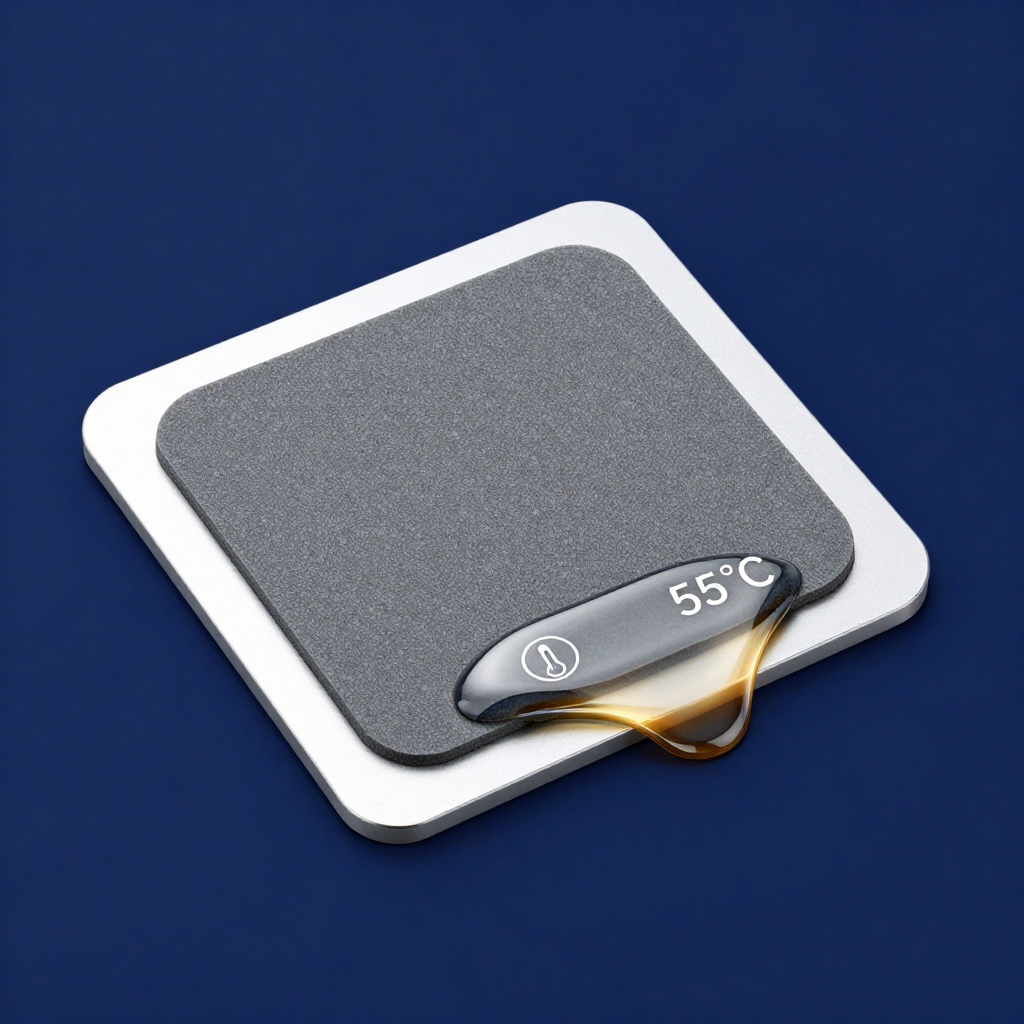
- The Critical Flow Zone (Phase Change Temp, e.g., 45-65°C): This is where design intent is realized. The viscosity must drop enough to allow complete wetting of surface asperities, but not so much that the material flows uncontrollably (slumps) away from the target area under gravity or pressure, especially in vertical or complex 3D assemblies.
- Post-Flow Stability (Operating Temp >65°C): After filling gaps, the material should stabilize, increasing in viscosity or modulus to resist pump-out under shear stress from thermal cycling. It should not continue to behave like a low-viscosity liquid.
Advanced Applications Dictated by η-T:
- For In-Line Reflow Compatibility: The TIM must survive the SMT reflow oven peak (~250°C) without excessive slump or volatile emission. This requires a formulation with a high-degree of cross-linking or filler loading that dramatically increases viscosity at high temperatures.
- For Non-Slump Vertical Applications: A material with a sharper, more pronounced viscosity drop at its phase change point, followed by a rapid plateau, ensures it flows only when and where needed, then stops.
- For Filling Large, Irregular Gaps: A material with a broader, more gradual η-T curve and thixotropic properties (shear-thinning) will flow easily under the pressure of assembly and then hold its shape.
Specifying a phase change TIM now moves beyond “melts at 50°C.” It involves discussing the full rheological curve with your supplier. We engineer our phase change materials with specific η-T profiles to match challenging assembly realities, ensuring the material behaves predictably from the pick-and-place nozzle to end-of-life in the field.