The Electrochemical Cell Within: Preventing Galvanic Corrosion at TIM Interfaces in Humid Environments
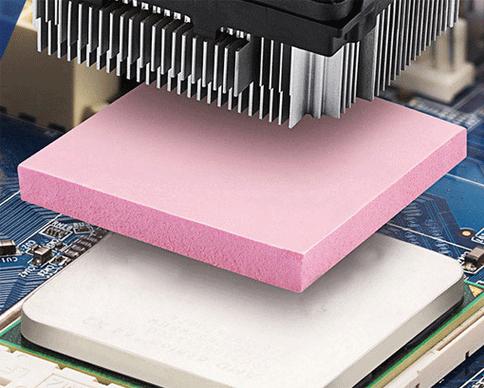
When a Thermal Interface Material (TIM) is electrically conductive or becomes slightly conductive due to moisture absorption, it can create a dangerous galvanic cell between the two dissimilar metals it connects (e.g., an aluminum heatsink and a copper-plated PCB). In the presence of an electrolyte (like condensed humidity), this triggers rapid electrochemical corrosion, leading to joint failure, increased thermal resistance, and conductive debris that can short adjacent circuits.
The Galvanic Corrosion Mechanism at the TIM Interface:
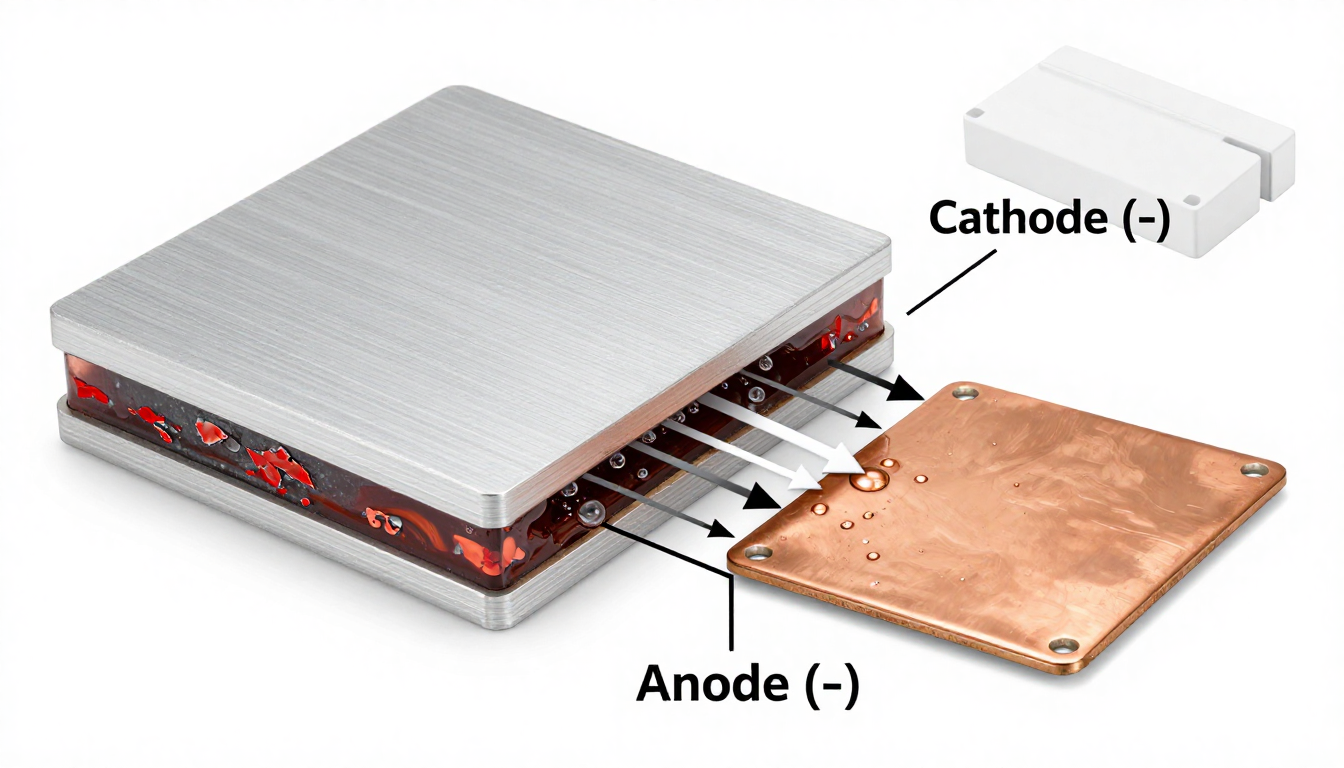
- The Cell is Formed: The TIM bridges two metals with different electrochemical potentials (e.g., Aluminum [Anode] and Copper [Cathode]).
- The Electrolyte Arrives: Ambient humidity condenses or is absorbed by the TIM/polymer matrix, forming a weak ionic path.
- Corrosion Accelerates: Electrons flow from the anode (Al), causing it to oxidize and corrode. Ions move through the electrolyte (TIM), completing the circuit. The cathode (Cu) is protected, but the anode is destroyed.
Why This is a Stealthy, High-Risk Failure:
The corrosion occurs beneath the TIM, hidden from view. It may only be discovered when the heatsink falls off or a thermal runaway event occurs, by which time the damage to the metal surfaces and surrounding circuitry can be severe.
Preventative Design Strategies:
- The Prime Directive: Electrically Insulate: Whenever possible, use a dielectric TIM (high volume resistivity) to physically break the electrical path between dissimilar metals. Verify dielectric strength for your application’s voltage.
- If Conduction is Necessary: If using a conductive TIM (e.g., for EMI grounding), ensure the connected metals are closely matched on the galvanic series (e.g., both aluminum alloys) or employ a sacrificial anode or protective coating.
- Control the Environment: Use conformal coatings, seals, or desiccants to minimize humidity ingress. Specify TIMs with low moisture absorption and hydrophobic properties.
- Test for It: Include biased humidity testing (e.g., 85°C/85% RH with a voltage bias across the interface) in your reliability qualification to screen for galvanic corrosion susceptibility.
A TIM should solve thermal problems, not create electrochemical ones. Our dielectric material options are engineered with high purity and moisture resistance to ensure they act as reliable thermal conductors, not accidental corrosion catalysts.