Learning from Nature: Biomimetic TIMs Inspired by Leaf Veins, Blood Vessels, and Insect Heat Exchangers
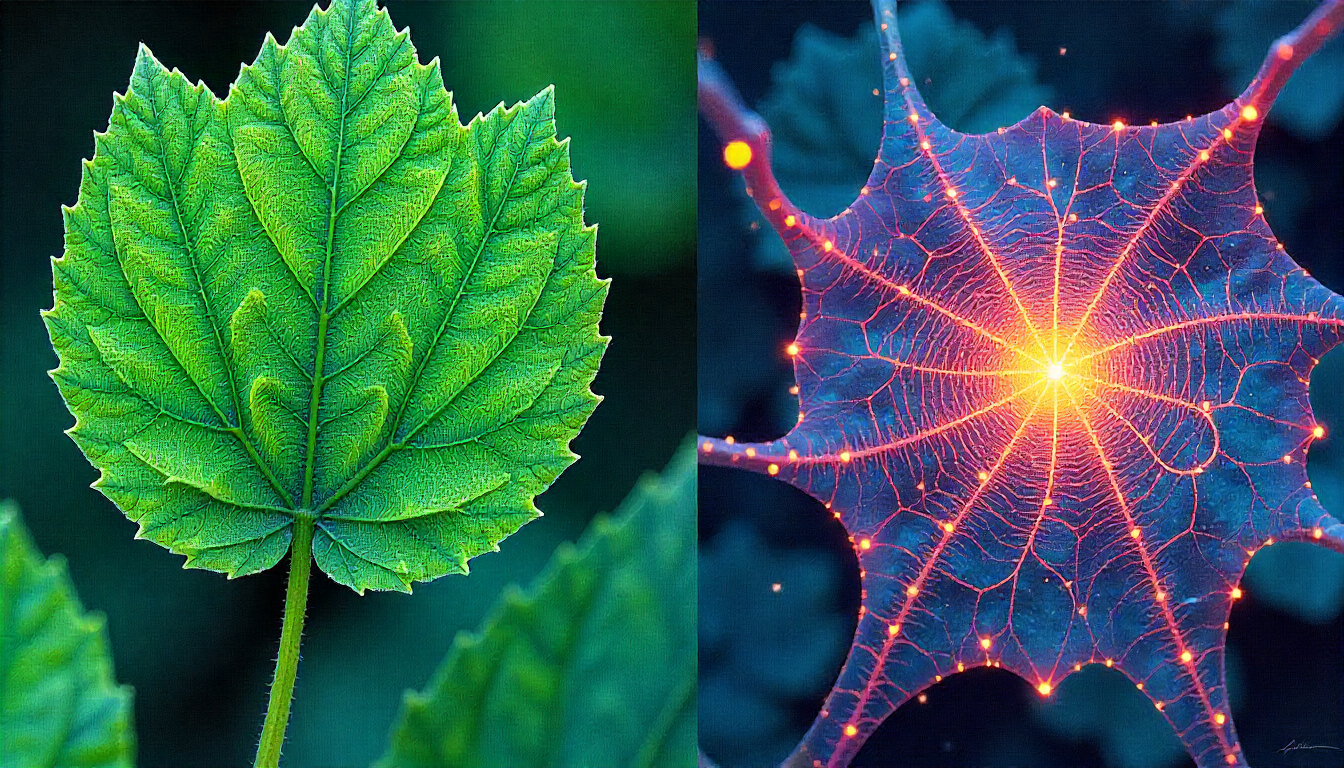
Evolution has optimized biological systems for efficient mass and heat transfer under constraints of minimal material and energy. By mimicking these natural blueprints—a field known as biomimetics—we can revolutionize Thermal Interface Material (TIM) and heat sink design, moving beyond bulk composites to intelligent, multi-scale, hierarchical structures.
Nature’s Blueprints for Advanced Thermal Management:
- Fractal Networks for Maximum Coverage (Leaf Veins & Blood Vessels): Nature uses branching, fractal patterns to distribute fluids (sap, blood) with minimal pumping power. Applying this to TIMs could mean creating graded filler networks or micro-channel structures that maximize heat spreading from a point source with minimal material, reducing weight and cost.
- Counter-Current Heat Exchangers (Animal Limbs & Fish Gills): Many animals use closely packed, oppositely flowing blood vessels to retain core heat. A biomimetic TIM could incorporate microfluidic channels in a similar pattern, enabling integrated, ultra-efficient liquid cooling within the interface layer itself.
- Structural Color and Radiative Cooling (Moth Eyes & Beetle Shells): Nanostructures on certain insects provide passive radiative cooling. Engineering similar photonic or phononic crystal structures into the surface of a TIM could enhance infrared radiation, adding a non-conductive cooling pathway.
From Inspiration to Implementation:
Modern fabrication techniques like multi-material 3D printing, direct laser writing, and self-assembly are making these complex bio-inspired architectures feasible. The challenge is scaling production and integrating them with electronic components.
This approach doesn’t just seek incremental improvement; it seeks a paradigm shift in efficiency. A vascularized, liquid-cooled TIM could simultaneously manage higher heat flux and provide mechanical compliance. A fractal-spreading pad could make heatsinks obsolete for many applications.
We look to biology not just for sustainability, but for superior engineering principles. Our R&D explores these concepts to develop the next generation of adaptive, ultra-efficient thermal materials.