Harnessing Latent Heat: PCM-Integrated TIMs for Transient Buffering and Peak Power Shaving
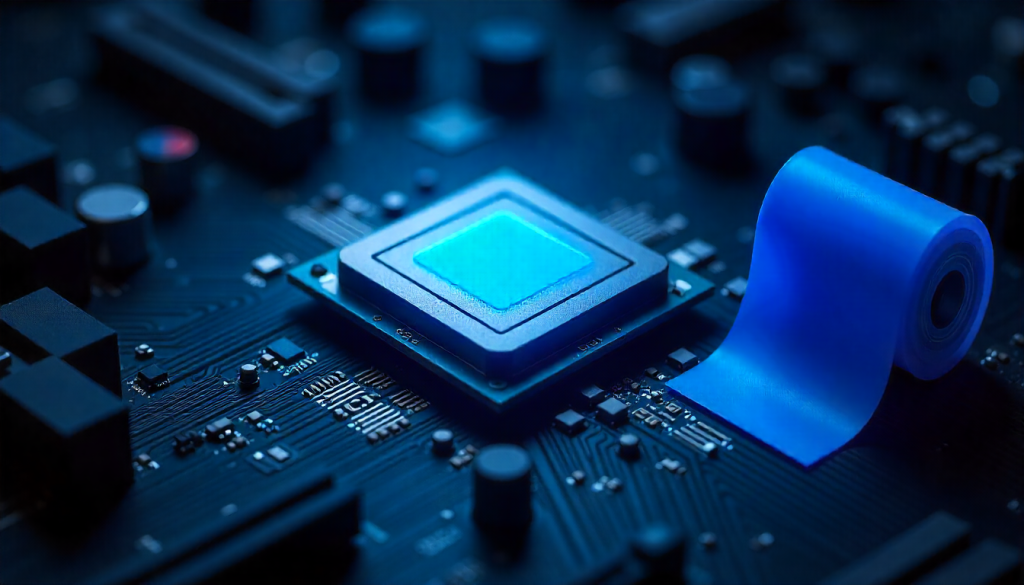
Modern electronics face a critical challenge: brief, intense power bursts that exceed the steady-state cooling capacity, causing thermal throttling or shutdown. What if the Thermal Interface Material (TIM) itself could act as a short-term thermal battery? This is the promise of Phase Change Material (PCM)-Integrated TIMs, which absorb excess heat as latent energy during a pulse, buffering the component temperature and releasing the heat slowly during low-power periods.
The Principle: Latent Heat Absorption
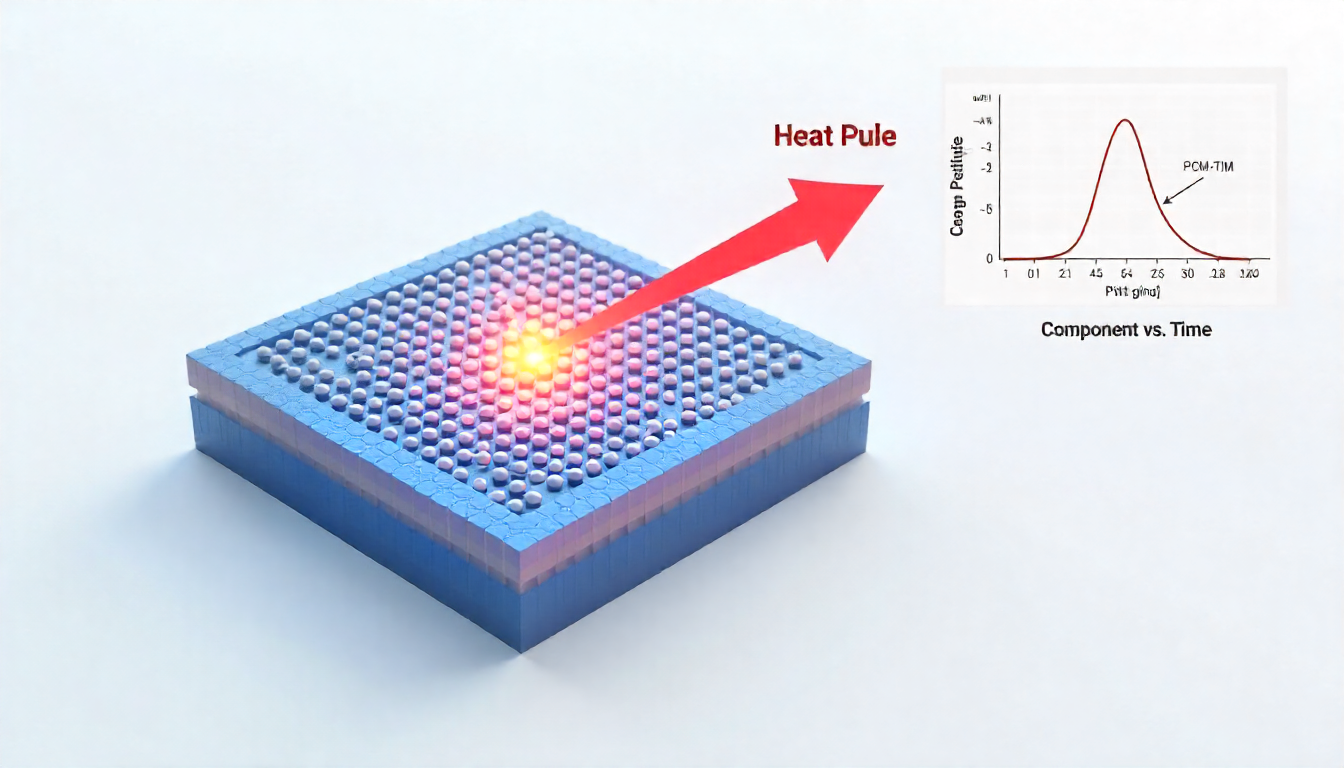
When a traditional TIM heats up, its temperature rises linearly with absorbed energy. A PCM-integrated TIM, however, undergoes an isothermal phase transition (solid-to-liquid or solid-to-solid) at a designed temperature. During this transition, it absorbs a large amount of energy (latent heat) while its temperature remains nearly constant, creating a powerful thermal buffer.
Architectures for PCM-TIM Integration:
- Microencapsulation: Tiny spheres of paraffin or salt-hydrate PCM are uniformly dispersed within a traditional silicone or polymer TIM matrix. The matrix provides structural integrity and baseline conductivity, while the microcapsules absorb pulse energy.
- Laminated Structures: A thin layer of pure PCM is sandwiched between two layers of high-conductivity TIM. This provides a dedicated, high-capacity buffer layer.
- Solid-Solid PCMs: Advanced materials change crystalline structure (solid-to-solid) without melting, avoiding potential leakage issues and volume change, making them ideal for constant-pressure interface applications.
System-Level Impact:
- Server & CPU Performance: Buffer 10-30 second turbo boost pulses, preventing throttling and maintaining peak computational performance.
- Electric Vehicle Power Electronics: Absorb heat from acceleration or regenerative braking spikes, protecting IGBT/SiC modules and smoothing thermal cycles to extend lifespan.
- Renewable Energy Systems: Buffer intermittent heat loads in power converters, improving reliability.
This represents a shift from passive conduction to active thermal energy management at the source. We are developing hybrid material systems that combine reliable interfacial conduction with tailored latent heat capacity, enabling electronics to safely and reliably handle the dynamic power profiles of the future.