The Soft Circuit for Heat: Hydrogel-Based TIMs Using Ion Transport for Conformal Cooling and Sensing
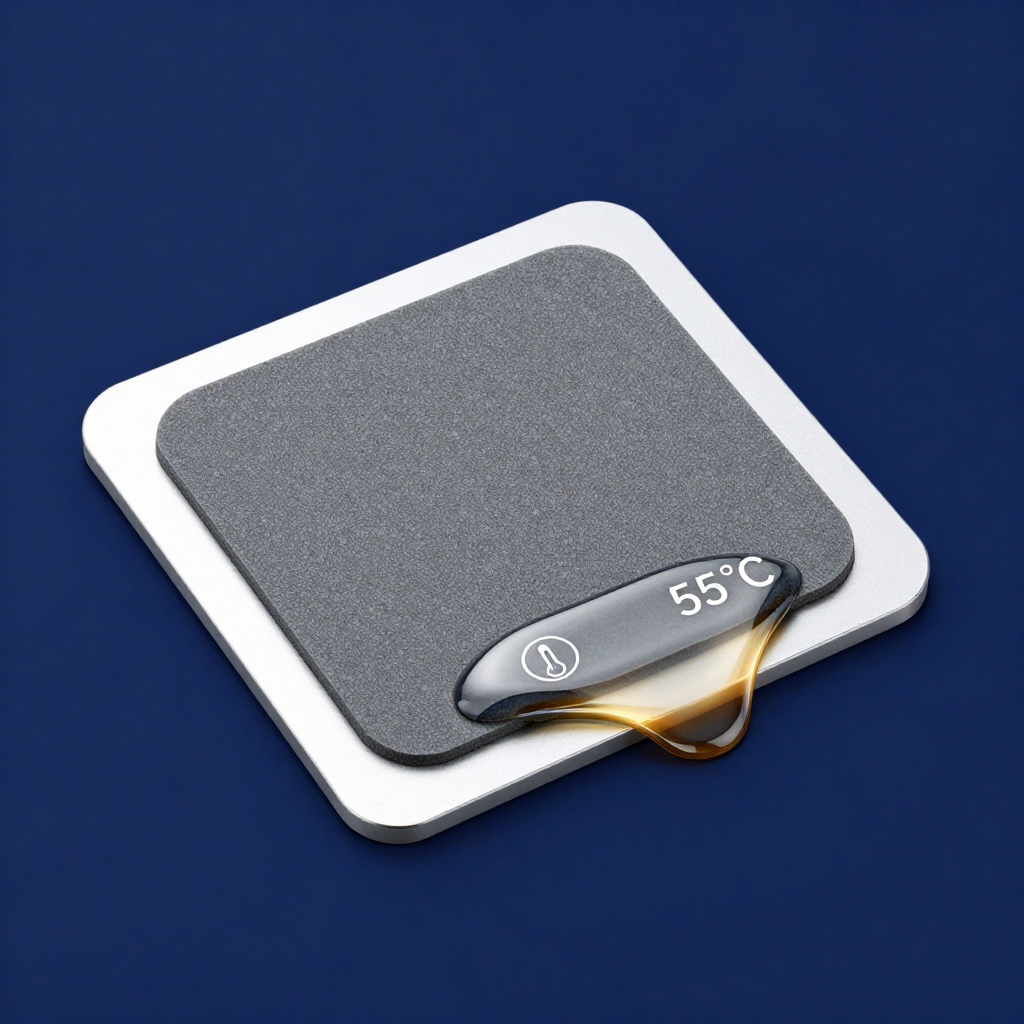
As electronics become soft, stretchable, and integrated with biological systems, rigid, solid TIMs reach their limit. The future for these applications may lie in hydrogels: water-swollen polymer networks that are soft, biocompatible, and can conduct heat via a novel mechanism—mobile ion transport. This enables conformal cooling for the most challenging, dynamic surfaces.
The Dual Mechanism of Hydrogel TIMs:
- Ionic Thermal Diffusion: Dissolved ions (e.g., Li⁺, Cl⁻) in the hydrogel’s water matrix carry kinetic energy. When a temperature gradient is applied, these ions migrate from hot to cold, carrying heat with them. This can provide significant thermal conductivity, especially when the hydrogel is optimized with high ion concentration.
- Phonon Transport through Polymer Network: The cross-linked polymer chains themselves provide a secondary, solid-phase conduction path.
Unmatched Advantages for Niche Applications:
- Ultimate Conformality: As a viscoelastic fluid-solid, a hydrogel TIM can perfectly conform to irregular, textured, or moving surfaces (e.g., skin, curved sensors, robotic joints), eliminating air gaps impossible for solid pads to fill.
- Intrinsic Sensing: The ionic conductivity is sensitive to temperature, strain, and hydration. By monitoring the electrical impedance of the hydrogel TIM, you can simultaneously sense temperature and mechanical stress at the interface.
- Tunability & Active Control: Applying an electric field (electrothermal effect) can manipulate ion concentration gradients, potentially allowing for active modulation of the local thermal conductivity.
Challenges and Pathways:
Key hurdles include long-term hydration sealing to prevent drying, maintaining stable performance under strain, and achieving sufficiently high thermal conductivity for high-heat-flux applications. Research focuses on double-network hydrogels, nanocomposite fillers, and encapsulation strategies.
For the frontiers of bio-integrated and soft electronics, hydrogel TIMs represent a necessary paradigm shift—from a passive, solid filler to an adaptive, multi-functional, soft thermal circuit. We are investigating this novel material class to enable thermal management where traditional materials cannot go.