Surviving Orbit: The Extreme Demands on Thermal Interface Materials in Satellite Electronics
A satellite’s electronic systems must function flawlessly for 15+ years in the vacuum of space, with no possibility of repair. The Thermal Interface Materials (TIMs) used within these systems are not just thermal components; they are mission-critical reliability elements that must survive a gauntlet of extreme conditions that don’t exist on Earth.
The Space Environment Gauntlet:
- Ultra-High Vacuum & Outgassing: In vacuum, materials outgas violently. Condensable volatiles can coat and foul critical optical sensors, star trackers, and thermal radiator surfaces. TIMs must meet stringent standards like ESA’s ECSS-Q-ST-70-02C or NASA’s SP-R-0022A, with extremely low CVCM (Collected Volatile Condensable Materials).
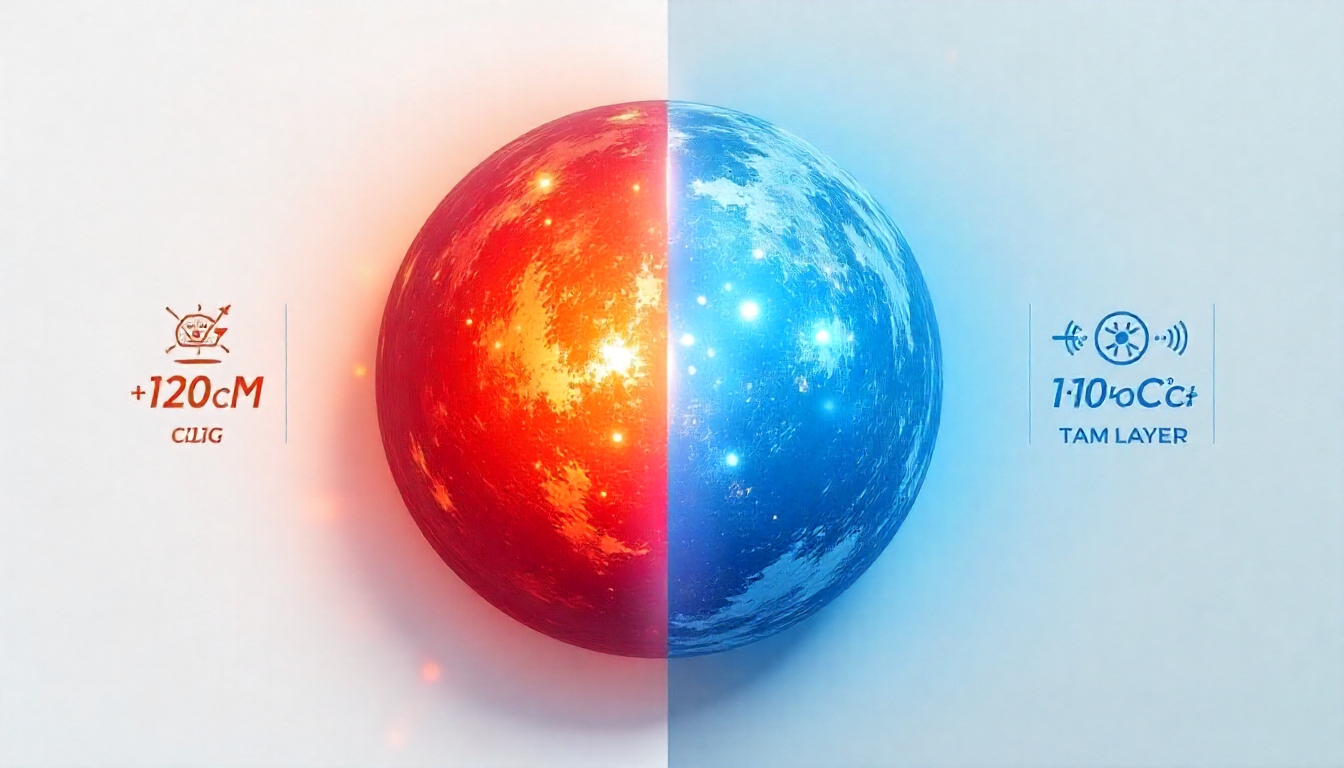
- Extreme Thermal Cycling: In Low Earth Orbit (LEO), a satellite can experience a temperature swing from -180°C in eclipse to +120°C in direct sun every 90 minutes, for years. This causes tremendous stress, leading to pump-out, delamination, and cracking in unqualified materials.
- Atomic Oxygen (LEO) & Radiation: In LEO, atomic oxygen erodes many polymers. Galactic cosmic rays and solar particle events can cause radiolytic decomposition and embrittlement in organic TIM matrices.
- Launch Vibration & Shock: The TIM must maintain integrity and contact through the violent forces of launch.
Space-Qualified TIM Solutions:
- Specialty Low-Outgassing Polymers: Formulations based on carefully purified and cured silicones, polyimides, or other high-stability polymers. They are often characterized by lot with certified outgassing data.
- Metal-Based Interfaces: Where electrical conduction is acceptable, indium foil, gold-tin solder preforms, or silver-filled epoxies offer zero outgassing and high stability.
- Dielectric Ceramic Fillers: Boron nitride or aluminum nitride-filled compounds are preferred for their stability and good thermal performance in insulating applications.
Design and Qualification Philosophy:
Selection is based on heritage and exhaustive testing. TIMs are subjected to extended thermal cycling, vacuum bake-out, radiation exposure, and mechanical testing that far exceeds commercial requirements. The cost is high, but the risk of failure is absolute. Every material is a qualified piece of the spacecraft, with full traceability back to its production batch.
For satellite engineers, a TIM is selected not from a catalog, but from a curated list of space-proven, flight-qualified materials whose every characteristic is known and documented for the life of the mission.