The Metallic Bond: Utilizing Solder as a Thermal Interface Material for Ultimate Performance
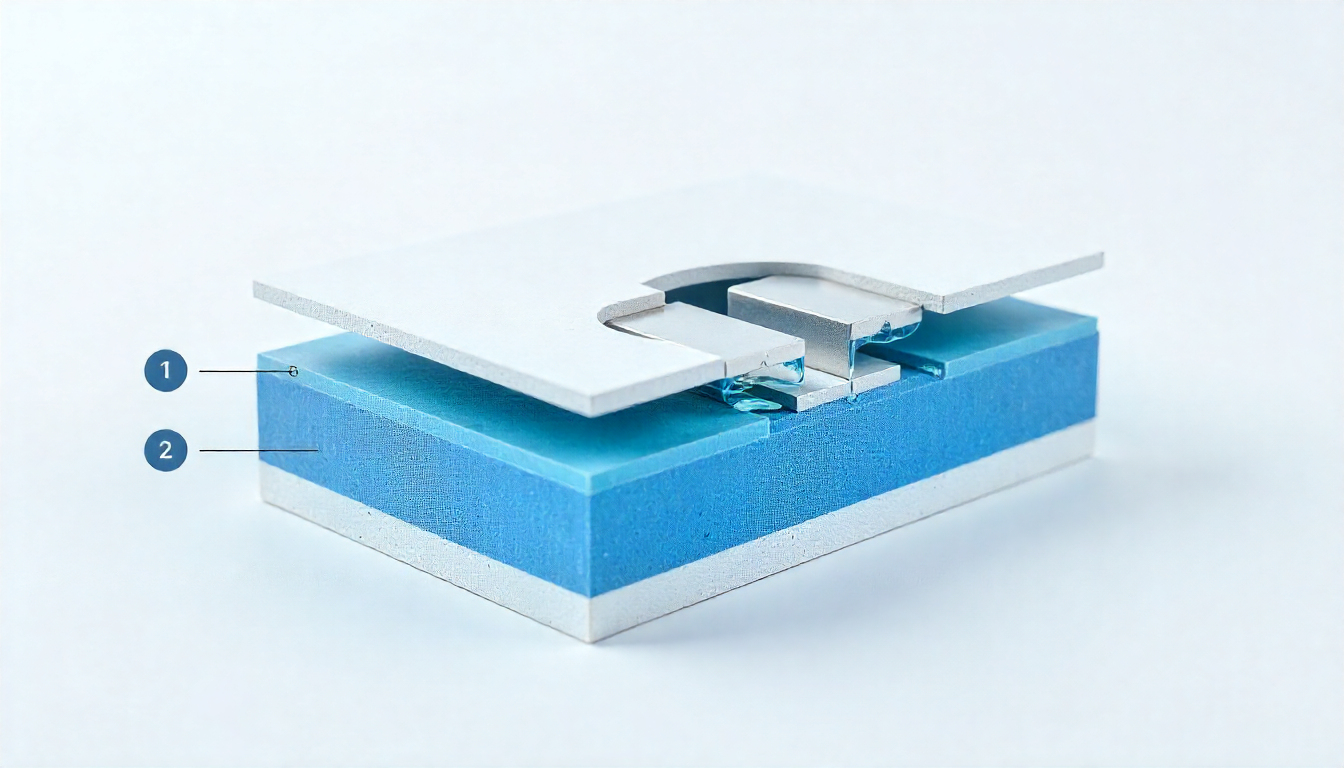
When the thermal and reliability requirements surpass the capabilities of polymer-based materials, engineers turn to Solder Thermal Interface Materials (STIMs). This involves using a preformed ring or sheet of solder alloy (e.g., SnAgCu, AuSn, InAg) that is heated to reflow, forming a permanent, metallic bond between components. The result is an interface with thermal conductivity approaching that of pure metal (>50 W/m·K) and exceptional long-term stability, but with significant process complexity.
Why Choose a Solder TIM?
- Ultra-Low Thermal & Electrical Resistance: Creates a near-monolithic metal joint.
- High Temperature Stability: The melting point of the solder defines the maximum service temperature (e.g., 217°C for SAC305, 280°C for AuSn).
- Exceptional Reliability: Properly formed, it is immune to pump-out, dry-out, or degradation under thermal cycling. It also provides strong mechanical attachment.
- Void Minimization: When done under vacuum or with appropriate flux, it can achieve <1% voiding, ensuring uniform heat transfer.
Key Process Considerations:
- Surface Finish & Compatibility: The surfaces to be joined must have a solderable finish (e.g., immersion silver, electroplated nickel-gold, bare copper with OSP). The solder alloy must be compatible to form a good intermetallic bond.
- Flux & Atmosphere: A no-clean flux is typically used. Vacuum reflow is ideal for eliminating voids caused by trapped gases.
- Co-Planarity & Pressure: The components must be flat and parallel. A fixture or weight is often used to hold them in place during reflow.
- Thermal Management: The reflow profile must be carefully controlled to melt the solder without damaging sensitive components elsewhere on the assembly.
Applications:
- Power Module Die Attach: Attaching SiC/GaN dies to DBC (Direct Bonded Copper) substrates.
- Lid Attach (Lid-on-Chip): Sealing a ceramic or metal lid to a CPU/GPU package for enhanced cooling and protection.
- High-Power LED Assembly: Attaching the LED chip to a ceramic submount or heat slug.
STIM is not a drop-in replacement; it’s a fundamentally different assembly process. It is justified for applications where ultimate thermal performance, hermeticity, or mechanical strength are required, and where the added process cost and complexity can be absorbed.