Beading Off the Threat: Engineering Superhydrophobic Surfaces on TIMs for Harsh Environments
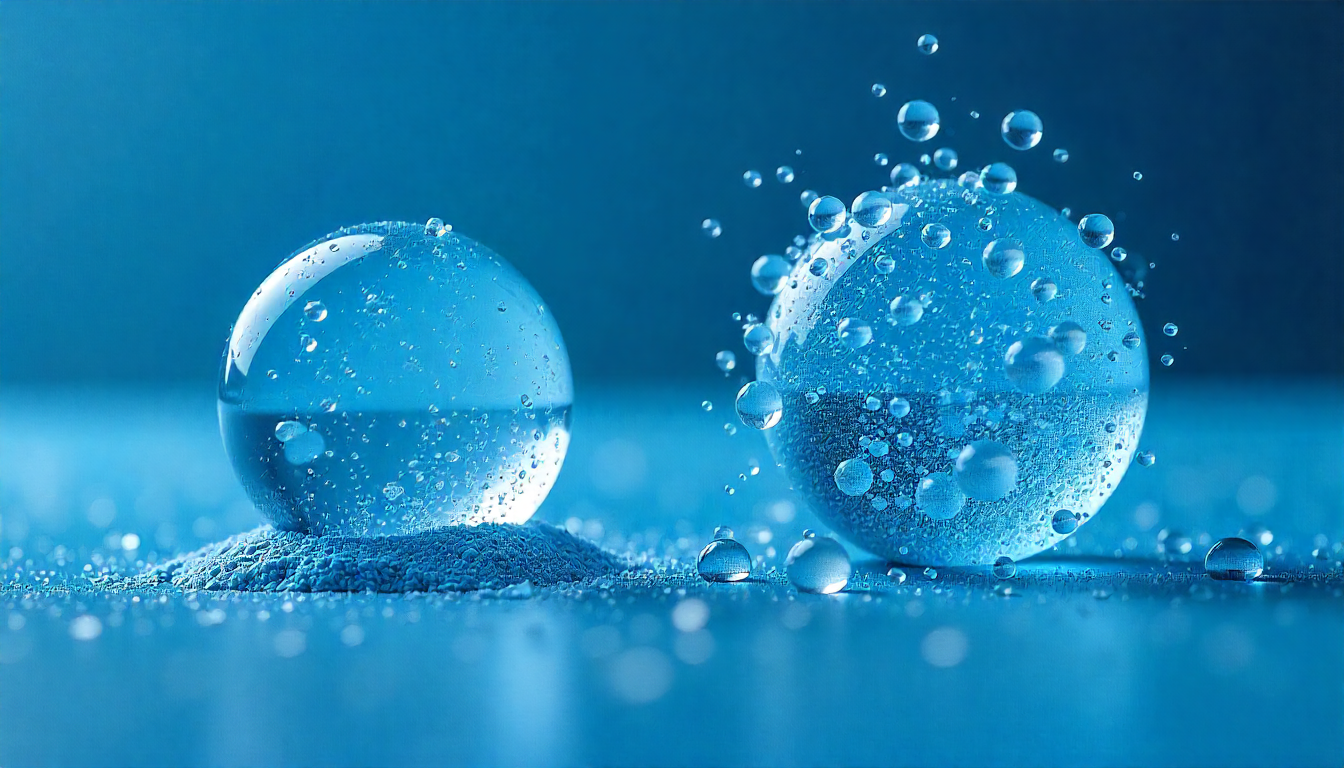
In outdoor or humid environments, a traditional Thermal Interface Material (TIM) presents a risk: it can act as a wick, drawing moisture into the critical gap between component and heatsink via capillary action. This moisture can cause corrosion, electrical leakage, and, upon freezing, mechanical damage. The solution is to engineer the TIM’s surface to be superhydrophobic—causing water to bead up and roll off without wetting the material, akin to a lotus leaf.
The Science of Superhydrophobicity:
A surface is superhydrophobic when it exhibits a water contact angle >150°. This is achieved through a combination of low surface energy chemistry (e.g., fluorinated coatings) and micro/nano-scale surface roughness. The roughness traps air beneath water droplets, minimizing contact.
Applying This to TIMs:
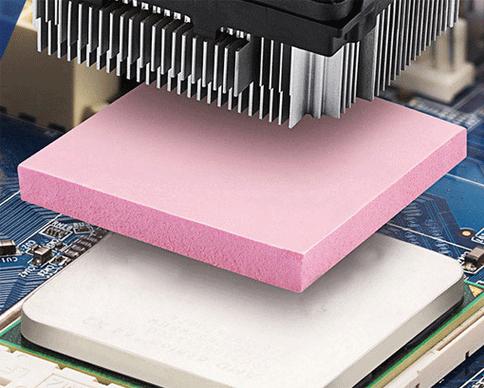
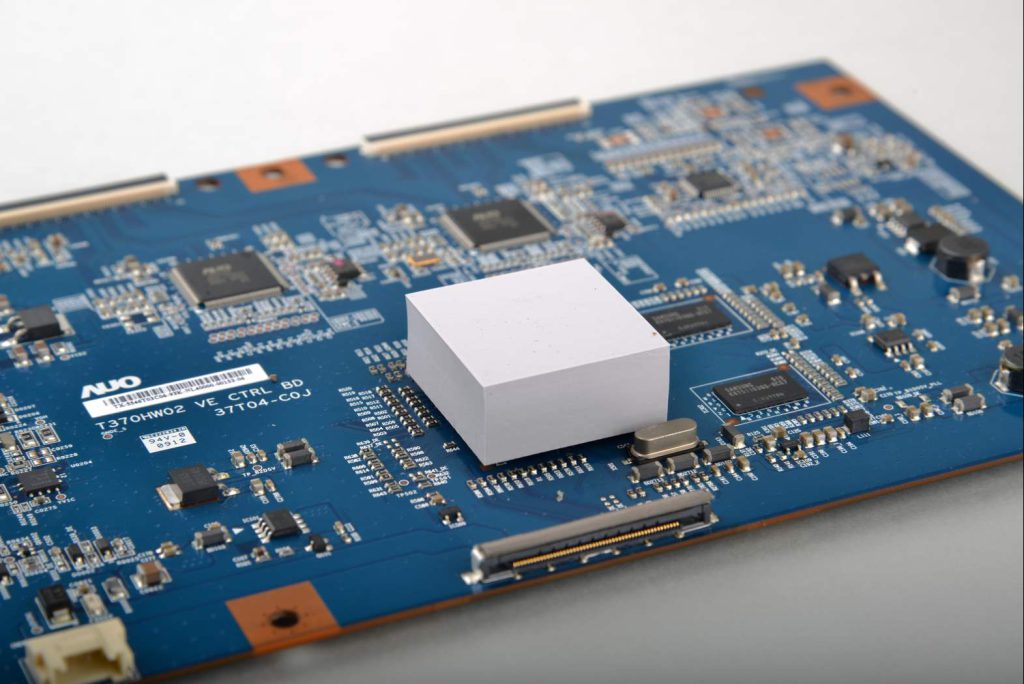
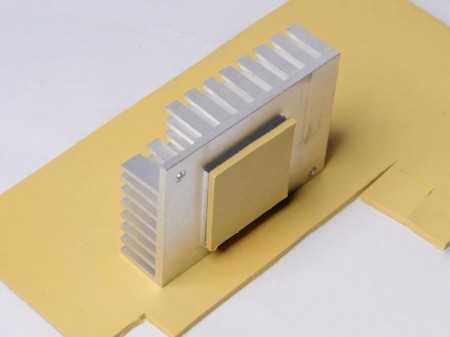
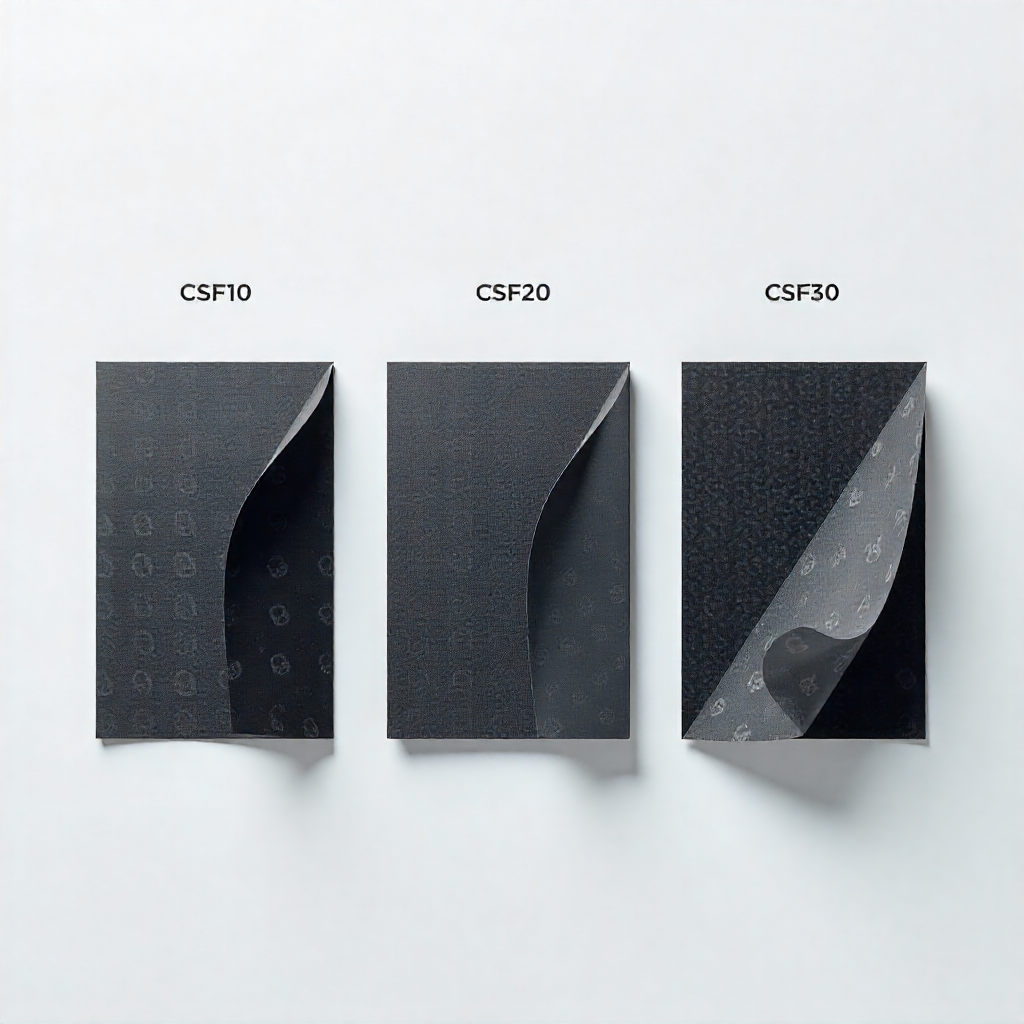
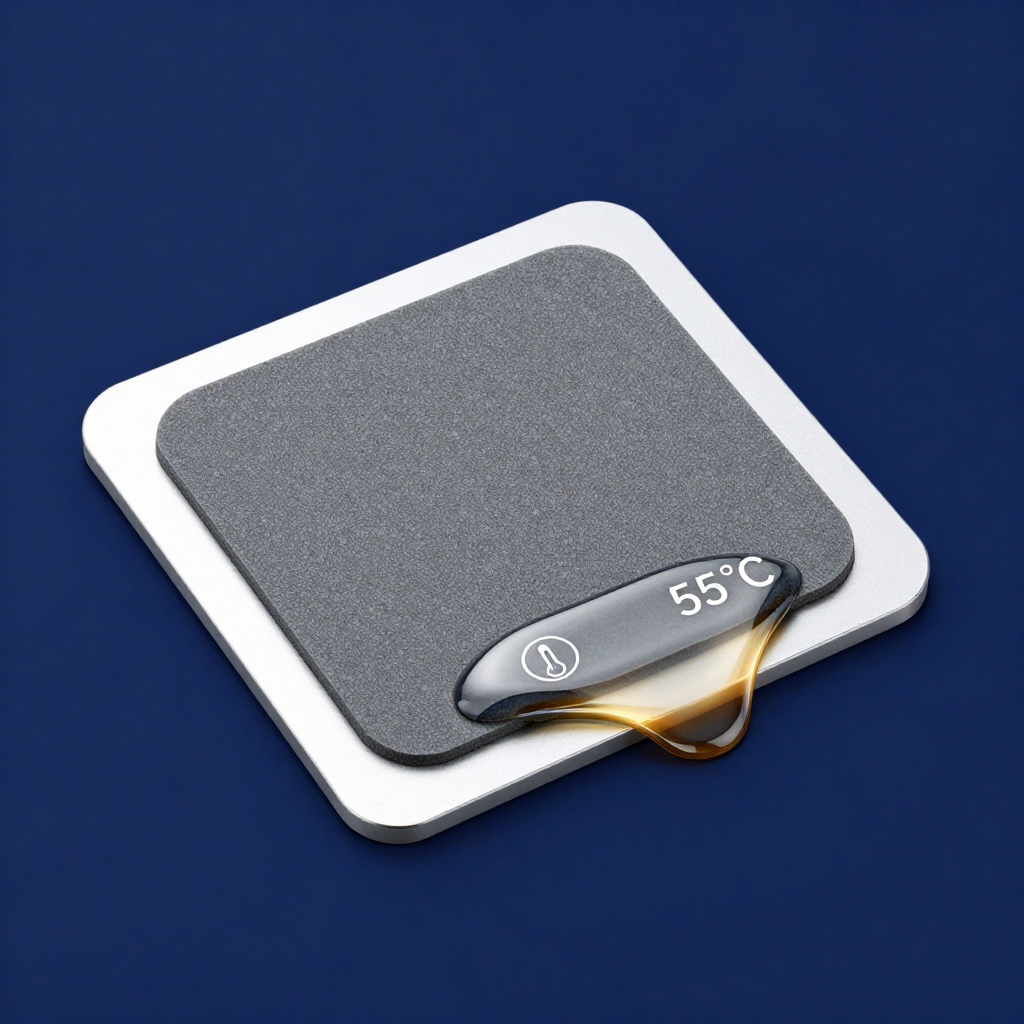
- For Thermal Pads/Gap Fillers: The pad can be manufactured with a micro-structured surface or have a durable hydrophobic coating applied during production. This prevents water from being drawn into the pad’s porous structure.
- For Thermal Greases/Pastes: Formulating the grease with hydrophobic fillers and carriers or applying a conformal hydrophobic top-coat after application can help, though durability can be a challenge.
- For Adhesives & Gels: These can be formulated from inherently hydrophobic polymer bases (e.g., certain polyurethanes) to resist moisture absorption.
Benefits Beyond Water Shedding:
- Condensation Management: In cycling environments, a superhydrophobic surface encourages condensed water to form discrete beads that roll away rather than forming a continuous film that bridges electrical contacts.
- Self-Cleaning: The rolling water droplets can pick up and remove dust and other contaminants, helping to maintain long-term thermal performance in dirty environments.
- Corrosion Inhibition: By keeping the metal interface dry, the risk of galvanic corrosion is significantly reduced.
Considerations and Testing:
The hydrophobic treatment must not significantly increase thermal resistance or degrade under UV exposure and temperature cycling. It must be validated through tests like IPX9 water ingress, salt fog, and damp heat to ensure the property lasts the product’s lifetime.
For electronics at the mercy of the elements, a superhydrophobic TIM is a proactive defense mechanism, transforming a potential vulnerability into a resilient feature that safeguards both thermal performance and electrical reliability.