The Neural Heat Sink: Thermal Management in Next-Generation Brain-Computer Interfaces
Advanced Brain-Computer Interfaces (BCIs) aim to record from or stimulate thousands of neurons with micron precision. The embedded electronics—amplifiers, digitizers, and wireless transmitters—dissipate heat. In the brain, even a local temperature rise of 1-2°C can alter neural activity and cause tissue damage. Therefore, thermal management in BCIs is not about component reliability; it’s about neural safety and function. This demands a new paradigm for Thermal Interface Materials (TIMs) that are biocompatible, ultra-thin, flexible, and potentially integrated with the body’s own cooling.
The Unique Thermal Constraints of a BCI:
- The 1°C Rule: A core design constraint. Active cooling (fans, liquid) is impossible. Heat must be passively conducted away from the neural tissue to a “safe” heat sink.
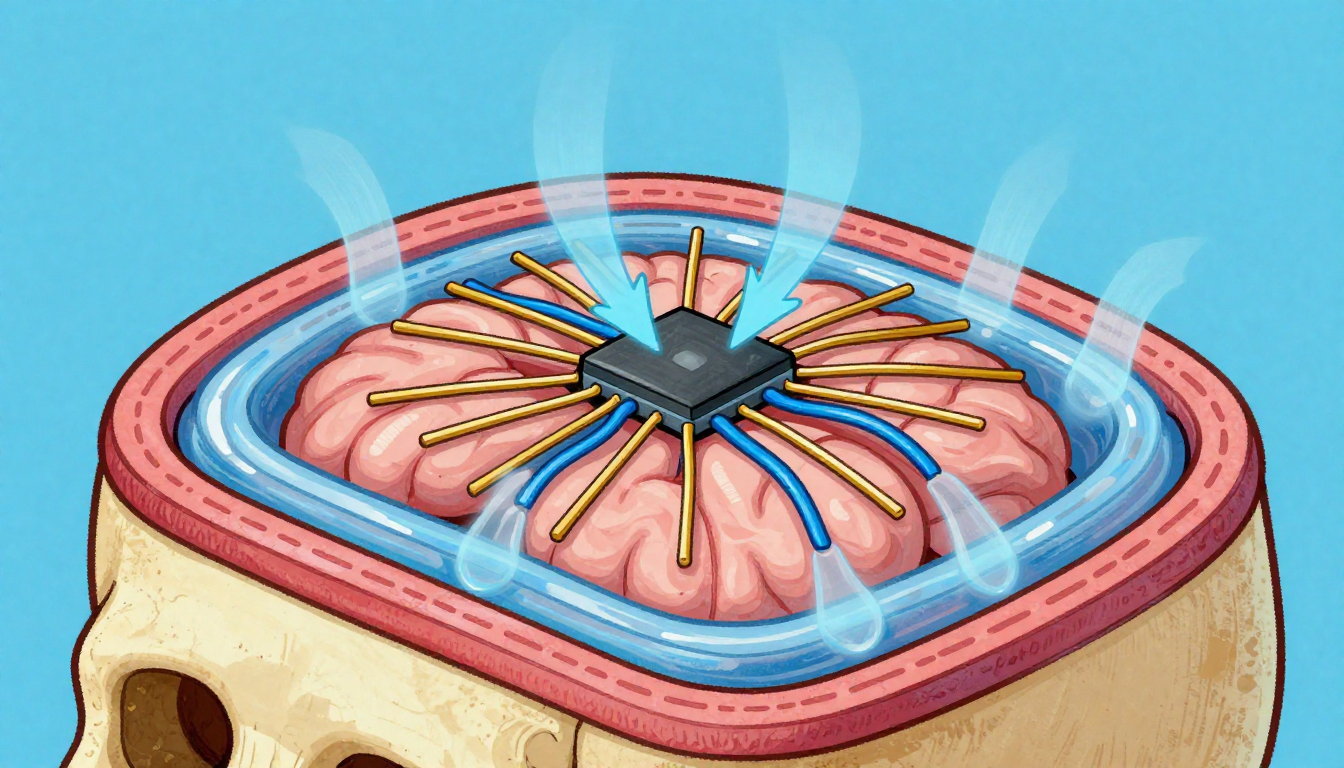
- The Heat Sink is Biological: The primary heat sinks are the cerebrospinal fluid (CSF), the highly vascularized dura mater, or the skull bone. The TIM must efficiently interface with these irregular, wet biological tissues.
- Form Factor: Implants are flexible, thin, and lightweight. Any TIM must conform to this without adding stiffness or volume.
Material and Design Strategies:
- Biocompatible Conductive Thin Films: Parylene-coated gold or platinum traces can act as both electrical interconnects and lateral heat spreaders, distributing heat from a hot ASIC across a larger area of the implant before it reaches the tissue interface.
- Hydrogel-Based Thermal Interfaces: A biocompatible, ionic hydrogel could serve as a conformal TIM between the implant and the dura or skull, leveraging ion mobility for heat transfer while being mechanically compatible with soft tissue.
- Strategic Heat Pathing: Design the implant package so that the heat-generating components are in direct thermal contact (via a thin, stable TIM) with a titanium or ceramic skull-facing plate, using the skull as the primary heat sink, rather than the brain.
The Future: Bio-Integrated Thermal Management
Research may explore materials that enhance local blood flow (vasodilation) or interface directly with CSF flow for heat exchange. The ultimate TIM for a BCI might be engineered to work in concert with the body’s own thermoregulatory systems.
In this field, the TIM is a critical safety component in the human-machine interface. Its development requires deep collaboration between thermal engineers, materials scientists, and neurobiologists.