EV Thermal Pads: Cooling & Insulating Power Electronics
Electric vehicle performance and safety are fundamentally tied to thermal management. In the high-stakes environment of an EV’s powertrain, thermal pads for electric vehicles serve a dual, critical mission: dissipating intense heat and providing fail-safe electrical insulation in high-voltage applications.
The Dual Challenge: Heat and Voltage
Components like traction inverters, IGBT modules, and onboard chargers operate at 400V to 800V systems, generating significant heat in compact, sealed units. A standard conductive pad is a safety hazard here. The primary role shifts to electrical insulation in power electronics. The material must have an exceptionally high dielectric strength (>5 kV/mm) to prevent catastrophic short circuits. Simultaneously, it must efficiently move heat from the semiconductor junction to the cooling plate—a function where thermal conductivity of insulating materials becomes a key selection criterion.
Meeting Stringent Automotive Standards
The automotive industry leaves no room for compromise. Any material used must comply with rigorous standards for fire safety in automotive electronics. This mandates thermal pads with UL 94 V-0 certification, guaranteeing the material will self-extinguish. Furthermore, to ensure longevity amidst constant vibration and extreme temperature swings from -40°C to 150°C automotive range, pads must exhibit superior resistance to compression set, thermal aging, and chemical degradation from potential exposure to coolants or other fluids.
Application Focus: Battery Packs and Motors
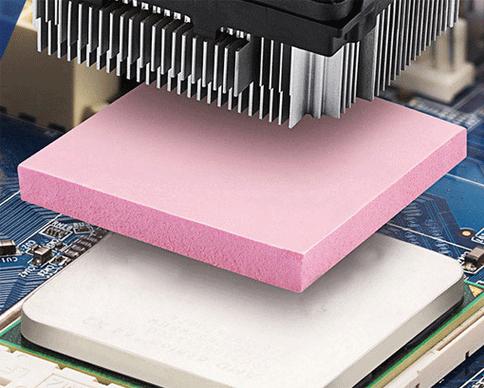
For EV battery pack assembly, thermal pads are used between battery modules and the cooling plate. Here, in addition to insulation, consistent interface pressure for optimal thermal contact is vital to prevent cell-to-cell thermal runaway. In electric motor and controller cooling, pads often interface rough cast surfaces, requiring materials with excellent conformability to uneven surfaces to eliminate insulating air pockets. By specifying automotive-grade thermal interface materials that are pre-tested for vehicle longevity, engineers safeguard both the immediate performance and the decade-long reliability of electric vehicle systems.