Bridging the Gap: When and How to Use Hybrid Thermal Interface Solutions
As system complexity increases, a single Thermal Interface Material (TIM) often can’t address all thermal demands: managing a high-flux GPU while also cooling surrounding memory and VRMs, or efficiently moving heat both vertically to a heatsink and laterally across a board. This is where strategic hybrid thermal solutions outperform monolithic approaches.
Common Hybrid Strategies and Their Rationale:
- High-Performance + High-Conformability Duo:
- Scenario: Cooling a high-power die adjacent to much taller capacitors or connectors.
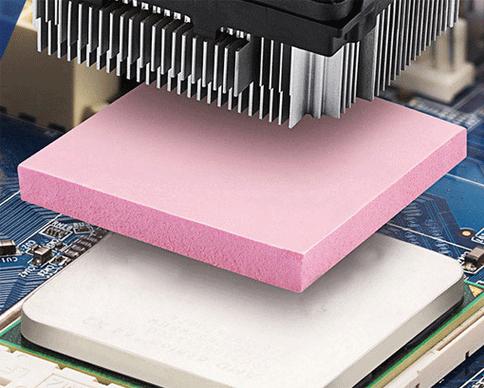
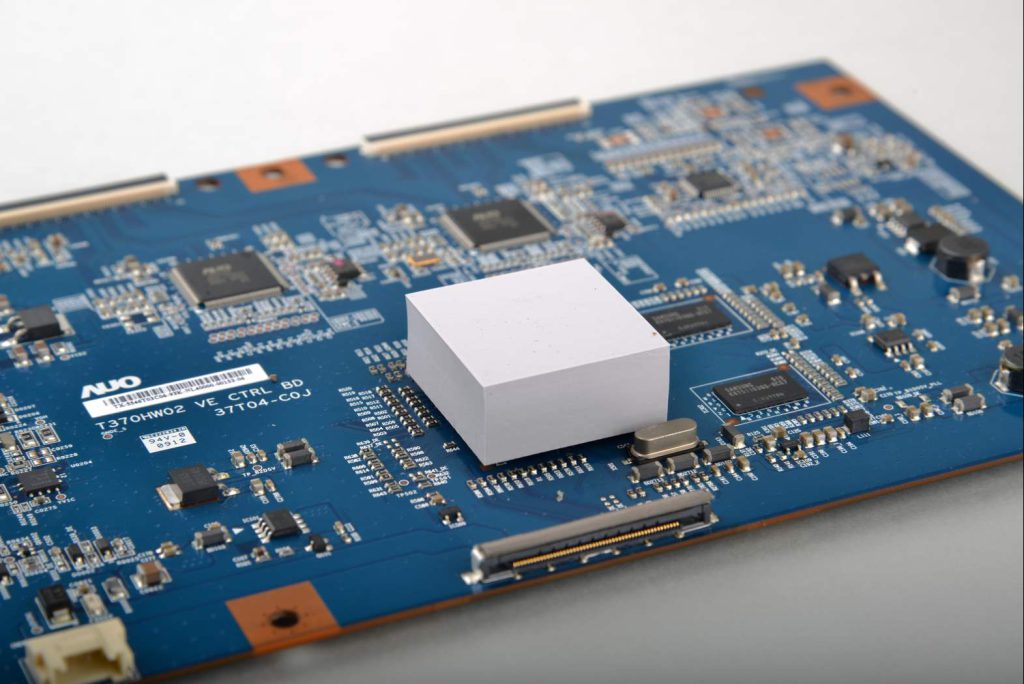
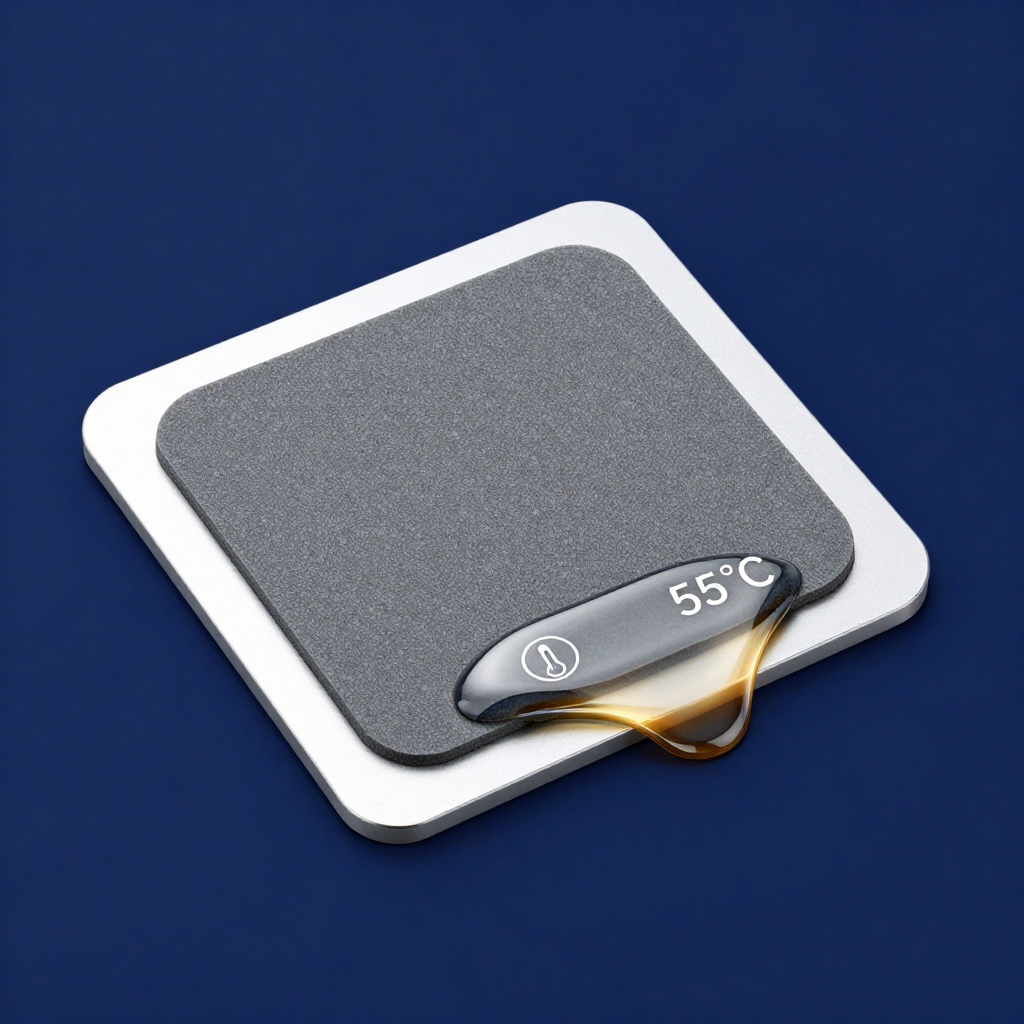
- Solution: Apply a high-conductivity phase change pad or thermal grease directly on the die for maximum heat transfer. Use a thicker, softer thermal gap filler putty to bridge the large, irregular gap to the heatsink over the surrounding components. This ensures both optimal die cooling and eliminates air pockets elsewhere.
- Conductive Adhesive + Interface Material Stack:
- Scenario: Permanently attaching a heatsink while ensuring the best possible thermal interface to the component.
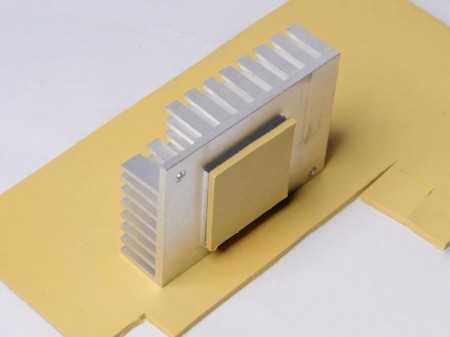
- Solution: Use a thin layer of thermally conductive adhesive (TCA) at the edges of the component or heatsink for robust mechanical bonding. In the central thermal pathway, use a standard high-performance phase change pad to ensure low thermal resistance, as most adhesives have poorer thermal performance than dedicated TIMs.
- Vertical TIM + Lateral Spreader:
- Scenario: Spreading heat from a concentrated hotspot across a large heatsink base or chassis.
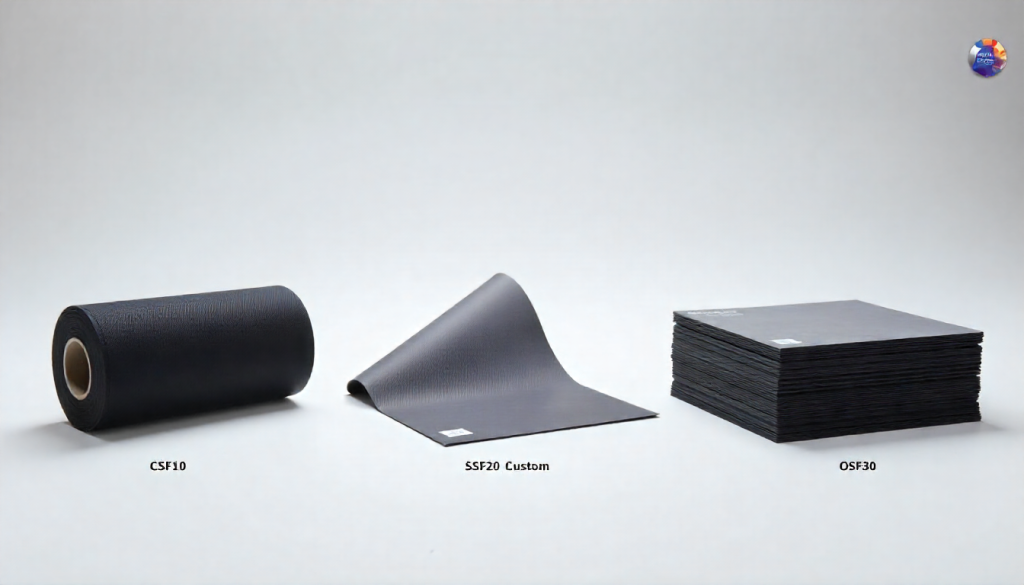
- Solution: Place a high-conductivity graphite or metal foil directly on the component to laterally spread the heat, effectively creating a larger “virtual” heat source. Then, use a standard thermal pad or grease between the spreader and the main heatsink. This two-stage approach often outperforms a single thick pad.
Key to Success: Material Compatibility and Process Design
The art of hybrid design lies in ensuring material compatibility (no chemical interactions) and designing the assembly process sequence. Will the phase change material flow and contaminate the adhesive before it cures? Can both materials be applied in the same automated step?
We collaborate on these integrated designs, providing compatible material pairs and process integration guidance to build thermal solutions that are greater than the sum of their parts, solving your most complex 3D thermal puzzles.