

The Nanoscale Heat Pipe: The Potential of Aligned Carbon Nanotube Arrays as Thermal Interfaces
Imagine a Thermal Interface Material (TIM) that is a forest of millions of microscopic, vertically aligned tubes, each an individual […]
Imagine a Thermal Interface Material (TIM) that is a forest of millions of microscopic, vertically aligned tubes, each an individual […]

In a lithium-ion battery pack, a single cell failing into thermal runaway can release enough heat to trigger its neighbors—a

A satellite’s electronic systems must function flawlessly for 15+ years in the vacuum of space, with no possibility of repair.
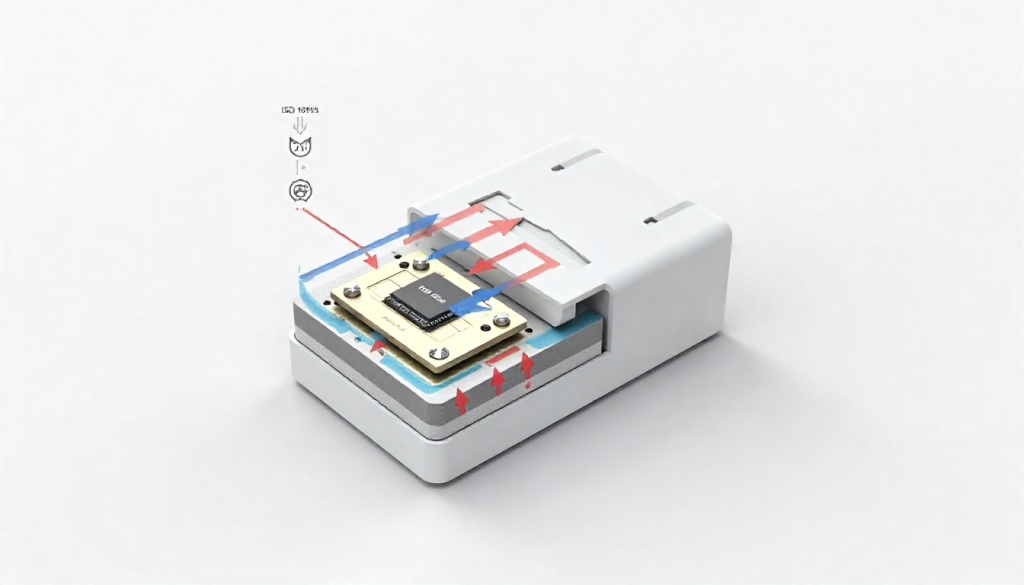
In an active implantable medical device (AIMD), heat is not just an engineering problem—it’s a biological constraint. Excess heat can damage

Graphene, a single layer of carbon atoms, possesses a remarkable in-plane thermal conductivity (~2000-5000 W/m·K). The promise of incorporating it

A Thermal Interface Material (TIM) can begin to fail before it ever touches a chip. Oxidization and component separation—driven by exposure
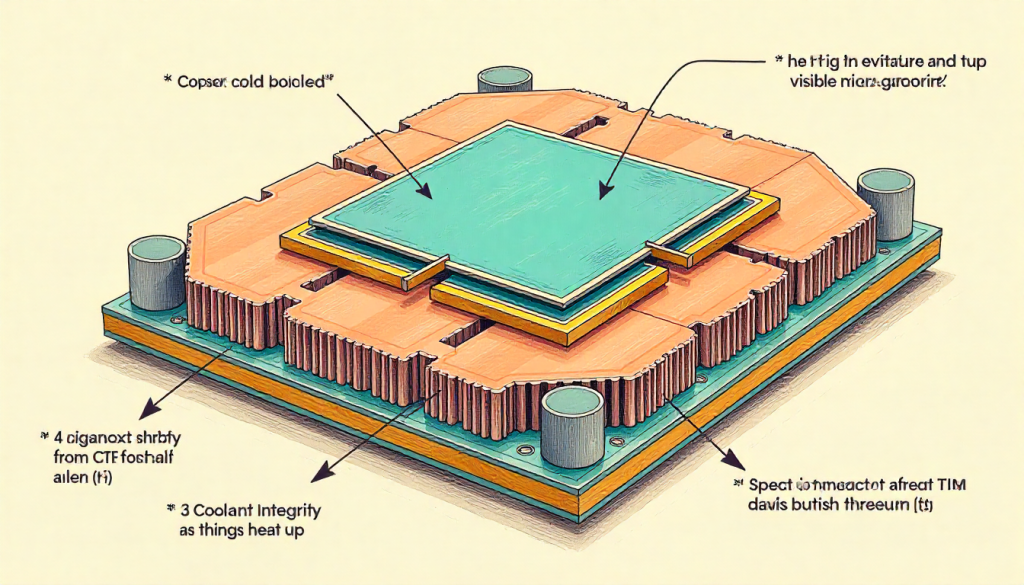
Liquid cold plates offer unmatched cooling capacity, but they transfer all thermal management complexity to a single, critical interface. The

Off-the-shelf squares and rectangles often don’t fit. When your design has unique component layouts, odd shapes, or requires multiple pads

When electronics must function in environments exceeding 200°C, conventional polymer-based Thermal Interface Materials (TIMs) fail. Silicones decompose, greases dry and carbonize,
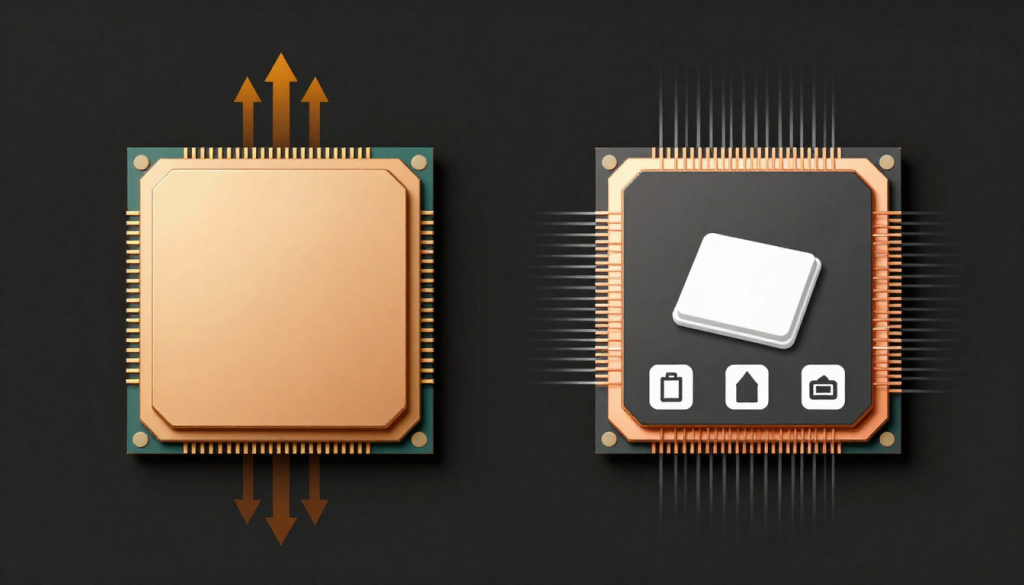
When thermal conductivity requirements surpass what filled polymers can offer, and electrical insulation is not needed, pure copper foil emerges as a
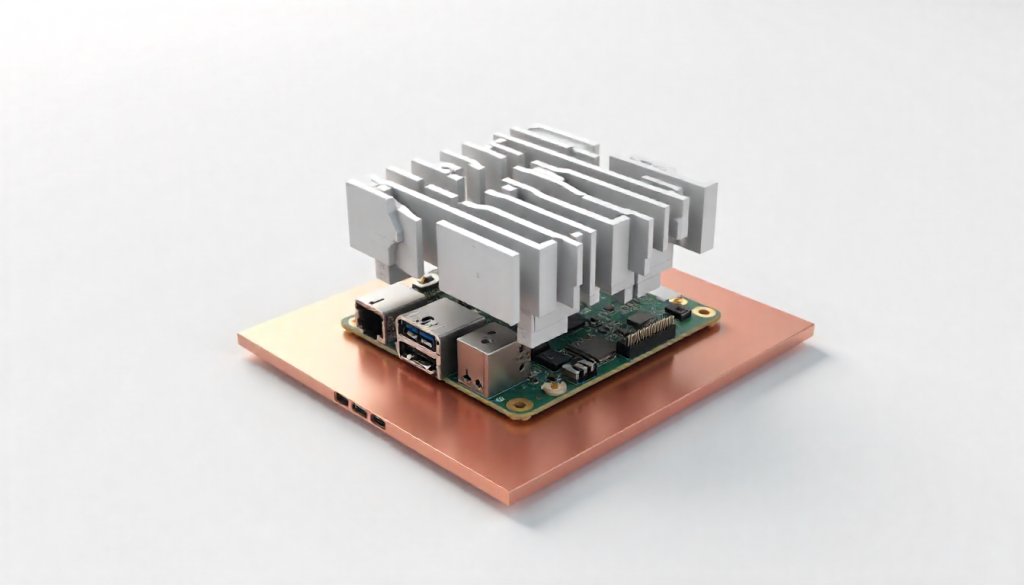
The Raspberry Pi is a marvel, but under sustained load, its SoC (System on a Chip) can thermal throttle, crippling

Not all electronics can withstand the high clamping pressure of a traditional heatsink. Fragile packages (e.g., certain BGAs, ceramic modules),