Cooling the AI Brain: TIM Strategies for Dense GPU Training Clusters
The heart of the AI revolution is the training cluster—racks packed with power-hungry GPUs like NVIDIA’s H100, each dissipating 700W or more. At this scale, even a minor improvement in the Thermal Interface Material (TIM) can yield massive savings in cooling energy (PUE) and prevent costly throttling. The TIM here must be selected for maximum stability under constant, extreme thermal load in systems often using advanced cooling like direct-to-chip liquid.
The AI Cluster TIM Imperative:
- 24/7 Extreme Load: Training runs for weeks. The TIM experiences constant, high heat flux with minimal thermal cycling, a different stress profile than a commercial web server. This makes long-term stability—resistance to dry-out and pump-out—paramount.
- Integration with Advanced Cooling: Many AI servers use direct-to-chip (D2C) liquid cold plates. The TIM interfaces the GPU die to this rigid, high-pressure cold plate. It must withstand high mounting pressure and the shear stress from CTE mismatch without degrading.
- Rack-Level Density: With power densities exceeding 50kW per rack, every component’s thermal resistance matters. An optimized TIM across thousands of GPUs directly translates to lower coolant temperatures, reduced chiller load, and better overall PUE.
- Serviceability & MTTR: While designed for uptime, clusters require servicing. The TIM should allow for safe, clean removal and reapplication during GPU replacement without damaging expensive components.
Recommended TIM Strategy for AI Clusters:
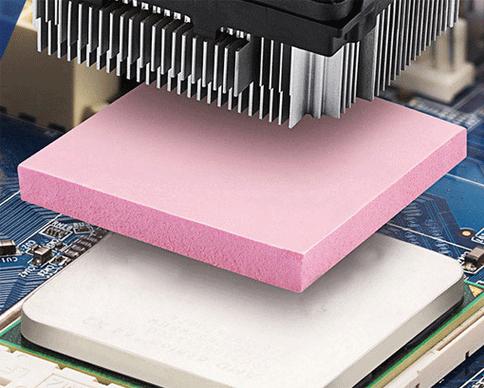
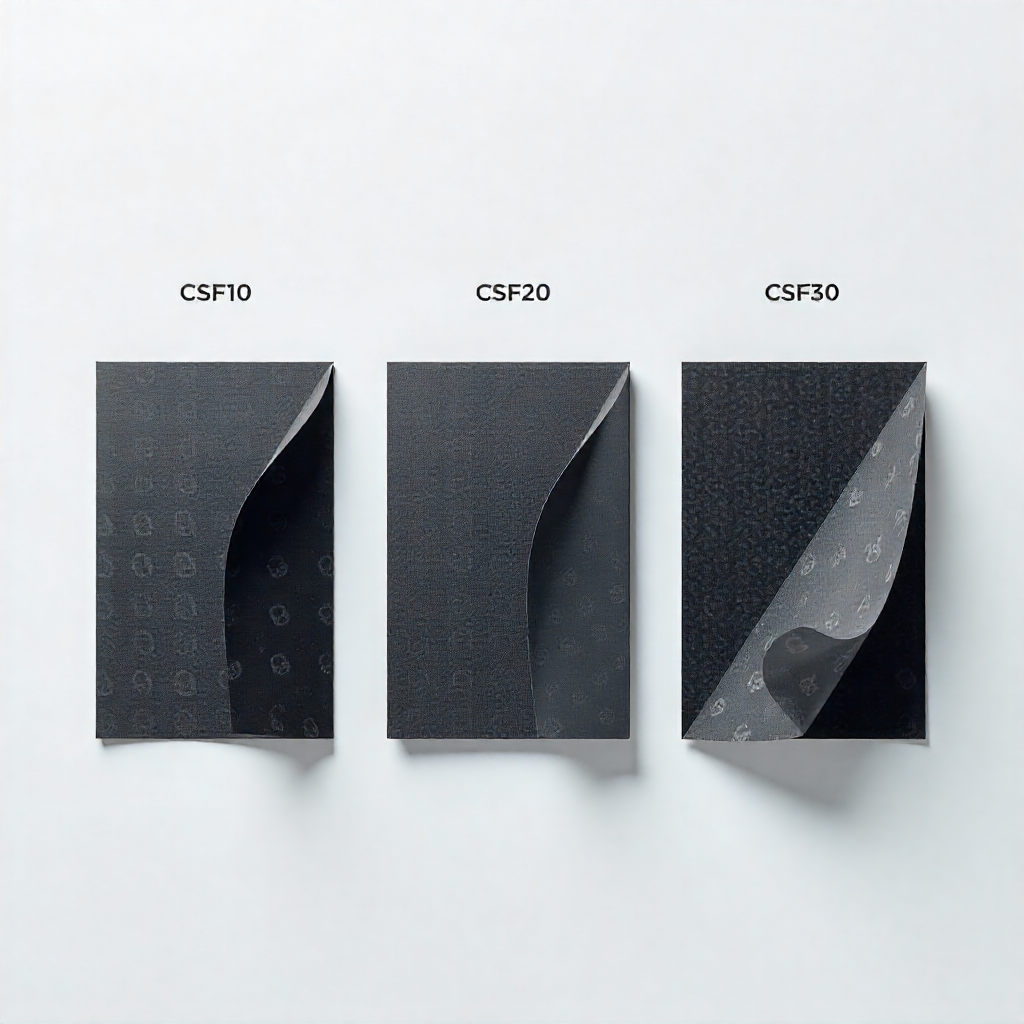
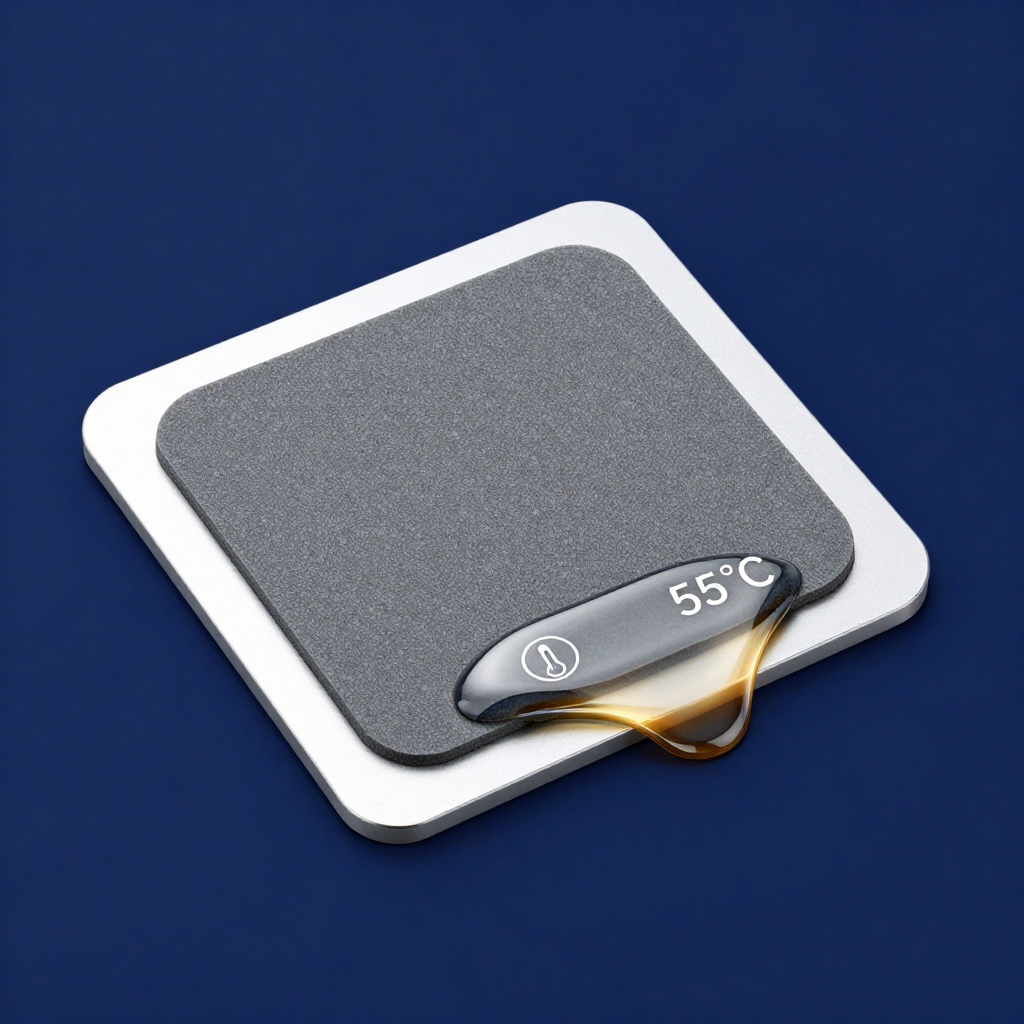
- Phase Change Pads are the Default Choice: For air-cooled or baseplate-cooled GPUs, a high-performance phase change pad offers the best balance of initial performance, long-term stability (no pump-out), and clean application for both OEM assembly and field service.
- For Direct-to-Chip Liquid Cooling: A stable, high-performance thermal grease or a specially formulated phase change material is used. The key is supplier validation that the material will not pump out under the specific pressure and shear conditions of the D2C assembly over long durations.
- Standardization & Scale: For large deployments, standardizing on a single, validated TIM across the entire cluster fleet simplifies procurement, spare parts logistics, and service procedures.
In AI infrastructure, the TIM is a critical efficiency multiplier. Selecting a material validated for this extreme duty cycle is a non-negotiable part of designing a reliable, efficient, and cost-effective training cluster.