Cooling the Light: Unique Thermal Interface Challenges in Optical and Photonic Integrated Circuits
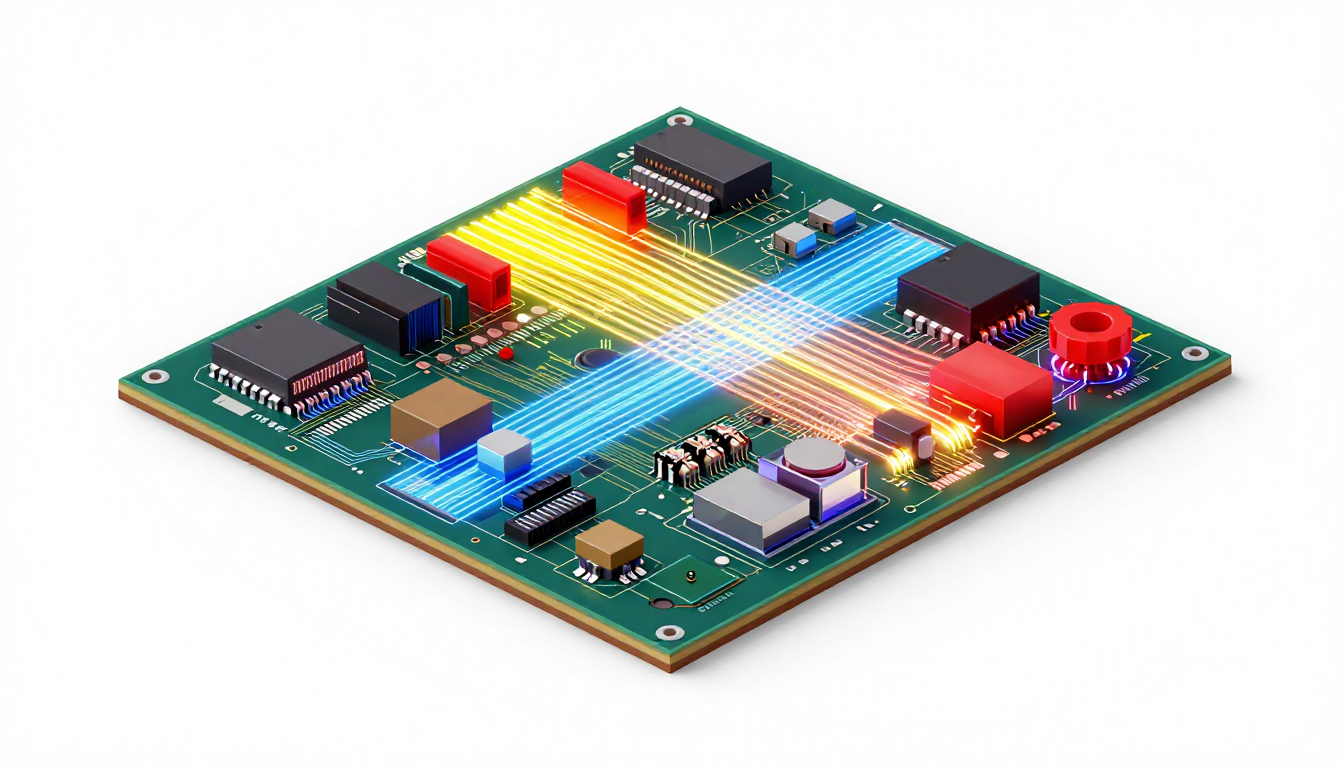
Optical computing and communication rely on Photonic Integrated Circuits (PICs), where light replaces electrons for processing and transmission. However, key components like lasers, modulators, and micro-heaters generate significant localized heat. This heat must be managed with extreme precision, as it directly impacts the wavelength, phase, and modulation efficiency of the light. A 1°C shift can misalign an entire optical network channel. The Thermal Interface Material (TIM) in a PIC must provide not just cooling, but thermal stability and precision.
The Photonic Thermal Challenge:
- Wavelength Drift: A laser’s output wavelength changes with temperature (~0.1 nm/°C for some). The TIM must ensure the laser diode’s junction temperature is stable and uniform to maintain precise wavelength locking.
- Thermal Crosstalk: Heat from a modulator or heater can bleed into adjacent waveguides, altering their optical properties. The TIM and substrate must be designed to localize or manage this crosstalk.
- Low Stress and CTE Matching: PICs are often made of delicate materials like silicon, silicon nitride, or indium phosphide. A high-stress TIM or a large CTE mismatch can induce birefringence or cracking, distorting or destroying the optical path.
TIM Strategies for PICs:
- Ultra-Thin, High-Conductivity Layers: For attaching a laser diode to a silicon submount or heatsink, a thin film of solder (AuSn) or a precisely dispensed epoxy with diamond filler is used. The bond line must be thin and uniform to minimize thermal resistance and stress.
- Localized Thermal Isolation/Sinking: Designs may incorporate micro-machined thermal trenches in the silicon substrate filled with a low-k TIM to isolate components, or strategic placement of high-k TIMs to sink heat directly to the package base.
- Active Thermal Interface Control: In some advanced designs, the TIM layer itself could be part of a micro-Thermal Electric Cooler (TEC) array, providing active, pixelated temperature control for different regions of the PIC.
Integration is Everything:
The thermal design is inseparable from the optical design. The TIM is often applied during die-attach and lid-sealing processes in controlled environments. Its performance is validated by measuring the resulting spectral stability and bit-error-rate of the optical device under thermal load.
For optical engineers, the TIM is a critical element of the optical performance equation, directly influencing the fidelity of the light signal itself.