Data Center Cooling, Server Thermal Management, TCO, PUE, High-Density Computing
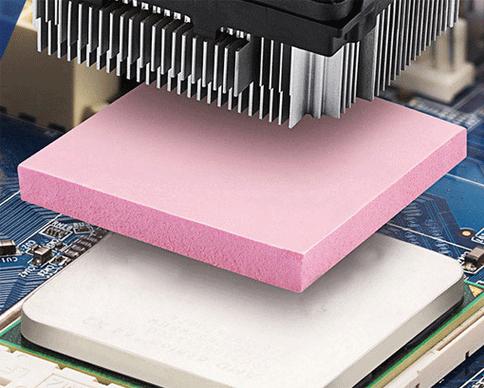
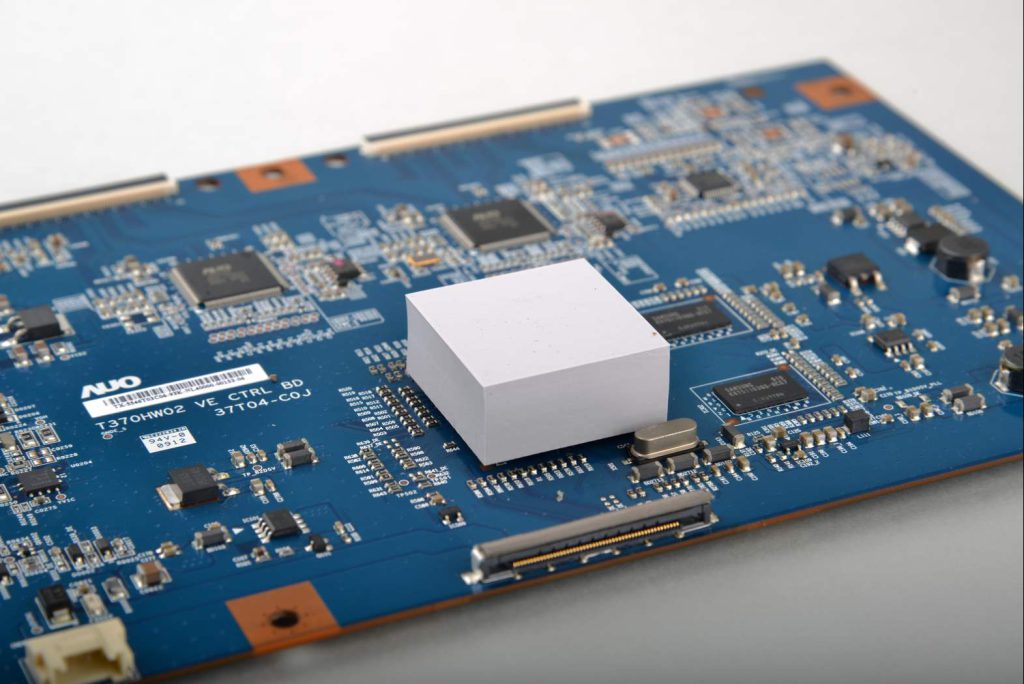
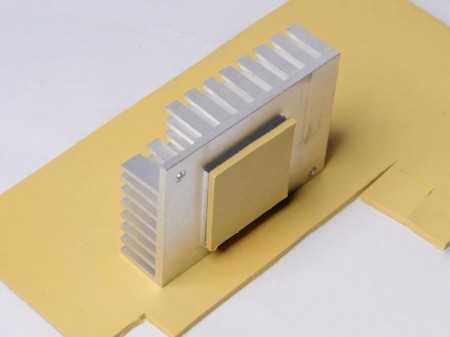
In a data center, every watt saved in cooling is a watt added to compute. While infrastructure (chillers, CRACs) gets attention, a critical efficiency lever exists inside every server: the Thermal Interface Material (TIM). Optimizing this small component has a cascading effect on Power Usage Effectiveness (PUE), operating expenses (OpEx), and hardware longevity.
The Thermal Domino Effect in a Server:
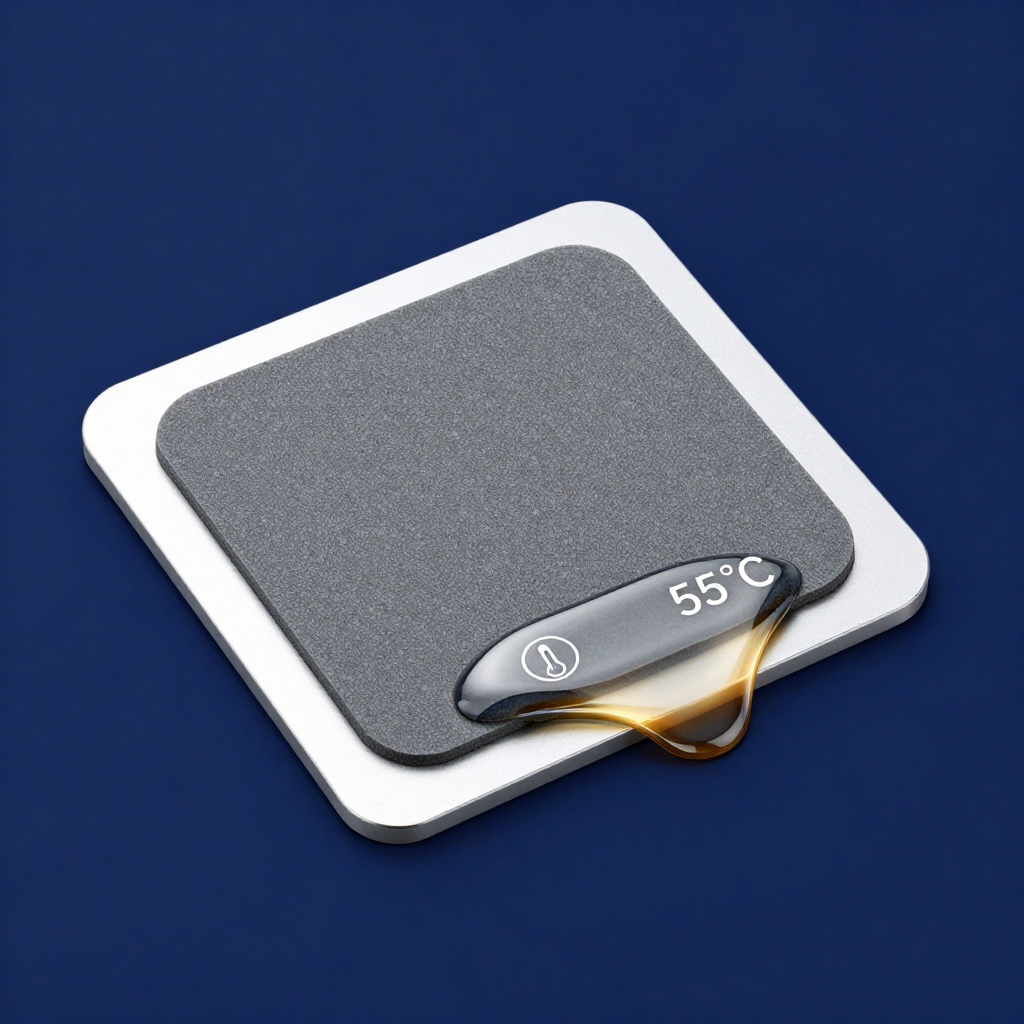
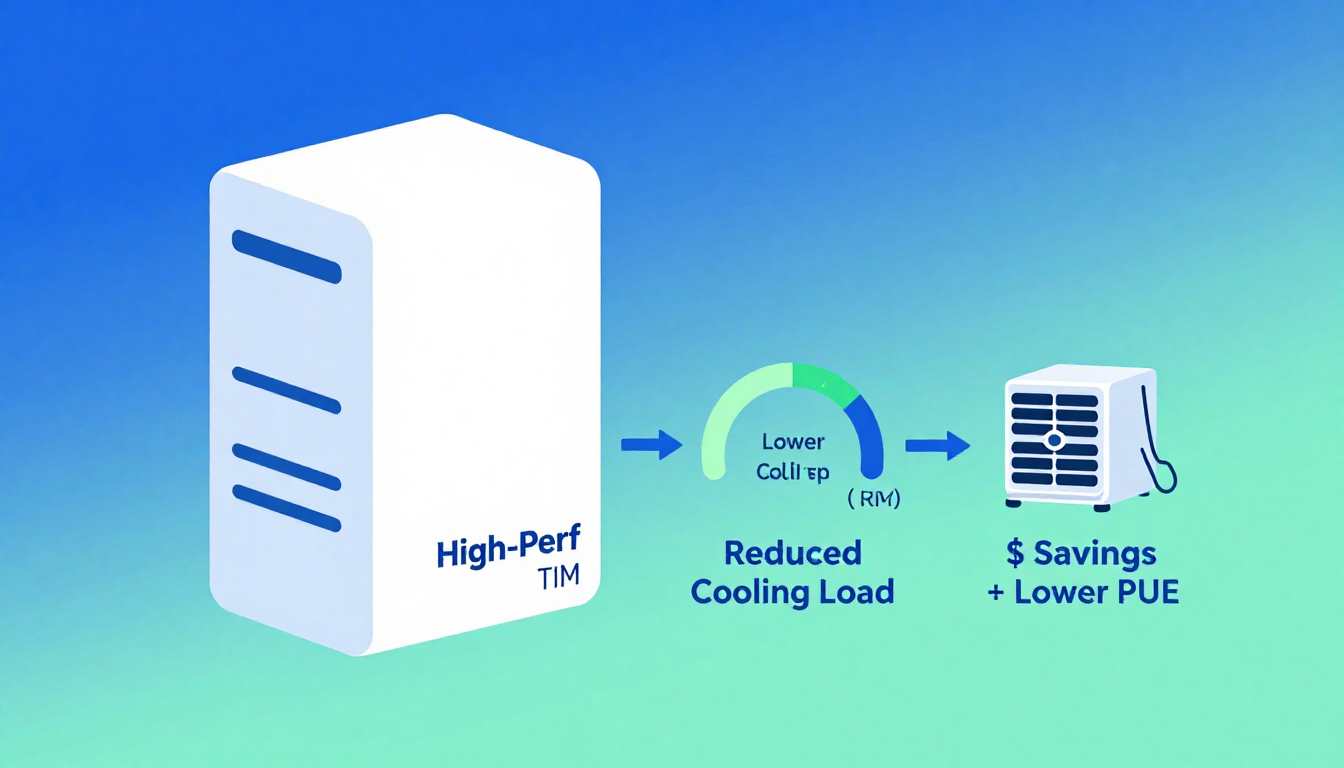
- Improved TIM Performance: A higher-performance TIM (e.g., a stable phase change pad vs. standard grease) lowers the CPU/GPU thermal resistance.
- Lower Component Temperature: This allows the chip to run cooler at the same power, or sustain higher boost clocks.
- Reduced Fan Power: Cooler components mean the server’s internal fans can spin slower. Fan power consumption scales with the cube of RPM. A 20% reduction in fan speed can cut fan power by nearly 50%.
- Increased Chiller Efficiency: The overall heat rejected to the data center’s cooling loop is at a lower temperature, improving the efficiency of chillers and cooling towers.
- Net Result: A lower facility PUE, reduced electricity costs, and potentially greater computational density per rack.
Quantifying the Impact:
A case study on a server with a 300W CPU showed that reducing the TIM’s thermal resistance by 0.03 °C/W allowed fan speeds to be reduced by 15%, saving ~10W per server. In a 10,000-server data center, that’s a 100 kW continuous saving, equating to roughly $100,000 per year in energy costs and a measurable PUE improvement.
Strategic Implementation:
- Bulk Procurement & Standardization: Specify a single, high-reliability TIM for all server deployments and refreshes.
- Scheduled Maintenance: Include TIM replacement in the server lifecycle maintenance schedule (e.g., every 3-4 years) to combat performance degradation from pump-out/dry-out.
- Co-engineering with OEMs: Work with server vendors to implement superior TIMs as a standard or optional configuration.
Viewing the TIM not as a commodity but as a strategic efficiency component transforms it from a cost line item into an investment with a clear, calculable return, contributing directly to sustainability goals and the bottom line.