Inside the Core: The Extreme Demands on Thermal Interface Materials in Nuclear Reactor Monitoring
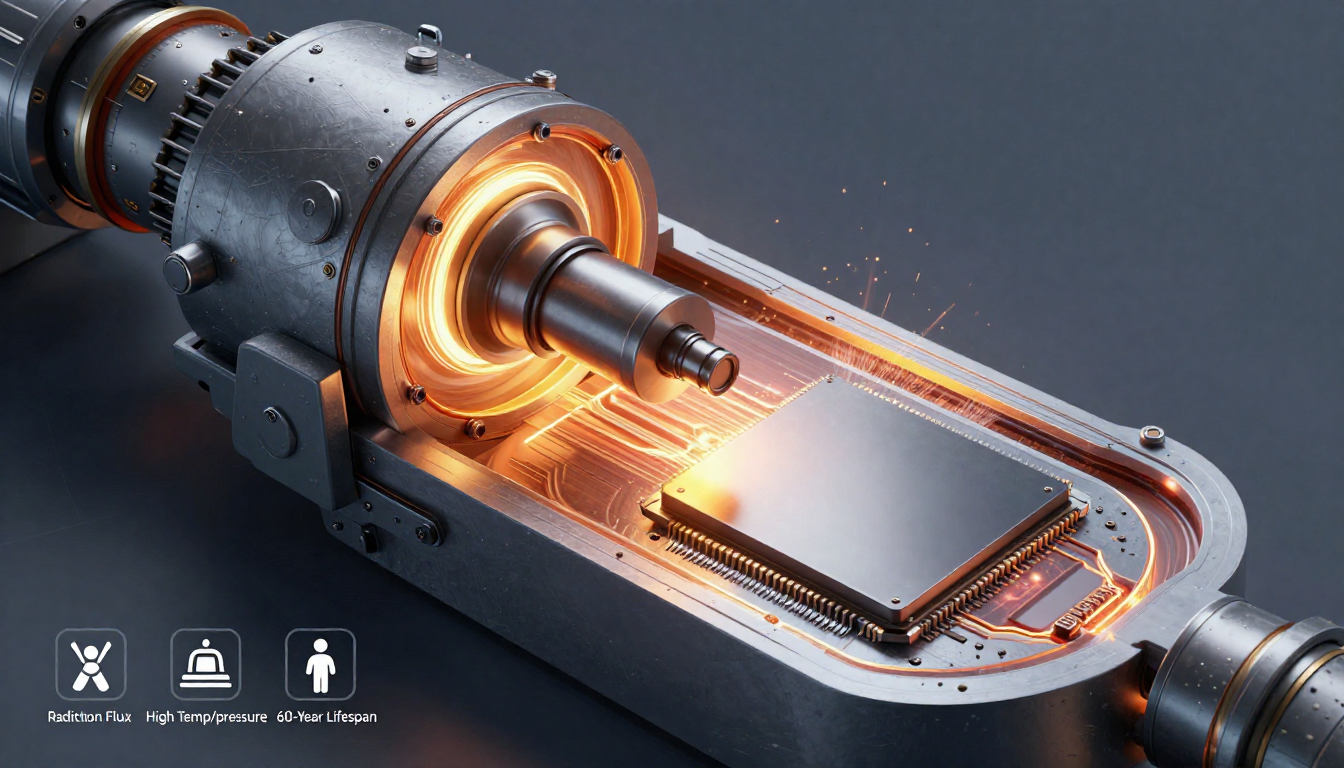
Within a nuclear reactor’s containment vessel, sensors and electronics are exposed to a uniquely hostile combination of factors: intense ionizing radiation (neutrons and gamma rays), elevated temperatures (up to 300°C+ for some locations), high pressure, and a humid, boric-acid-laced environment. The Thermal Interface Materials (TIMs) used here are not just for performance; they are safety-critical components whose failure could compromise monitoring systems. They must be selected from a drastically limited set of qualified materials.
The Degradation Mechanisms:
- Radiolytic Decomposition: High-energy radiation breaks the chemical bonds in organic polymers. This can cause embrittlement, cracking, loss of elasticity, and outgassing of hydrogen or other gases from silicones. Over decades, this can completely destroy a standard TIM’s structure and function.
- Thermal Aging Synergy: The combined effect of radiation and heat accelerates degradation far beyond either factor alone.
- Interaction with Coolant: In Pressurized Water Reactors (PWRs), any material must be compatible with the primary coolant, which is high-purity water with dissolved boron and lithium at high temperature and pressure.
Material Classes for Nuclear Applications:
- Inorganic & Ceramic Materials: Boron nitride sheets, aluminum nitride, or high-purity alumina ceramics are inherently radiation-resistant and stable at high temperatures. They are used as insulating, conductive spacers but require precise machining and high pressure.
- Metal-Based Joints: Indium foils, gold-tin solder, or diffusion-bonded metals offer zero outgassing and are largely unaffected by radiation. They are used for critical, permanent interfaces.
- Specially Formulated, Radiation-Resistant Polymers: Extremely limited selection of highly cross-linked, high-purity polymers (e.g., certain polyimides) that have been tested and shown to have acceptable degradation rates over the intended service life.
Qualification and Lifespan Management:
Materials are subjected to accelerated radiation aging tests (e.g., in research reactor test loops) to predict their 40-60 year lifespan. The qualification process is exhaustive and conservative. Replacement of such TIMs during a reactor’s life is often prohibitively difficult or impossible, so the initial selection must be correct for the entire plant lifetime.
For nuclear engineers, the TIM is a piece of qualified, safety-related equipment. Its selection is governed by stringent codes and relies on a tiny universe of vetted, pedigree-controlled materials with decades of supporting test data.