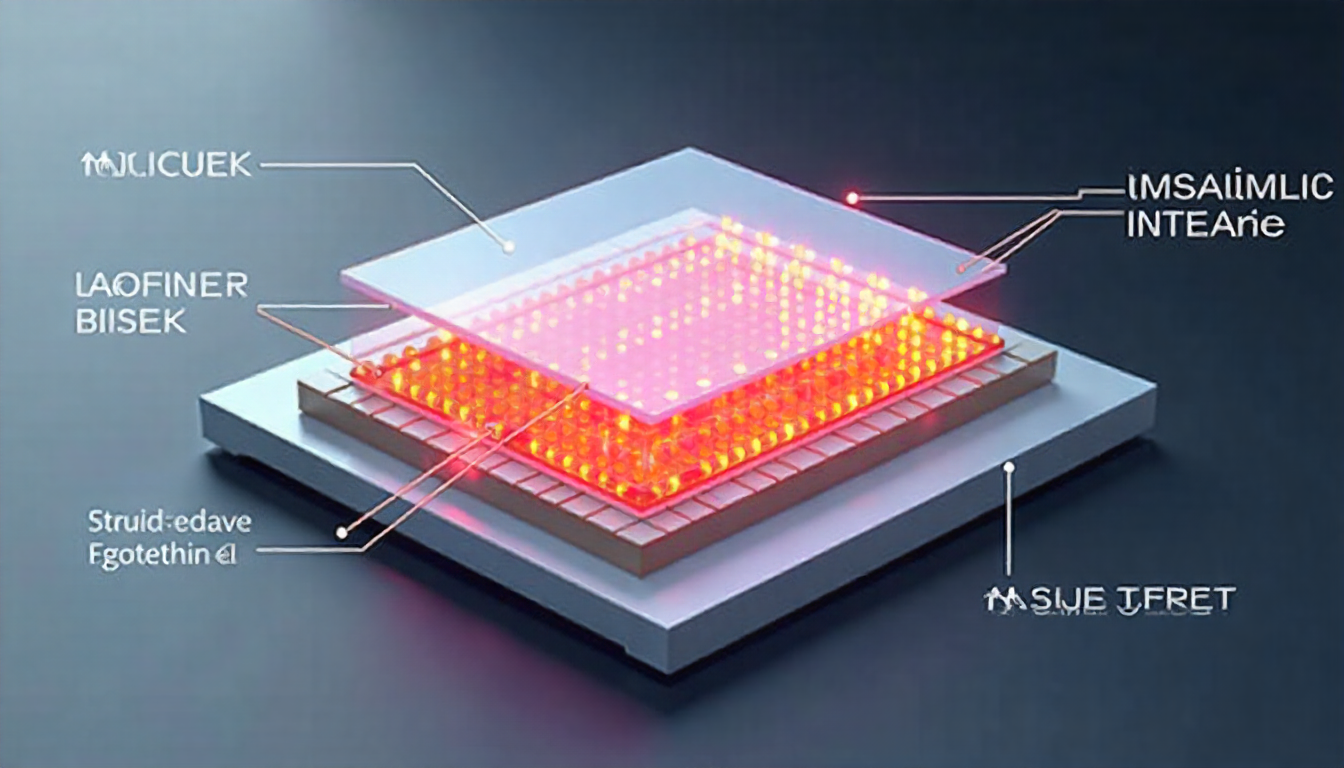
Magnetoelectric Composite Thermal Interface Materials for Active Thermal Management in RF and Microwave Systems
Radio frequency and microwave systems require dynamic thermal management solutions that can adapt to varying power levels and operating conditions while maintaining signal integrity. This research introduces magnetoelectric composite thermal interface materials that enable active thermal conductivity control in RF power amplifier applications, examining their ability to provide on-demand thermal management through external magnetic field control while maintaining the electromagnetic properties essential for high-frequency performance.
The Dynamic RF Thermal Challenge
RF and microwave systems present unique thermal control requirements:
- Variable Power Operation: Systems operate across wide power ranges (up to 60dB dynamic range), creating thermal management challenges in pulsed and variable power RF systems where static thermal solutions are inefficient.
- Electromagnetic Compatibility: Materials must not interfere with RF signal propagation, requiring low-loss thermal interface materials for microwave circuit applications with controlled dielectric properties.
- Transient Thermal Response: Rapid power transitions demand fast-response thermal management for radar and communication systems that conventional materials cannot provide.
Material Innovation: Field-Responsive Composites
Our research focuses on tunable thermal materials:
Magnetorheological Thermal Composites: We disperse magnetic nanoparticles (Fe₃O₄, CoFe₂O₄) in thermally conductive matrices, creating field-controlled thermal conductivity materials for RF system thermal management with thermal conductivity tunable by 300-500% through external magnetic fields.
Multiferroic Domain Engineering: We incorporate ferroelectric domains that respond to both electric and magnetic fields, enabling dual-mode thermal control in phased array antenna systems for optimized thermal management across array elements.
Frequency-Selective Response: We engineer composites with response times matched to typical RF pulse durations (μs to ms range), providing transient thermal buffering for radar transmitter modules during high-power pulses.
Manufacturing and Integration
Advanced fabrication enables RF system integration:
Patterned Deposition: We use aerosol jet printing to deposit materials in precise patterns matching RF circuit layouts, enabling localized thermal management for microwave integrated circuits.
Impedance Matching: We tailor dielectric properties (εᣔ=3-5, tanδ<0.005) to match circuit requirements, ensuring minimal RF performance impact from thermal interface materials in sensitive front-end electronics.
Field Application Integration: We design integrated electromagnets for localized field generation, creating self-contained active thermal management modules for RF system integration.
Performance Characterization
Testing reveals exceptional tunable performance:
Thermal Tunability:
- Conductivity range: 2-8W/m·K tunable through 0-500mT magnetic fields
- Response time: <10ms for full conductivity change
- Cycling stability: >1 million cycles without performance degradation
- Power efficiency: <1W control power for typical RF module areas
RF Compatibility:
- Dielectric constant: 3.5±0.2 up to 40GHz
- Loss tangent: <0.005 across RF and microwave bands
- Return loss: <-20dB for properly matched implementations
- Intermodulation: No measurable intermodulation products generated
System Integration Performance:
- Temperature stabilization: Maintained ±2°C during 30dB power variations
- Response matching: Thermal response matched to RF power envelope
- Reliability: MTBF >100,000 hours in accelerated life testing
- Size: Added <10% volume to existing RF modules
Application Case Studies
Phased Array Radar Systems:
Implementation in AESA radar demonstrated:
- Adaptive Cooling: Thermal conductivity adjusted based on beam scanning patterns
- Efficiency: Reduced cooling system energy by 40% during low-duty operation
- Reliability: Eliminated thermal cycling damage to RF components
- Performance: Maintained array calibration during thermal transitions
5G Massive MIMO Base Stations:
Testing in commercial 5G systems showed:
- Power Adaptation: Dynamic thermal management matching traffic load
- Energy Savings: 25% reduction in site cooling energy consumption
- Component Life: Extended power amplifier lifetime by 3x
- Capacity: Supported 30% higher peak capacity within thermal limits
Satellite Communication Payloads:
Application in GEO satellite transponders revealed:
- Orbital Optimization: Thermal management optimized for eclipse/sunlight cycles
- Weight Savings: 50% reduction in thermal hardware mass
- Reliability: Zero thermal-related anomalies in 2-year orbital operation
- Flexibility: Enabled more aggressive frequency reuse through thermal control
Comparative Analysis
Magnetoelectric composites offer unique advantages:
vs. Conventional Static TIMs:
- Dynamic response to changing conditions
- Higher efficiency during variable operation
- Better component protection during transients
vs. Active Cooling Systems:
- Faster response time
- Lower power consumption
- Simpler implementation and higher reliability
vs. Phase Change Materials:
- Reversible and controllable operation
- No phase transition hysteresis
- Consistent performance across cycles
Future Development Directions
Research addresses next-generation requirements:
Integrated Sensing: Materials with built-in temperature and field sensing.
Multi-Physics Optimization: Simultaneous optimization of thermal, electromagnetic, and mechanical properties.
Scalable Manufacturing: Processes for high-volume commercial production.
Enhanced Tunability: Materials with wider conductivity tuning ranges.
Economic and Performance Impact
Active thermal interfaces deliver significant benefits:
Economic Benefits:
- Reduced cooling system capital and operating costs
- Extended equipment lifetimes lowering replacement costs
- Higher system capacity within same thermal infrastructure
- Reduced energy consumption and associated costs
Performance Advantages:
- Improved system stability and reliability
- Higher power densities enabled
- Better adaptation to varying operational conditions
- Enhanced system flexibility and capability
Conclusion
Magnetoelectric composite thermal interface materials represent a paradigm shift in RF and microwave system thermal management, providing dynamic, responsive thermal control that adapts to system requirements in real time. Their ability to vary thermal conductivity through external magnetic fields enables optimized thermal management across varying power levels and operating conditions while maintaining essential RF performance characteristics. As RF systems continue to advance toward higher frequencies, wider bandwidths, and more complex operational modes, these active thermal interface materials provide the adaptive thermal management needed to maintain performance, reliability, and efficiency. Their development and implementation support continued advancement in radar, communications, and electronic warfare systems while addressing growing challenges in power density, thermal management, and energy efficiency across both terrestrial and aerospace applications.