Not Just Steady-State: Why TIM Thermal Mass and Response Time Matter in Pulsed Applications
Most TIM analysis focuses on steady-state performance—dissipating a constant heat load. However, a growing class of electronics, from automotive lidar to 5G power amplifiers, operates in pulsed or burst mode with high peak power and low duty cycles. For these, the TIM’s transient behavior—how quickly it reacts to a spike in heat—becomes critical.
The Concept of Thermal Mass and Time Constant:
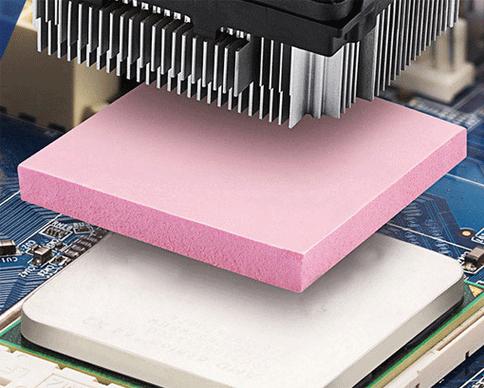
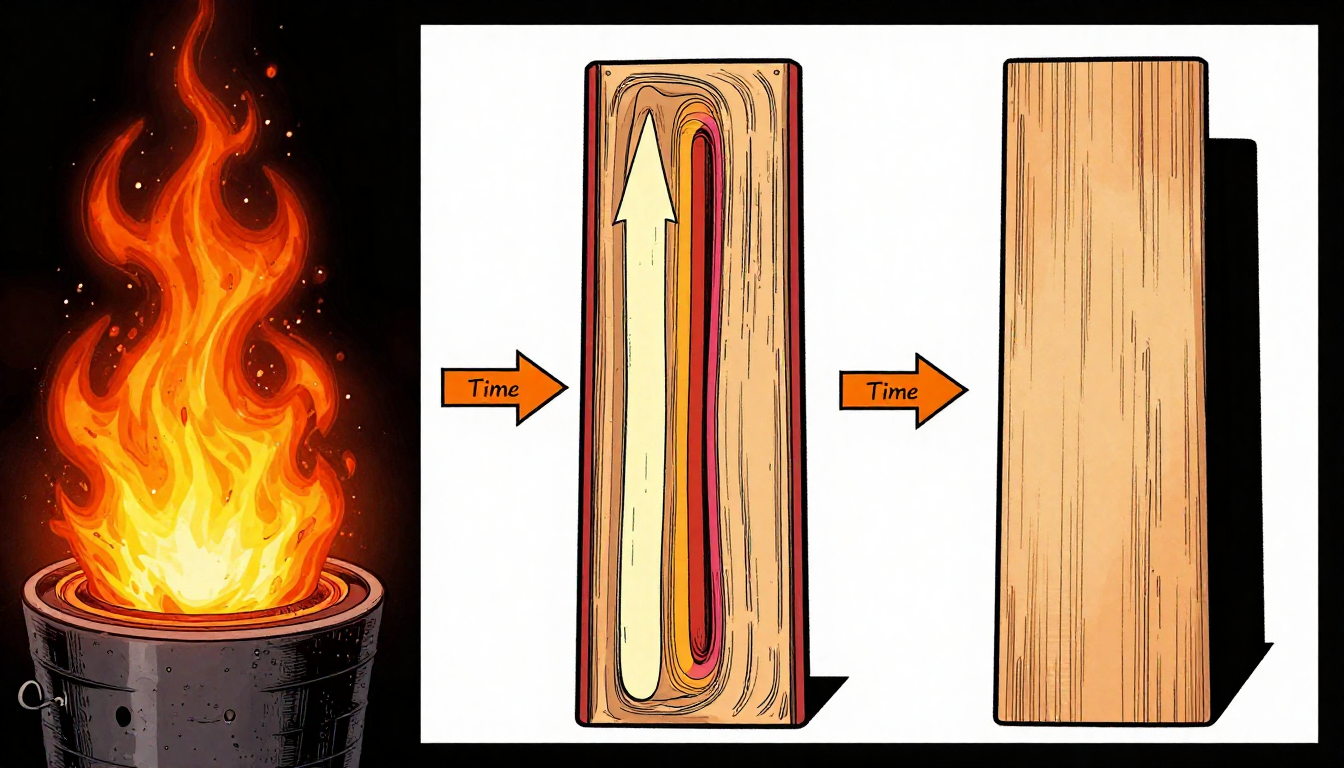
A TIM layer isn’t just a resistor; it’s also a capacitor. It stores thermal energy (has thermal mass). When a heat pulse hits, the TIM itself must heat up before it can conduct the full heat flux to the sink. This delay is characterized by its thermal time constant.
Key Factors Influencing Transient Response:
- Thickness is a Double-Edged Sword:
- Thin Pad: Has low thermal mass, so it heats up quickly (fast time constant), allowing heat to pass through rapidly. However, it may have higher thermal resistance.
- Thick Pad: May have lower bulk resistance but higher thermal mass. It acts as a heat soak, absorbing the initial pulse and slowing the transfer to the heatsink, potentially causing a higher peak junction temperature during the pulse.
- Material Properties: Volumetric Heat Capacity (ρCp):
This product of density (ρ) and specific heat (Cp) defines how much energy a material stores per degree per volume. A TIM with a lower ρCp will have a faster transient response for a given thickness.
Designing for Pulsed Loads:
The optimal TIM for pulsed applications often differs from the steady-state choice. It may be a thinner, lower-mass layer that prioritizes fast reaction time, even if its steady-state resistance is slightly higher. Engineers must model the entire thermal circuit, including capacitances, using tools capable of transient analysis.
For components that live and die by their peak temperature during a microsecond burst, don’t just look at the TIM’s resistance—examine its reactance. We can provide data on material thermal diffusivity to help model these critical transient scenarios.