Sealing the Deal: TIM Selection and Integration for Liquid Cold Plate Systems
Liquid cold plates offer unmatched cooling capacity, but they transfer all thermal management complexity to a single, critical interface. The Thermal Interface Material (TIM) between the component and the cold plate faces extreme conditions: very high clamping pressure, significant shear forces from CTE mismatch, and potential exposure to coolant in case of a leak. Standard TIM selection rules do not apply.
The Liquid Cooling TIM Challenge Triad:
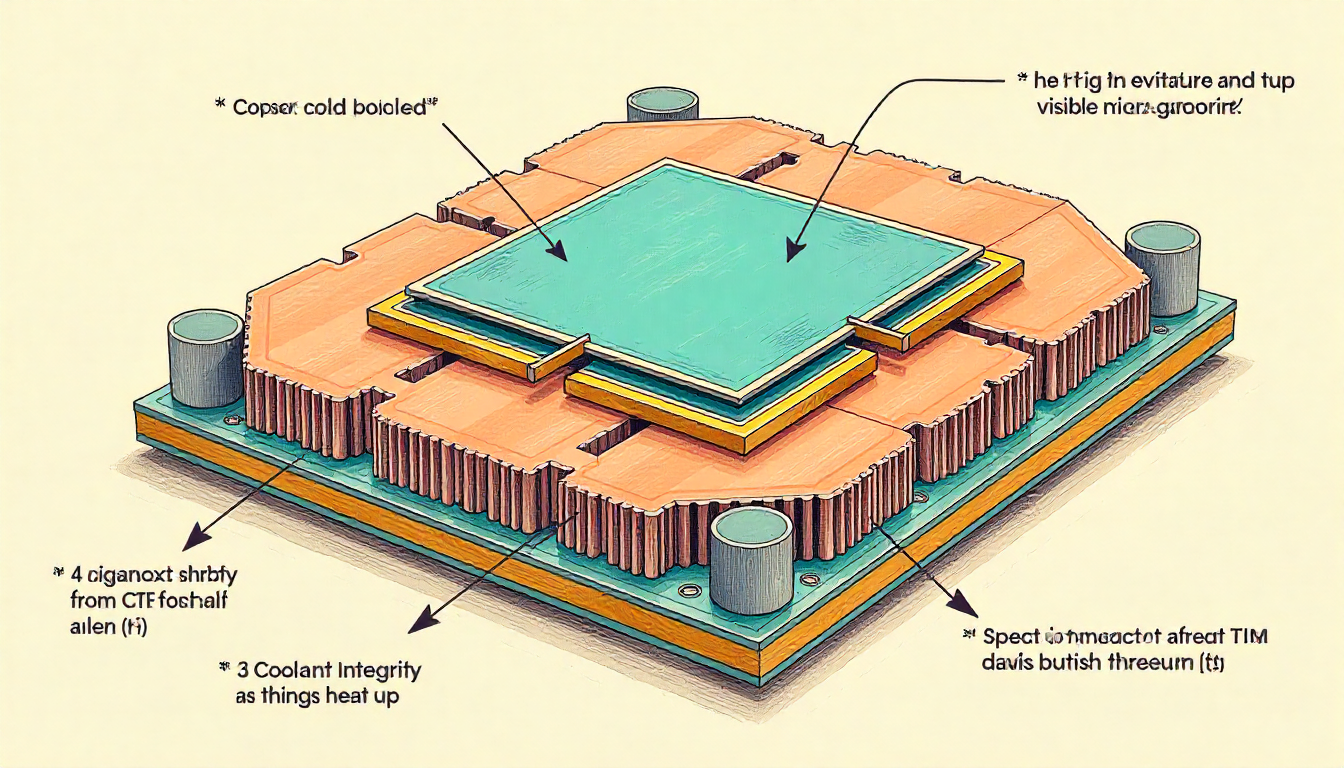
- Extreme Pressure & Low BLT: Cold plates are often bolted directly to the substrate with high force (50-200 psi) to ensure flatness and minimize Bond Line Thickness (BLT). The TIM must not extrude or flow excessively under this pressure.
- Massive Shear Stress: The difference in thermal expansion between a silicon die and a copper cold plate is large. During power cycling, this creates lateral shear forces that can mechanically pump out greases or delaminate pads.
- Environmental Compatibility: The TIM must be stable and non-reactive in the unlikely event of coolant (often a glycol/water mix) contact. It should also have low outgassing to avoid contaminating the coolant loop if permeation occurs.
Optimal TIM Strategies for Liquid Cooling:
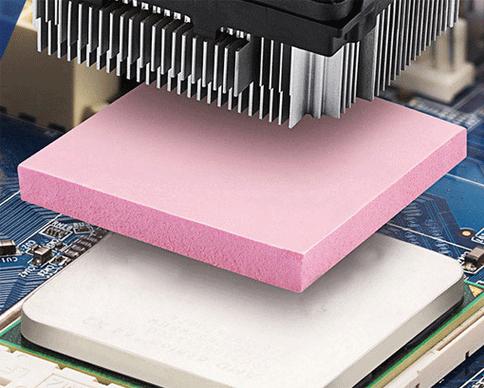
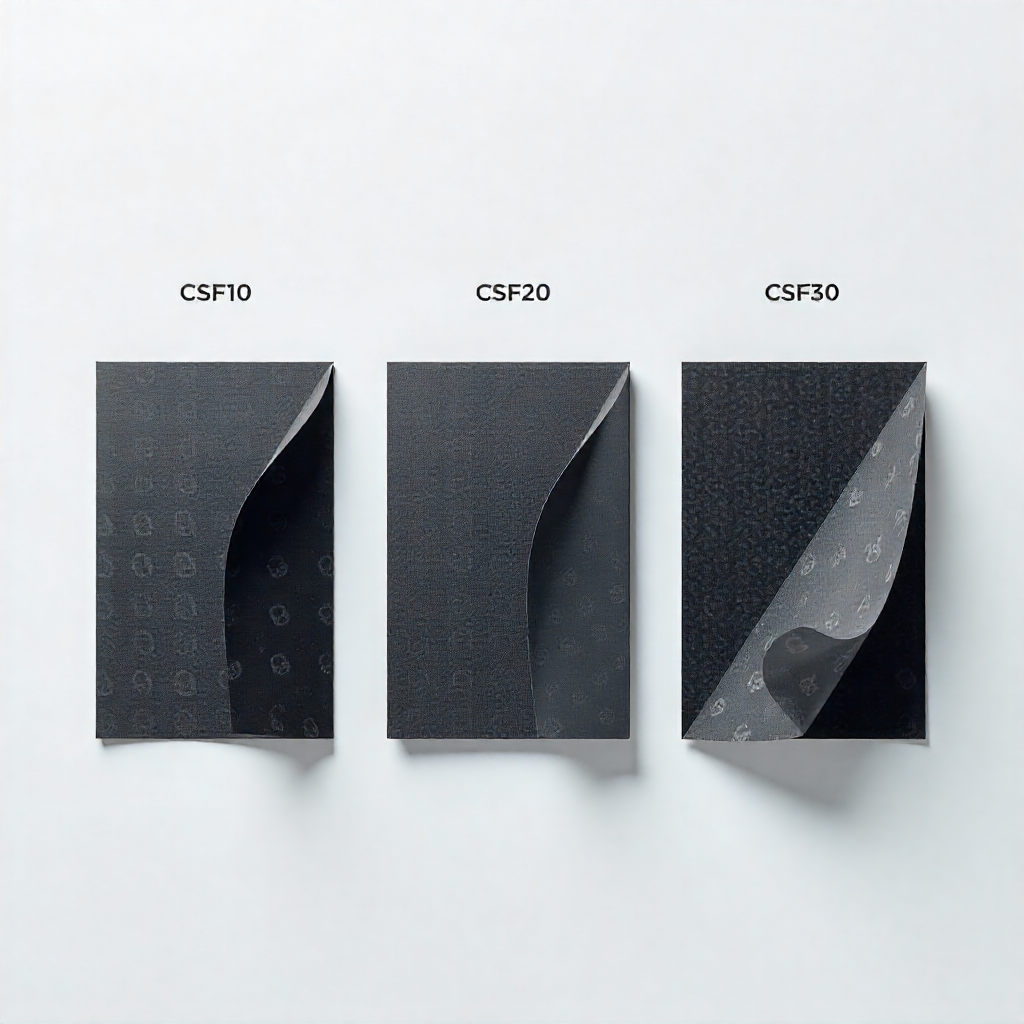
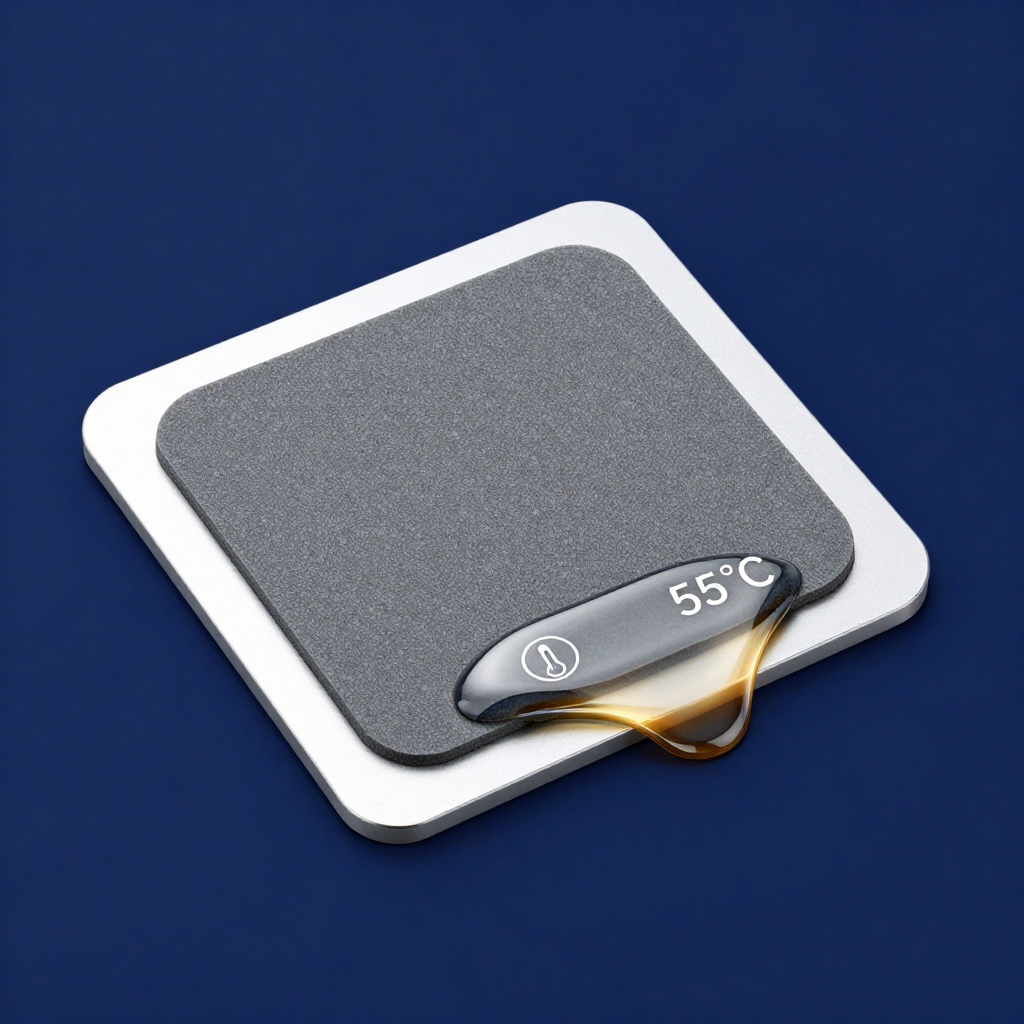
- Phase Change Pads: An excellent choice. They are solid for handling, conform under heat and pressure to achieve a thin BLT, and crucially, resolidify to resist pump-out from shear stress. They provide a balance of performance, reliability, and clean application.
- High-Performance Thermal Grease: Can achieve the lowest initial thermal resistance but is highly susceptible to long-term pump-out under the shear stresses of a rigid cold plate mount, leading to performance degradation.
- Liquid Metal: Offers the ultimate thermal performance for direct-die cooling but introduces risks of electrical shorting, corrosion (galinstan with aluminum), and requires extreme care in application and containment.
- Thermally Conductive Adhesives/Epoxies: Provide permanent attachment and eliminate pump-out but make rework impossible and have higher thermal resistance.
System Integration Tip: The mechanical design must ensure even pressure distribution across the entire die. Warped cold plates or uneven mounting can cause localized hotspots that even the best TIM cannot overcome. A well-engineered phase change pad often provides the best balance of performance, reliability, and manageable risk for production liquid-cooled systems.