Smart TIMs for Hybrid Cooling: Adaptive Interfaces in Next-Gen Systems
The evolution of cooling technology is moving toward hybrid systems that intelligently combine multiple cooling methods—air, liquid, and phase change—based on real-time thermal demands. At the heart of these adaptive systems lies a new generation of intelligent thermal interface materials. These smart TIMs for dynamic cooling environments don’t just passively transfer heat; they actively respond to changing conditions, optimizing performance and energy efficiency in real-time across diverse operating scenarios from idle to peak computational loads.
The Science Behind Adaptive Thermal Interfaces
Intelligent TIMs achieve their responsive behavior through advanced material engineering:
- Phase-Change Materials with Tunable Transitions: Unlike conventional PCMs with fixed melting points, adaptive PCMs with broad transition ranges can modulate their thermal conductivity based on temperature. At low loads, they provide standard interface resistance, but as heat flux increases, they transition to a high-conductivity state, effectively creating a self-regulating thermal valve at the component interface.
- Thermochromic & Electroactive Composites: Emerging materials incorporate fillers that change properties with temperature or electrical stimulation. For instance, carbon nanotube-polymer composites that increase alignment—and thus thermal conductivity—when exposed to specific thermal or electrical conditions, enabling programmable thermal pathways in server processors.
- Microencapsulated Thermal Fluids: These materials contain microscopic capsules of fluid that rupture at specific temperatures, releasing high-conductivity nanoparticles that dramatically improve interface performance precisely when and where it’s needed most in high-performance computing modules.
Integration with Hybrid Cooling Systems
Smart TIMs serve as the critical interface layer in sophisticated hybrid cooling architectures:
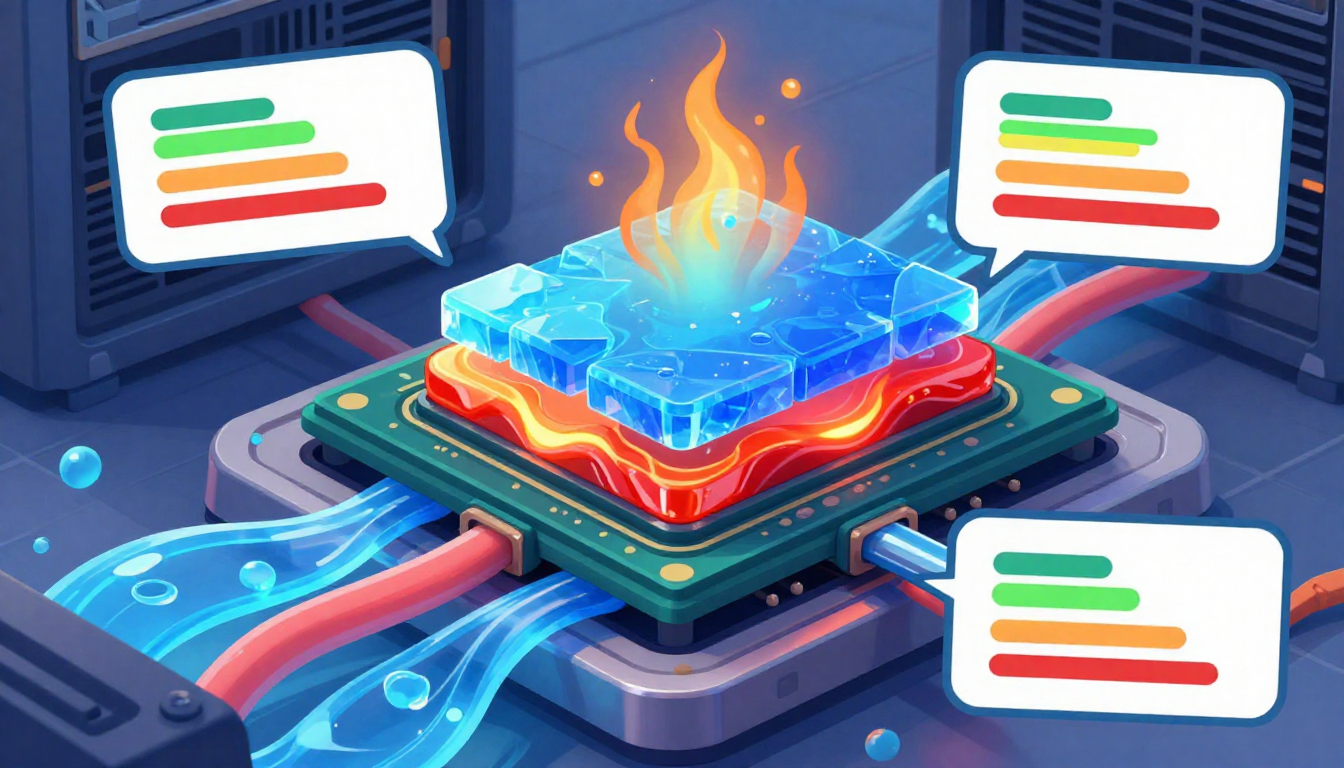
- Air-to-Liquid Transition Zones: In systems that switch between air and liquid cooling based on load, adaptive thermal interface materials ensure seamless thermal handoff. They maintain optimal contact pressure and conductivity as cooling plates engage or disengage, preventing the thermal shock that can damage sensitive semiconductor packages during transition periods.
- Variable Heat Flux Management: For components with dramatically varying heat outputs—common in AI inference processors that cycle between idle and burst modes—smart TIMs adjust their effective thermal resistance dynamically. This prevents overcooling during low utilization (saving energy) while ensuring sufficient cooling capacity during compute-intensive tasks.
- Predictive Failure Prevention: Some advanced formulations incorporate distributed micro-sensors within the TIM matrix that monitor interface degradation, hot spot formation, or contact pressure loss. This enables proactive maintenance scheduling for data center cooling systems before thermal issues impact performance or reliability.
Performance Advantages and Operational Benefits
The implementation of intelligent TIMs delivers measurable improvements:
- Energy Efficiency Optimization: By matching thermal resistance to actual cooling needs, smart TIMs can reduce parasitic cooling energy consumption by 15-25% in mixed-workload environments compared to static, over-provisioned interfaces.
- Extended Component Lifetime: Eliminating thermal cycling stress through gradual property transitions reduces mechanical fatigue on solder joints and package interfaces, potentially extending mean time between failures in enterprise hardware.
- Simplified Thermal Design: The adaptive nature of these materials allows engineers to design for typical rather than worst-case scenarios, enabling more compact and cost-effective cooling solutions for edge computing devices and other space-constrained applications.
- Improved Performance Consistency: By maintaining more stable junction temperatures across varying loads, smart TIMs help ensure consistent clock speeds and computational throughput in variable workload servers, particularly valuable in cloud and HPC environments.
Implementation Challenges and Solutions
Deploying intelligent TIMs requires addressing several practical considerations:
- Control System Integration: Effective use demands integration with thermal management controllers and building management systems in data centers. Standardized communication protocols for smart material feedback in cooling loops are still evolving.
- Reliability Under Cyclic Operation: Materials must withstand potentially thousands of property transition cycles without degradation. Accelerated testing protocols that simulate decade-long operational profiles in hyperscale data centers are essential for qualification.
- Cost-Benefit Analysis: While currently premium solutions, the total cost of ownership calculation must factor in energy savings, reduced maintenance, and extended hardware lifespan. As manufacturing scales, prices are projected to approach conventional TIMs within 3-5 years.
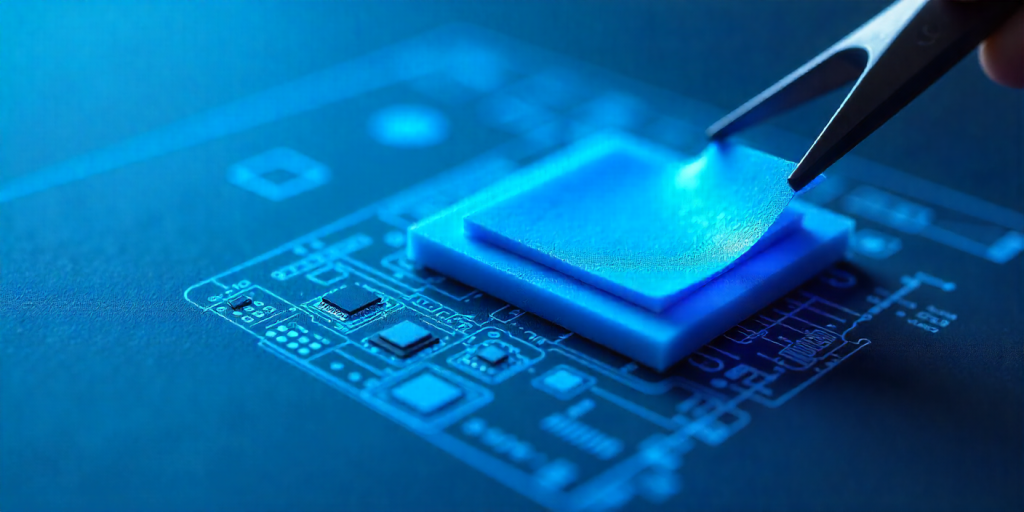
- Application and Maintenance Procedures: Some smart TIMs require specific curing conditions, activation sequences, or specialized application tools. Developing standardized deployment methodologies for field technicians will be crucial for widespread adoption.
Future Applications and Industry Impact
Looking forward, intelligent TIM technology is poised to enable several transformative applications:
- Autonomous Vehicle Compute Platforms: Self-regulating interfaces that adapt to the extreme thermal environments encountered in autonomous driving systems, from cold starts to sustained highway computation.
- Wearable Medical Devices: Smart TIMs that optimize heat transfer based on both device operation and user skin temperature variations, improving comfort and battery life in continuous health monitoring systems.
- Space-Constrained 5G Infrastructure: Adaptive materials that provide adequate cooling in compact millimeter-wave antennas while minimizing size, weight, and power consumption—critical factors in dense urban deployments.
- Quantum Computing Systems: Ultra-stable smart interfaces that maintain precise thermal conditions for qubit operation while compensating for external temperature fluctuations and internal heat generation variations.
The development of intelligent thermal interface materials represents a paradigm shift from passive heat transfer to active thermal management. By embedding responsiveness directly into the material interface, these solutions are enabling the next generation of efficient, reliable, and adaptive cooling systems across the entire spectrum of computing and electronics applications.