Surface Topography and TIM Performance: Why a 3D Surface Map is More Important Than Ra
Every engineer knows surface roughness affects TIM performance, but the common specification of “Ra < 1.6 µm” is dangerously insufficient. Ra is an average, and two surfaces with the same Ra can have radically different topographies, leading to vastly different thermal contact. To minimize interfacial resistance, you must think in three dimensions.
Beyond Ra: Key Surface Texture Parameters:
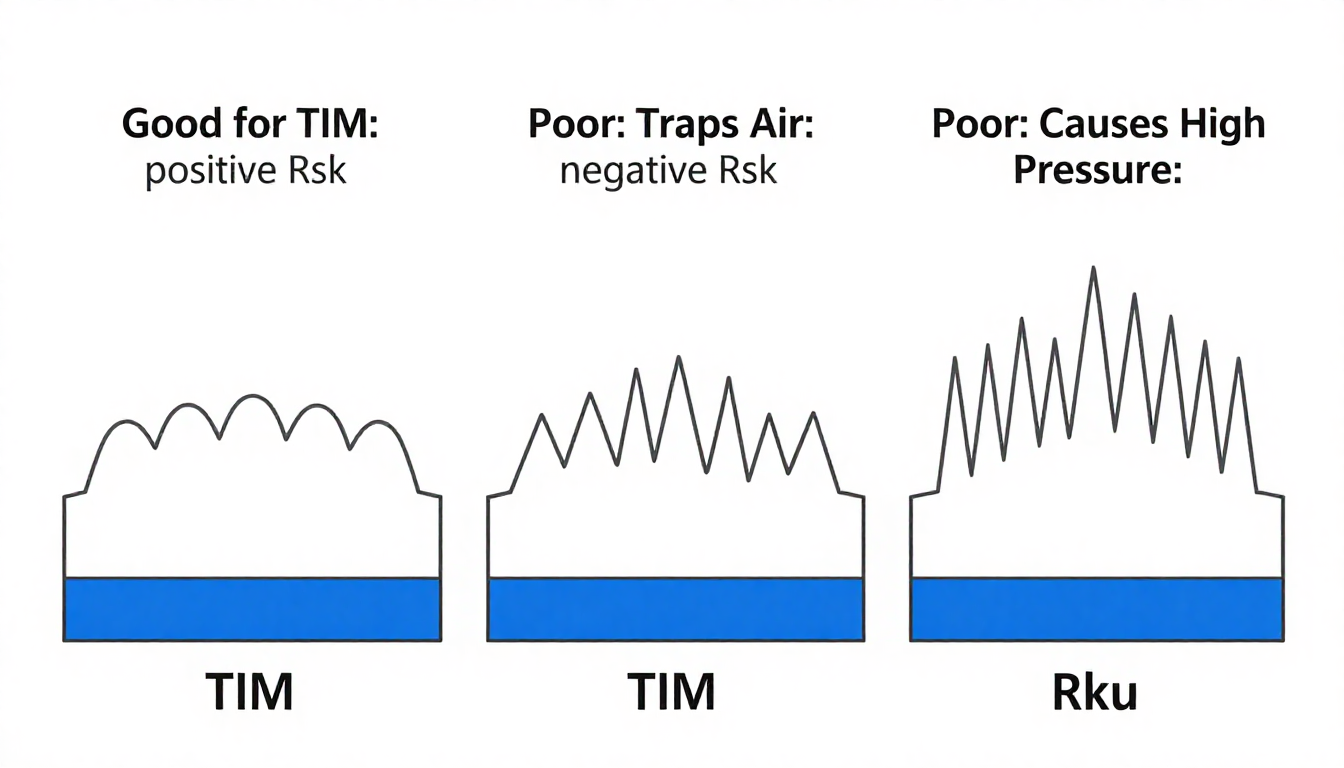
- Skewness (Rsk): This indicates if a surface is peaked (positive Rsk) or porous/valleyed (negative Rsk). A surface with negative Rsk has deep valleys that a TIM may not fill, trapping insulating air. A slightly peaked surface (positive Rsk) provides more peaks for initial contact, which the TIM can then flow around.
- Kurtosis (Rku): This measures the “sharpness” of the roughness profile. A high Rku (spiky surface) concentrates pressure on fewer points, potentially piercing soft TIMs. A lower Rku (rounded peaks) promotes more uniform contact pressure distribution.
- Waviness: This is the broader, more gradual deviation from flatness (bow, convexity). A surface can have excellent Ra but terrible waviness, creating a large central air gap no TIM can fill without excessive pressure. Controlling flatness or waviness over the contact area is often more critical than Ra for large chips.
The Ideal Surface for a Phase Change TIM:
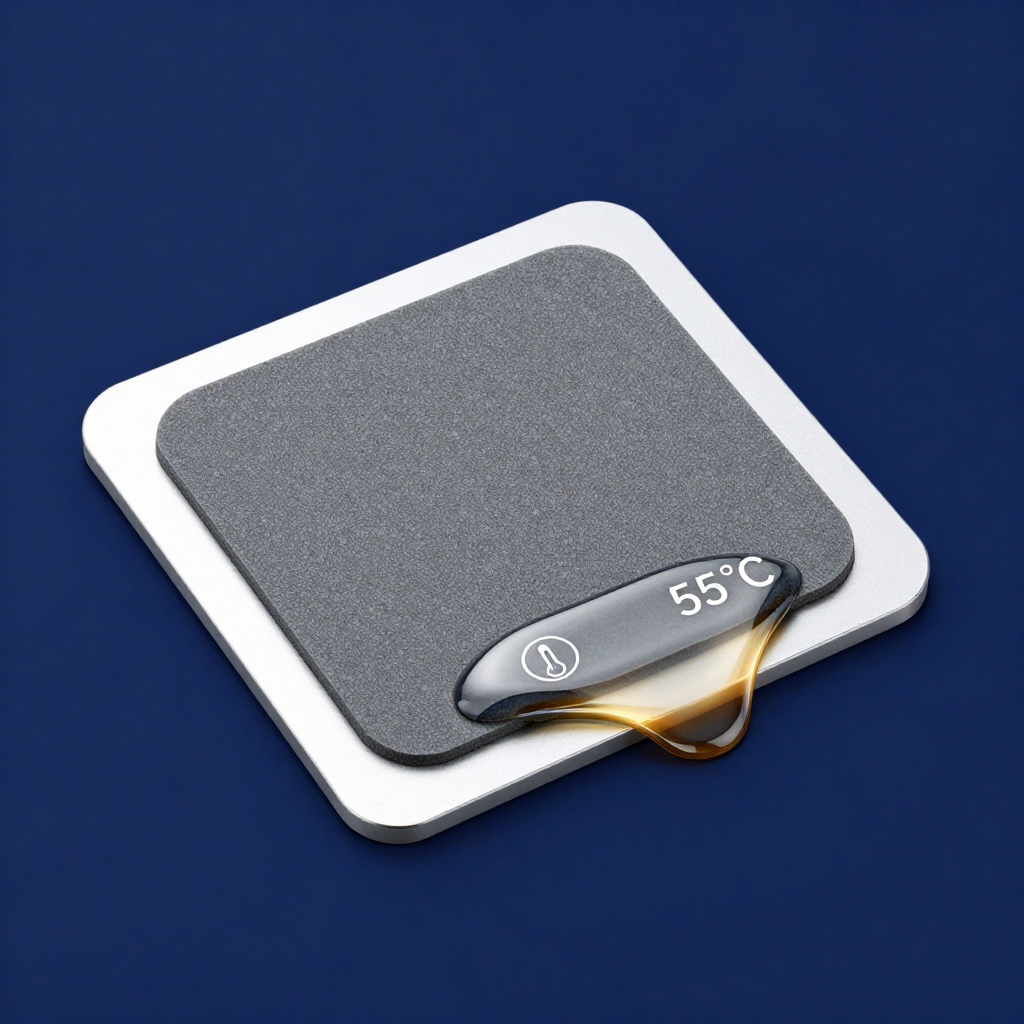
For a phase change material that flows upon heating, the optimal surface isn’t necessarily mirror-polished. A controlled, uniform, slightly peaked (positive Rsk) surface with good flatness provides a stable mechanical scaffold. Upon heating, the material flows into the valleys, displacing air without being squeezed out of the contact zone.
Actionable Advice:
- Specify multiple surface texture parameters (Ra, Rsk, flatness) on your heatsink and cold plate drawings.
- For critical interfaces, consider surface mapping via optical profilometry to visualize the true 3D landscape the TIM must conquer.
- Share this surface data with your TIM supplier. It allows for a more informed recommendation on material hardness and phase change characteristics to achieve the lowest possible thermal resistance.