Testing Thermal Pads: Ensuring Long-Term Reliability
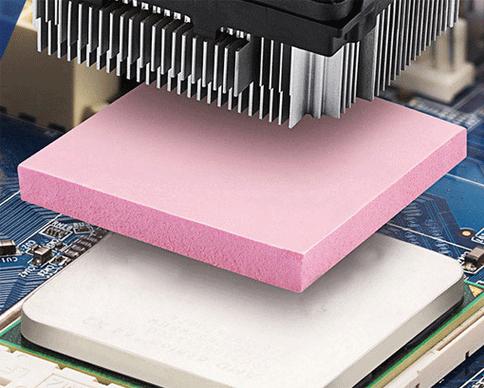
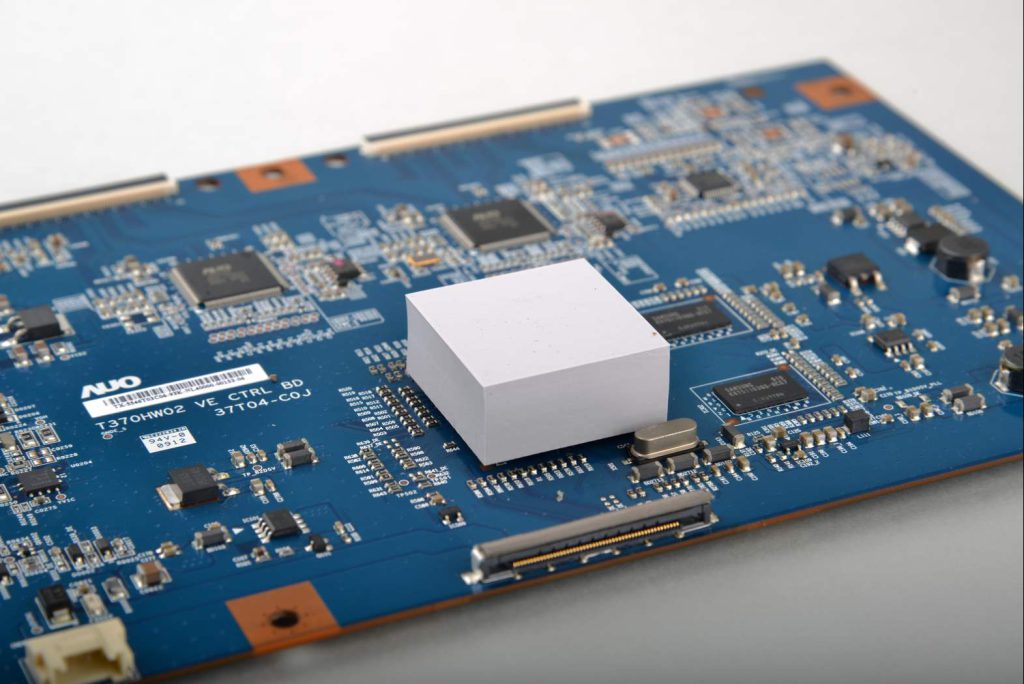
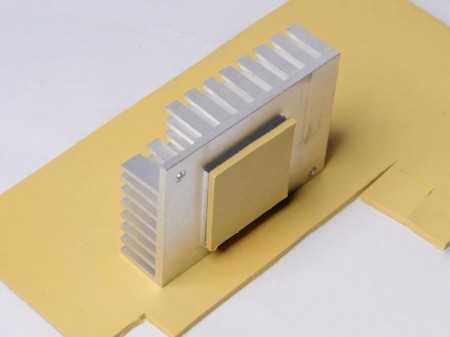
A thermal interface material (TIM) might perform perfectly on day one, but will it still be effective after a year of continuous use or thousands of power cycles? For mission-critical applications in aerospace, automotive, or industrial electronics, understanding and validating long-term reliability of thermal pads is not optional—it’s imperative. This deep dive explores the key tests and failure modes that separate high-quality materials from the rest.
Accelerated Life Testing: Simulating Years in Days
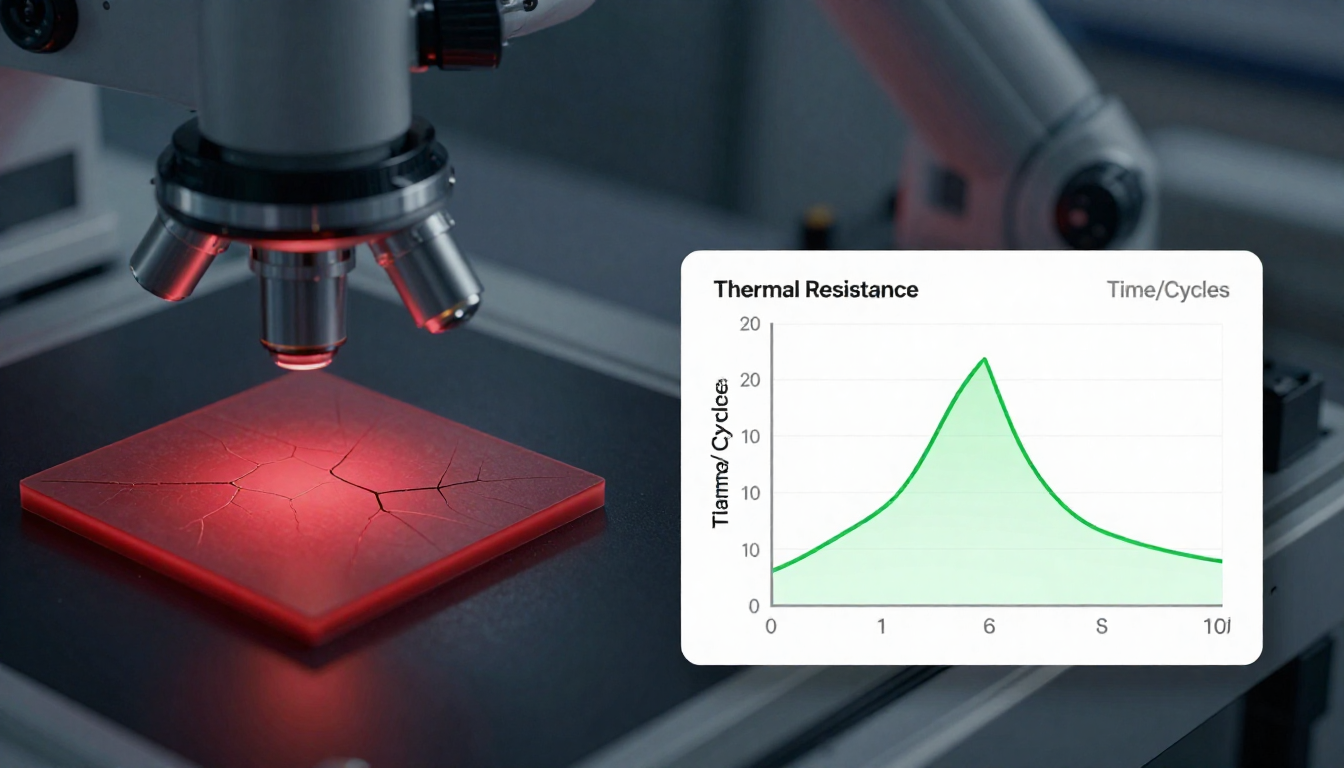
Manufacturers use standardized environmental tests to predict a material’s lifespan. Key among these is thermal cycling testing per JEDEC or AEC standards, which subjects the pad to extreme temperature swings (e.g., -55°C to +125°C) to simulate years of daily use. The goal is to check for cracking or delamination of thermal interface materials under stress. Similarly, high temperature and humidity aging tests (85°C/85% RH) accelerate chemical changes, helping identify pads prone to the pump-out effect or silicone oil bleeding.
Common Failure Modes and Their Root Causes
Understanding why pads fail is the first step to prevention:
- Loss of Contact Pressure (Compression Set): This is the most common silent failure. A pad that undergoes excessive permanent compression set loses its spring-back, reducing the clamping force on the component. This leads to increased thermal resistance over time. Selecting materials with a low compression set percentage (e.g., <20% after 22hrs at 150°C) is critical for maintaining thermal performance in screw-mounted assemblies.
- Chemical Degradation & Outgassing: In sensitive environments like optical systems or satellite electronics, volatile components can evaporate from the pad (outgassing) and condense on lenses or sensors, causing damage. Specifying low-outgassing thermal pads validated per NASA standards is essential.
- Electrical Property Drift: For insulating pads, it’s vital that dielectric strength does not degrade with age. Testing for volume resistivity stability after thermal aging ensures the pad will not become a conductive path and cause a short circuit later in the product’s life.
Building a Robust Qualification Plan
To select a reliable thermal interface material, engineers should request full test reports from suppliers. Look for data on thermal impedance stability after 1000+ cycles, weight loss after high-temperature exposure (indicating volatility), and hardness change over time. For applications involving vibration resistance in automotive or industrial gear, shear and peel adhesion tests are also crucial. By prioritizing proven longevity of thermal gap fillers over initial cost, you invest in reducing field failures and warranty returns, securing the durability of your end product.