The Clean Room for Heat: Low Outgassing TIMs for Vacuum and Sensitive Optical Systems
In the hard vacuum of space or the controlled environment of a sensitive instrument, traditional Thermal Interface Materials (TIMs) pose a hidden threat: outgassing. The slow release of volatile compounds can condense on cold optical surfaces, foul delicate sensors, degrade coatings, and compromise vacuum integrity. For these applications, thermal performance is secondary to material purity and stability.
The Science of Outgassing & Key Standards:
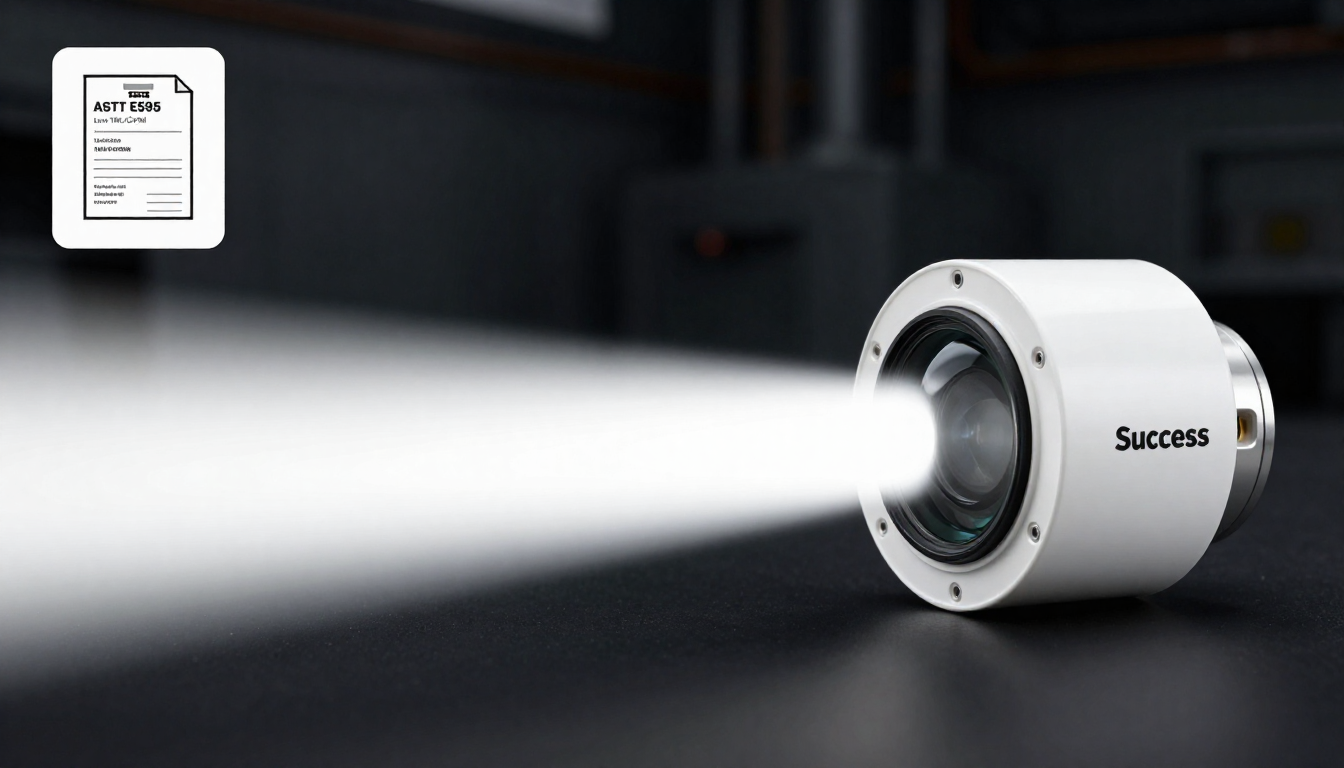
All polymers release some volatiles, especially under heat and vacuum. The industry standard test, ASTM E595, quantifies this:
- Total Mass Loss (TML): Must typically be <1.0%. Indicates overall volatility.
- Collected Volatile Condensable Materials (CVCM): The critical metric. Must often be <0.10%. This measures the “bad” stuff that re-condenses on critical surfaces like lenses, mirrors, or cryogenic coolers.
Consequences of Using a Standard TIM:
- Optics Fouling: Condensed hydrocarbons form a hazy, scattering film on lenses and laser windows, permanently reducing transmission and degrading beam quality.
- Sensor Contamination: In mass spectrometers or particle detectors, contaminants create noise, false signals, and reduce sensitivity.
- Vacuum Degradation: Continuous outgassing raises the chamber pressure, increasing pump load and potentially interfering with processes (e.g., thin-film deposition).
Solutions: Materials Engineered for Purity
- Specially Purified & Cured Silicones: Undergo extra processing to remove low-molecular-weight siloxanes.
- Non-Silicone Alternatives: Polyolefin, acrylic, or polyimide-based materials often have intrinsically lower outgassing profiles.
- Metal-Based Interfaces: Indium foil, solder, or sintered silver joints have near-zero outgassing but come with other trade-offs (conductivity, process temperature).
Specification and Verification:
Never assume a commercial TIM is suitable. You must:
- Explicitly Specify “Low Outgassing per ASTM E595” with required TML/CVCM limits in your RFQ.
- Demand Certified Data from the supplier for the exact lot of material.
- Consider In-House Bake-Out: For ultra-critical systems, a pre-installation vacuum bake of the TIM can drive off initial volatiles.
In these extreme environments, the TIM is not just a thermal part; it is a critical contamination control component. Selecting the wrong one can ruin a multi-million dollar instrument.