The King of Conductivity: When Diamond-Filled Thermal Paste is Worth the Premium
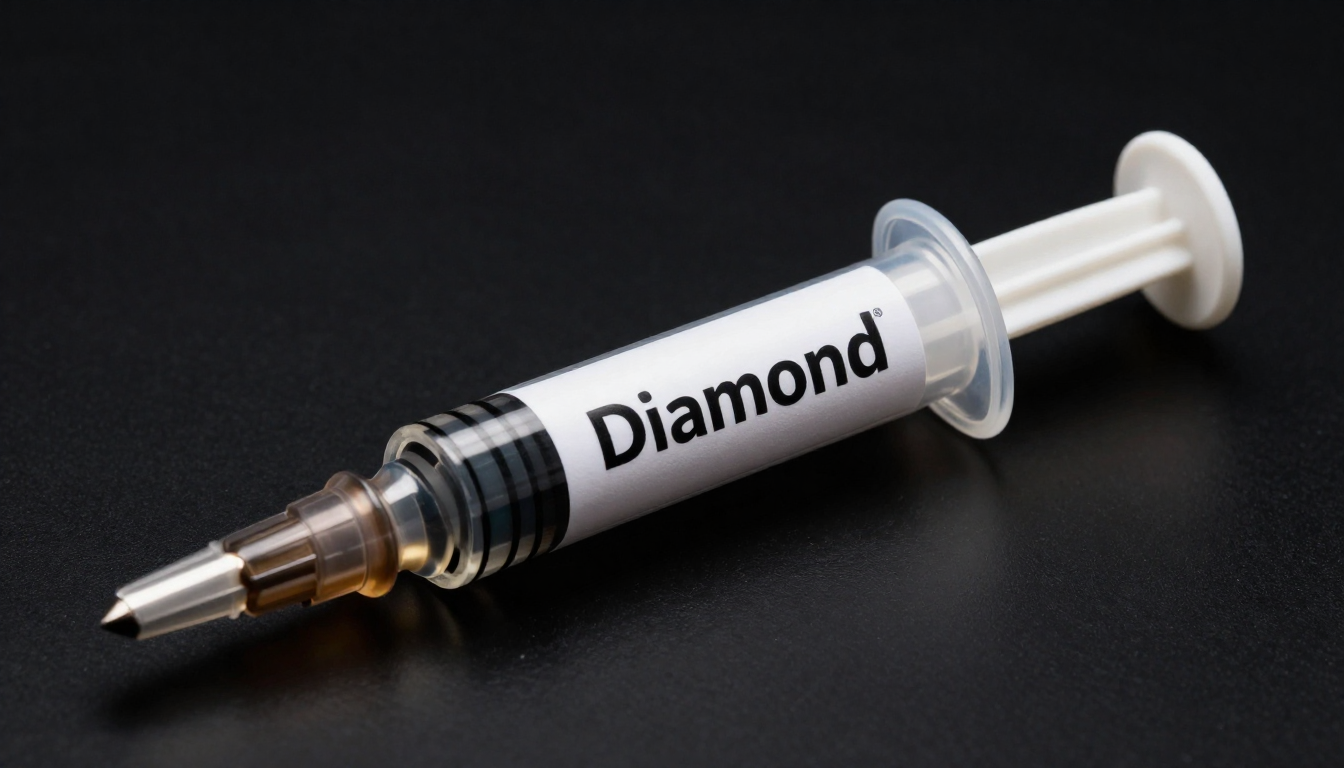
In the relentless pursuit of the lowest possible thermal resistance, one filler material reigns supreme: diamond. With a bulk thermal conductivity of ~2000 W/m·K, synthetic diamond powder is the ultimate additive for thermal pastes. The resulting composites promise unmatched performance but come with significant trade-offs in cost, handling, and application, making them a tool for specific, demanding use cases.
Why Diamond?
Diamond’s crystal lattice transmits phonons (heat vibrations) with minimal scattering. When finely milled and properly dispersed in a high-quality carrier fluid (often a specialized hydrocarbon or silicone oil), it creates a paste where the heat transfer pathways are dominated by these ultra-conductive particles. Pastes can achieve thermal conductivity ratings of 10-15+ W/m·K, surpassing even high-end metal-filled pastes.
The Practical Realities and Challenges:
- Cost: Synthetic diamond powder is expensive. A small syringe of premium diamond paste can cost 5-10x more than a standard ceramic paste.
- Abrasiveness: Diamond is the hardest known material. The paste can be micro-abrasive to soft surfaces like aluminum heatsink bases or nickel plating if applied and removed frequently. It is generally safe for copper and direct-die silicon.
- High Viscosity & Application: These pastes are often thick. They require careful application (the pea method works) and adequate mounting pressure to spread into a thin layer.
- Diminishing Returns: The performance gain over a very good silver paste (8-12 W/m·K) might only be 1-3°C under extreme loads. The value is for systems where that last degree is critical.
Ideal Use Cases:
- Extreme CPU/GPU Overclocking (Delidded): Applied directly to the silicon die for world-record attempts.
- High-Power LED Modules: Where maximum heat extraction extends lifespan and maintains luminosity.
- Specialized RF & Power Electronics: For small-area, very high heat flux devices where performance outweighs all other factors.
Diamond paste is not for everyday builds. It is a specialist’s tool for pushing the absolute limits. For the vast majority of industrial and consumer applications, the cost/benefit ratio favors high-quality phase change pads or metal pastes. But for those chasing the pinnacle, diamond is the unchallenged material of choice.