The Link Between TIM Stability and Preventing “Silent” Semiconductor Failures
While catastrophic thermal shutdown grabs attention, a more insidious threat exists: silent, cumulative degradation leading to premature semiconductor failure. A key but often overlooked accelerator of this process is an unstable Thermal Interface Material (TIM). The link is electromigration.
The Physics of the Problem:
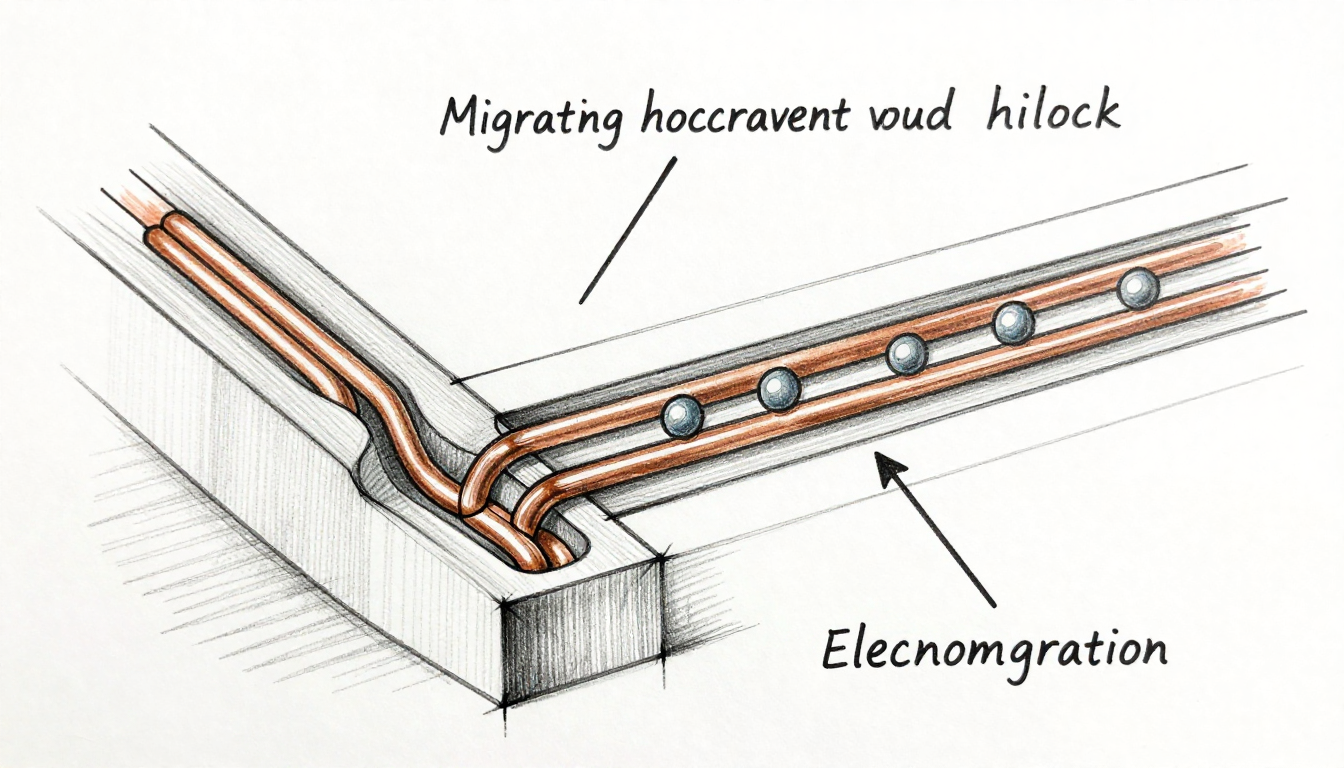
Electromigration is the gradual movement of metal atoms in a chip’s interconnects due to high current density. Its rate is exponentially dependent on junction temperature (Tj). Even a seemingly modest, sustained increase in Tj (e.g., 10-15°C) can double or triple the rate of electromigration, drastically shortening the chip’s mean time to failure (MTTF).
How an Unstable TIM Becomes the Catalyst:
- Progressive Performance Loss: A TIM that suffers from pump-out, dry-out, or phase separation over time causes its thermal impedance to gradually increase.
- The Rising Temperature Spiral: This increased impedance raises the component’s operating Tj. The higher temperature further accelerates the TIM’s own degradation and, crucially, exponentially accelerates electromigration within the silicon.
- The “Silent” Outcome: The device doesn’t suddenly overheat. It operates “within spec” but at a progressively higher temperature until, months or years later, a critical interconnect fails, causing a functional fault that is difficult to trace back to the original TIM choice.
Designing for Lifetime Stability:
Mitigating this risk requires selecting TIMs with data-backed long-term thermal stability. Look for materials validated in extended high-temperature aging and thermal cycling tests with minimal change in thermal impedance. Phase change materials that resist pump-out are inherently advantageous here, as they maintain a stable thermal junction.
Understanding this chain reaction transforms the TIM from a simple gap-filler to a critical reliability component. Specifying a high-stability TIM is a direct investment in lowering your product’s long-term failure rate and protecting its functional integrity over its entire service life.