The Metal Bond: When Sintered Silver Thermal Interface Materials Are the Only Option
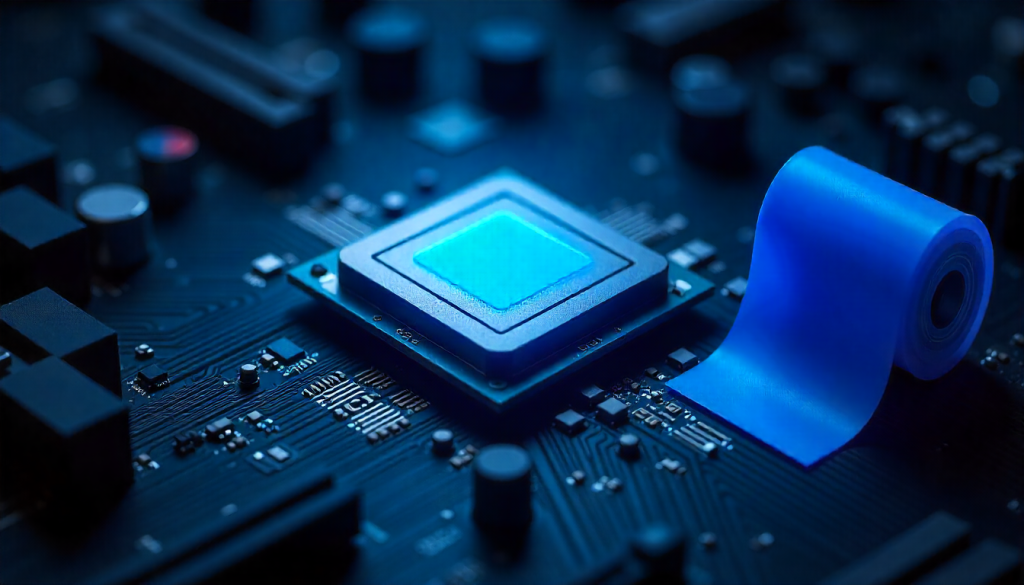
When heat fluxes exceed 500 W/cm² and absolute thermal resistance must be minimized, polymer-based TIMs—even the best phase change pads or greases—hit a fundamental barrier: the low intrinsic conductivity of the organic matrix. The solution lies in removing the polymer entirely, using sintered silver (Ag) to form a pure, metallic thermal joint.
What is a Sintered Silver TIM?
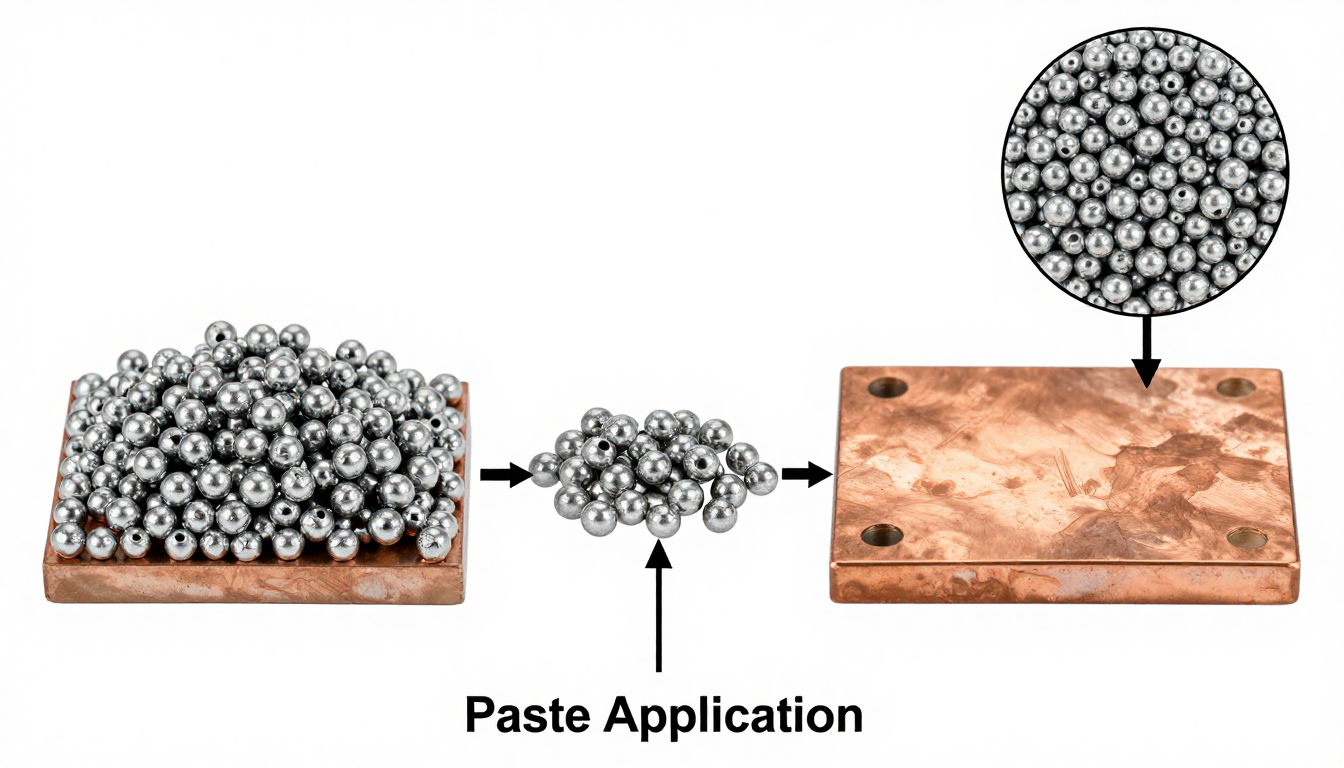
It is a paste or preform composed of micro- or nano-scale silver particles, organic binders, and solvents. When heated under controlled conditions (typically 200-300°C), the binders burn off and the silver particles diffuse into each other (sinter), forming a dense, porous, and highly conductive metallic layer. The result is a bond with thermal conductivity approaching that of bulk silver (~430 W/m·K) and extremely low thermal resistance.
Why and Where It’s Used:
- Ultra-High-Power Electronics: Die-attach in EV traction inverters, industrial motor drives, and RF power amplifiers. It is the preferred method for attaching SiC/GaN dies to direct-bonded copper (DBC) substrates.
- Extreme Reliability: The sintered silver joint has a melting point near 960°C, making it immune to remelting during operation. It exhibits superior performance under high-temperature and high-power cycling compared to solder or polymer TIMs.
- Material Compatibility: It can create a robust joint between materials with large CTE mismatch (e.g., Si to Cu) due to the metal’s ductility and strength.
The Trade-Offs: Process Complexity
This performance comes at a cost:
- High Processing Temperature: Requires a dedicated sintering step, often incompatible with standard SMT assembly lines.
- Pressure & Atmosphere: Some formulations require applied pressure; others need a controlled (e.g., nitrogen) atmosphere to prevent oxidation.
- Cost: Silver is expensive, and the process is more complex than applying a pad.
Sintered silver represents the pinnacle of TIM technology. For applications where every millikelvin of temperature rise counts and reliability is paramount, it is the definitive choice. We provide sintered Ag pastes and preforms along with the process support needed to integrate this advanced solution.