The Metallic Conduit: Using Pure Copper Foil as an Ultra-High Performance Thermal Pad
When thermal conductivity requirements surpass what filled polymers can offer, and electrical insulation is not needed, pure copper foil emerges as a brute-force, elemental solution. Unlike composite pads, a copper shim offers the full intrinsic conductivity of copper (~400 W/m·K) and can serve multiple roles: as a thermal spreader, a structural component, an electrical busbar, and an EMI shield.
Applications and Implementation Methods:
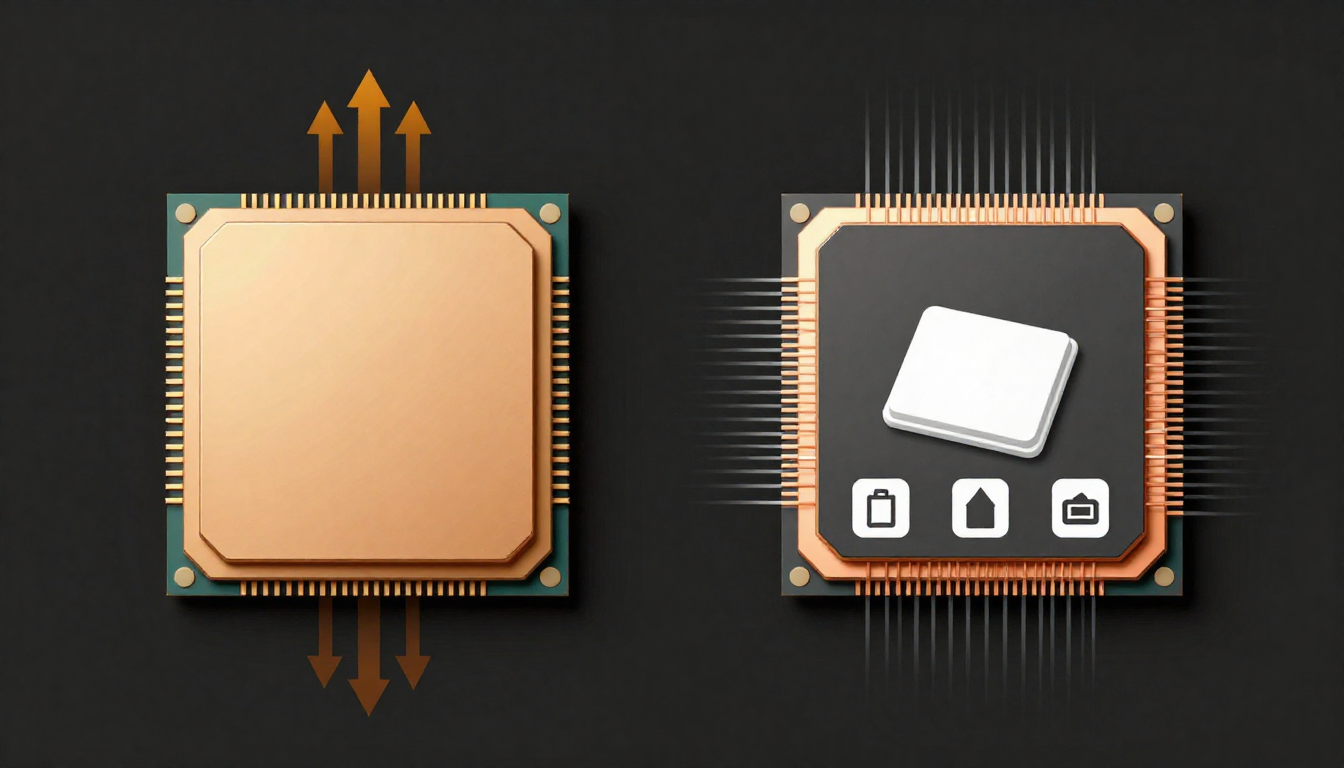
- As a Thermal Spreader/Shim: A thin copper foil (0.1mm to 1.0mm) can be placed between a hot component and a larger heatsink. It laterally spreads the heat, reducing the thermal density before it reaches the heatsink, which can dramatically improve overall cooling efficiency. It must be used with a thin layer of grease or phase change material on both sides for optimal interfacial contact.
- As a Solderable Thermal Bridge: Copper shims can be soldered directly to a component’s thermal pad on a PCB and to a heatsink, creating a permanent, ultra-low-resistance thermal and mechanical connection. This is common in high-power LED modules and RF power transistors.
- As a Conformal Heatsink: Annealed copper foil is highly malleable. It can be formed to fit curved or irregular surfaces (e.g., battery cells, housings) to extract heat from areas where a rigid heatsink cannot mount.
Advantages and Critical Considerations:
- Unmatched Conductivity: Provides the highest possible in-plane heat spreading.
- Multifunctionality: Can simultaneously solve thermal, electrical, and shielding challenges.
- Precision: Can be precision-stamped into complex shapes.
- Weight: Copper is heavy, unsuitable for weight-sensitive applications.
- Corrosion: Bare copper oxidizes; may require plating (tin, nickel, silver) for long-term reliability.
- Electrical Hazard: It is highly conductive. Must be properly isolated if not intended for electrical connection.
- Assembly Complexity: Often requires solder or grease, adding process steps compared to a self-adhesive pad.
Copper foil is not a universal TIM, but a specialized thermal engineering component. It is the tool of choice when the primary goal is moving the maximum amount of heat through the smallest possible thickness, and when its secondary properties can be leveraged in the design.