The Shape-Shifting Interface: A Vision for Programmable Matter as the Ultimate Adaptive TIM
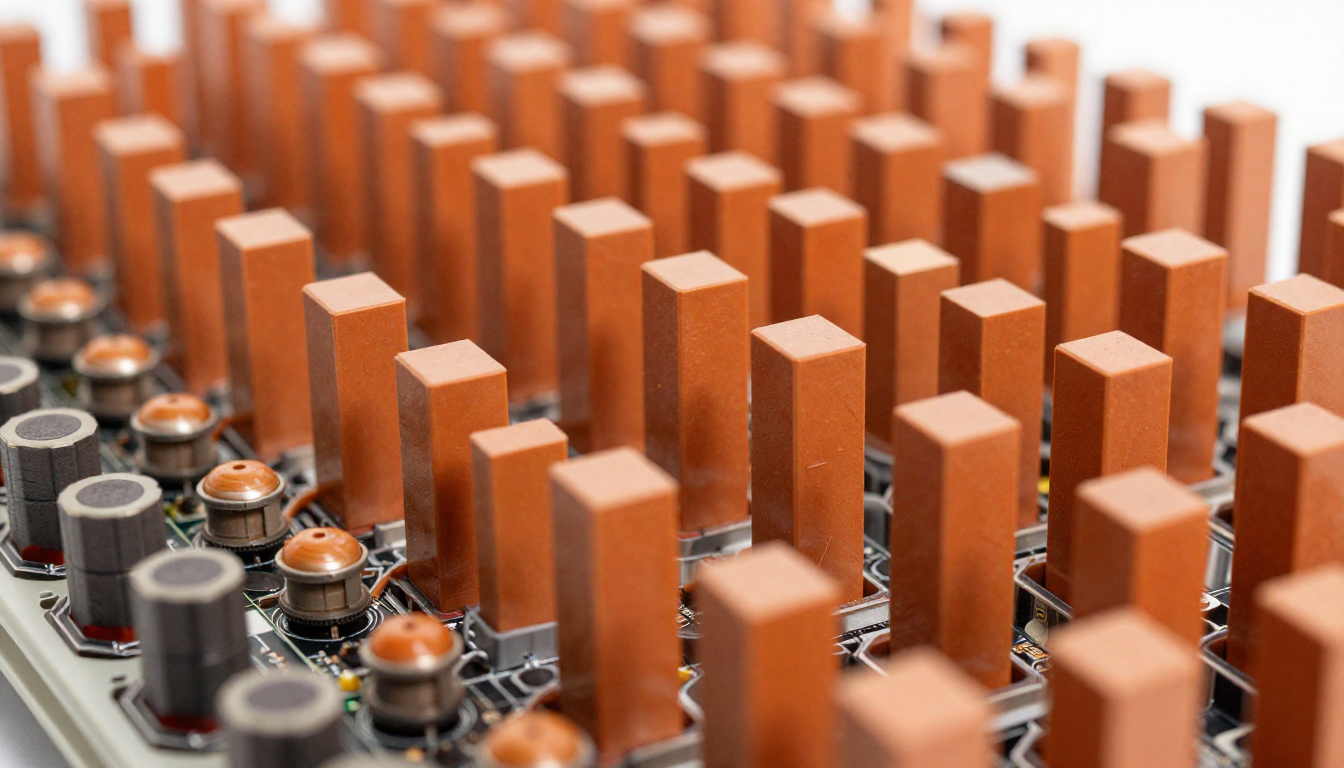
Imagine a Thermal Interface Material that isn’t applied, but deploys. One that senses a hotspot and flows towards it, or stiffens to increase pressure, or changes its thermal anisotropy to redirect heat flow. This is the distant horizon of programmable matter applied to thermal management—materials composed of many individual, coordinated units that can change their collective properties in response to stimuli, creating the perfect, adaptive interface in real-time.
Conceptual Mechanisms:
- Micro-Robot or “Smart Dust” Swarms: A layer of microscopic robots could position themselves to create optimal thermal pathways between two surfaces, dynamically rearranging to compensate for warpage, new heat sources, or component failure.
- Field-Responsive Materials: Composites where the alignment of conductive fillers (e.g., magnetic nanowires) is controlled by an electric or magnetic field. Applying a field could instantly increase through-plane conductivity in a specific area to cool a newly activated processor core.
- 4D-Printed Shape-Morphing Structures: A TIM printed with shape-memory polymers or hydrogels that, when triggered by temperature or moisture, undergoes a pre-programmed transformation—like expanding fingers that grip an irregular surface or flattening to reduce bond line thickness.
The Potential Impact:
- Perfect Contact, Always: Could autonomously compensate for assembly tolerances, thermal expansion during operation, and material creep over time.
- Dynamic Thermal Routing: Could actively steer heat away from sensitive sensors or towards different cooling systems based on operational mode.
- Self-Healing and Self-Assembly: If damaged, the material could reform. For space missions, it could be launched as a powder and assemble itself in zero-gravity.
Current Reality and Challenges:
This is speculative, fundamental research at the intersection of robotics, materials science, and computer science. The challenges are monumental: powering and controlling micro-units, achieving sufficient thermal performance at the macro scale, reliability, and of course, cost.
While not a product, envisioning programmable matter as a TIM stretches our thinking about the future role of materials. It suggests a shift from static, dumb fillers to intelligent, adaptive thermal systems that are an integral, responsive part of the electronic device’s function—a fitting vision for the frontier of thermal interface technology.