The Structural Role of TIMs: Managing Stress, Strain, and Vibration in Electronic Assemblies
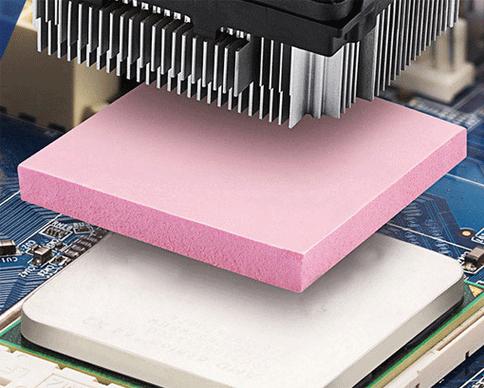
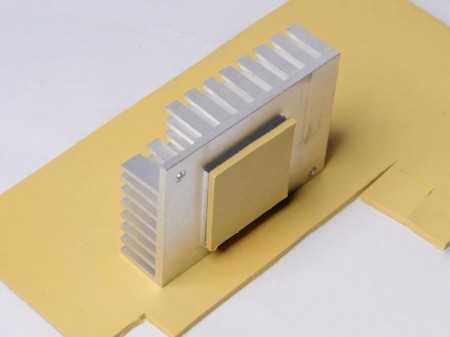
In electronic packaging, mechanical and thermal challenges are inextricably linked. A Thermal Interface Material, by occupying space between components with different coefficients of thermal expansion (CTE), inevitably plays a structural role. A well-chosen TIM can be a mechanical asset, while a poor choice can induce failure.
The TIM as a Mechanical Element:
- CTE Mismatch Stress Absorber:
When a silicon die (CTE ~2.6 ppm/°C) heats up against a copper heatsink (CTE ~17 ppm/°C), the copper wants to expand more. A soft, compliant TIM (e.g., a low-durometer gap pad or gel) can deform to absorb this differential expansion, reducing shear stress on the die’s solder bumps or adhesive layer, which is a primary cause of fatigue failure. - Vibration Damper:
In automotive or aerospace applications, constant vibration can loosen connections. A TIM with viscoelastic properties (exhibiting both viscous and elastic behavior) can act as a damping layer, dissipating vibrational energy and preventing fretting corrosion or loss of contact pressure at the interface. - Gap Filler and Strain Relief:
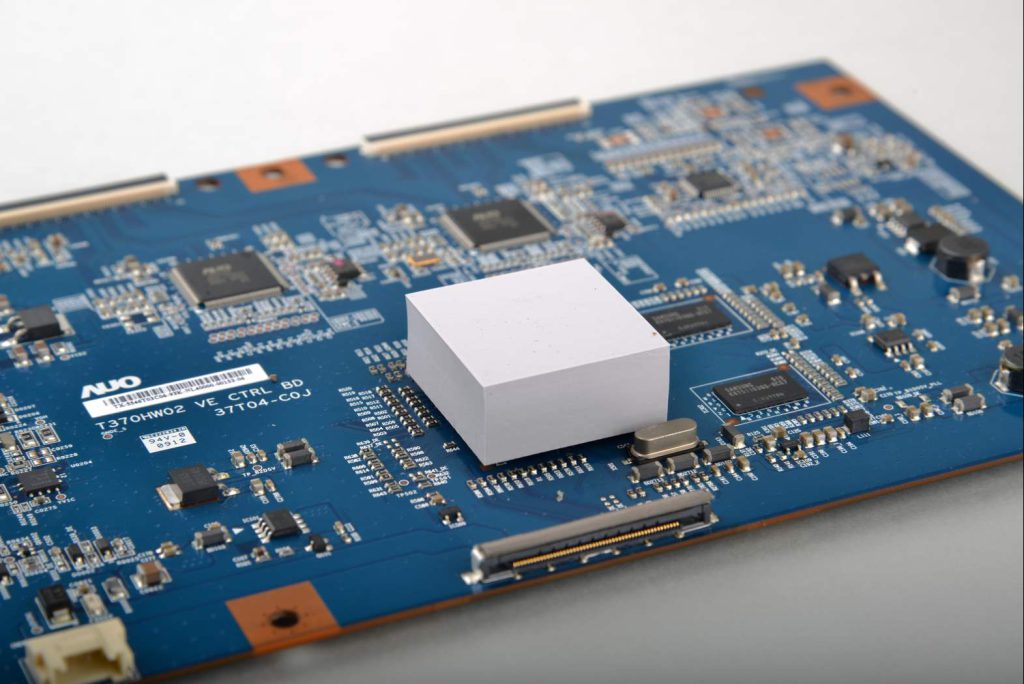
Beyond planar interfaces, TIMs like putties and gels are used to fill large, irregular gaps around components. By fully encapsulating components, they can provide mechanical support and strain relief for wires or delicate connectors, protecting them from shock and vibration.
Selecting for Mechanical Performance:
Key material properties to consider include:
- Hardness (Shore OO or Shore A): Softer materials (lower Shore) are more compliant.
- Compressive Set: The material’s ability to recover after prolonged compression. A low set is best for long-term reliability.
- Tear Strength: Resistance to propagating a rip, important for handling and durability.
- Storage/Loss Modulus (for viscoelastic analysis): Advanced data describing damping behavior.
By co-optimizing for thermal and mechanical performance, you build more robust systems. Our materials are characterized not just for thermal metrics, but for key mechanical properties to ensure they contribute to the structural integrity of your assembly.