TIMs for Immersion Cooling: Compatibility & Performance
As power densities in computing soar, liquid cooling—particularly immersion cooling for high-density servers and advanced cold plate designs—has moved from niche to necessity. In these systems, thermal interface materials play evolved, critical roles beyond simple conduction: they must maintain performance while withstanding prolonged exposure to dielectric fluids and often act as environmental seals, creating unique challenges for thermal management in two-phase cooling systems.
Immersion Cooling: The Direct Contact Challenge
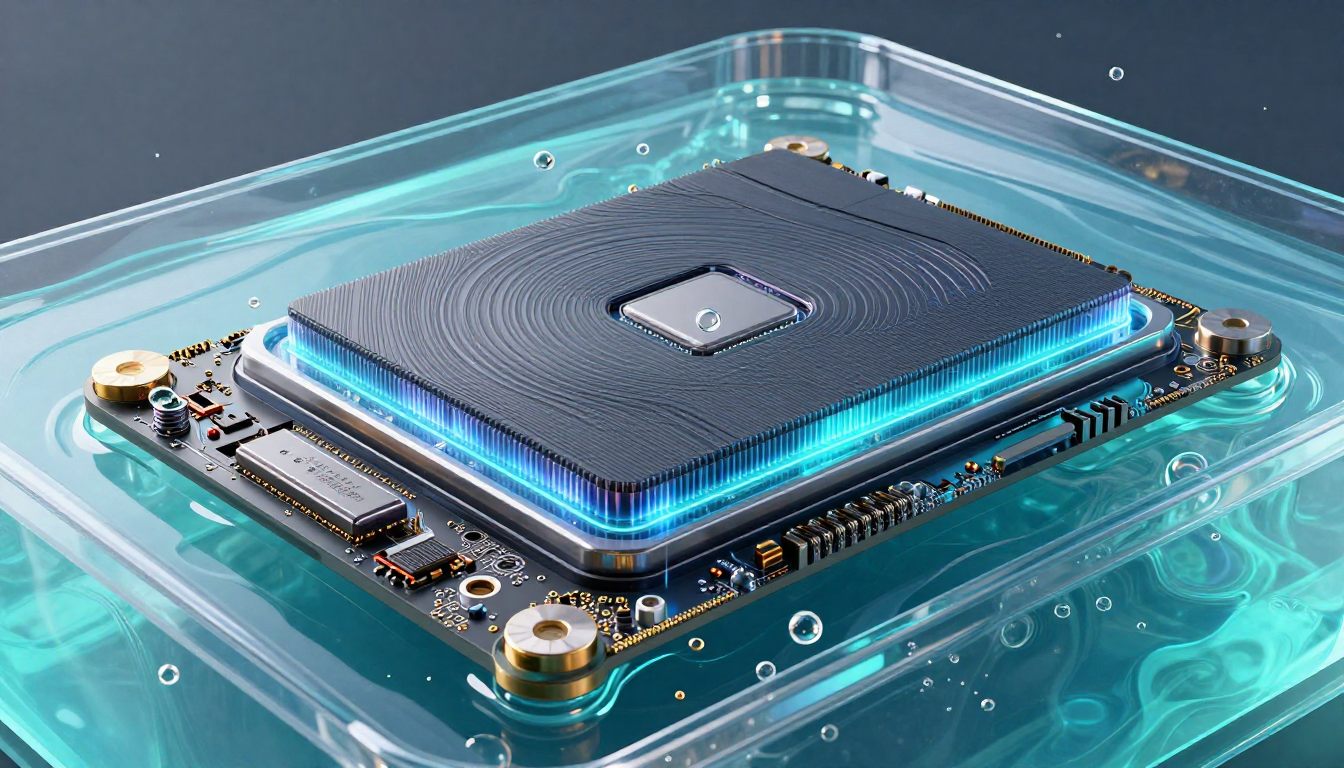
In single-phase or two-phase immersion baths, every component is submerged. TIMs in these systems are in direct contact with engineered dielectric fluids like fluorocarbons or mineral oils. Materials must be thoroughly tested for compatibility with immersion cooling fluids to avoid swelling, softening, dissolution, or the leaching of fillers that could contaminate the costly fluid and impair its thermal properties. This necessitates selecting chemically stable, non-reactive thermal gap fillers validated through long-term immersion testing.
The Sealant-Converter Dual Function
At the interface between a component and a liquid cold plate or heat spreader, the TIM often serves a dual purpose:
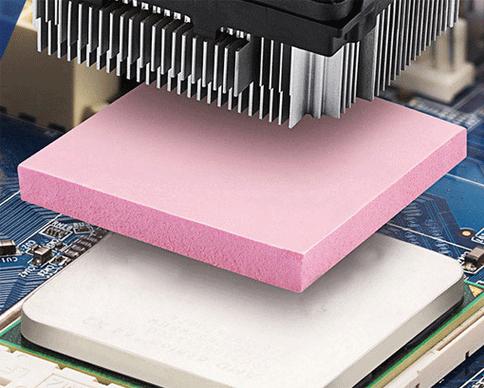
- Thermal Conduction: It must provide a low-resistance path from chip to cold plate, often under higher clamping pressures than air cooling.
- Environmental Sealing: It must prevent coolant leakage. This drives the use of cure-in-place thermal gap filling compounds that form a gasket-like seal, or compressible thermal pads with adhesive properties that bond to both surfaces. The material must exhibit long-term stability against pump fluid permeation and maintain adhesion under thermal cycling.
Material Innovations for Liquid Environments
- Non-Silicone Alternatives: Due to potential swelling of silicone in hydrocarbon oils, fluorosilicone or hydrocarbon-based elastomeric TIMs are gaining traction, offering better fluid compatibility.
- Reinforced Interface Designs: For sealing high-power GPU modules in immersion tanks, some solutions employ metal-infused or graphite-filled polymers that combine thermal performance with mechanical robustness to maintain seal integrity.
- Testing and Validation: Key parameters include volume swell percentage after immersion, hardness change, and thermal resistance stability after thousands of hours in heated fluid. Specifying TIMs with published compatibility data sheets for common dielectric coolants is essential for reliable system design.
Enabling Next-Generation Cooling Architectures
Effective TIM solutions are the linchpin that enables the full benefits of liquid cooling: higher heat flux handling, reduced fan energy, and consistent junction temperatures. For designers of direct-to-chip cooling loops or immersion tanks, partnering with TIM suppliers who understand the unique requirements of enclosed liquid cooling systems is crucial. By solving the interface challenge, these advanced cooling methods can reliably support the thermal demands of AI training clusters, cryptocurrency mining rigs, and high-performance computing cores, pushing the boundaries of computational density.