Under-the-Hood Survival: TIM Requirements for Reliable Automotive ECU Cooling
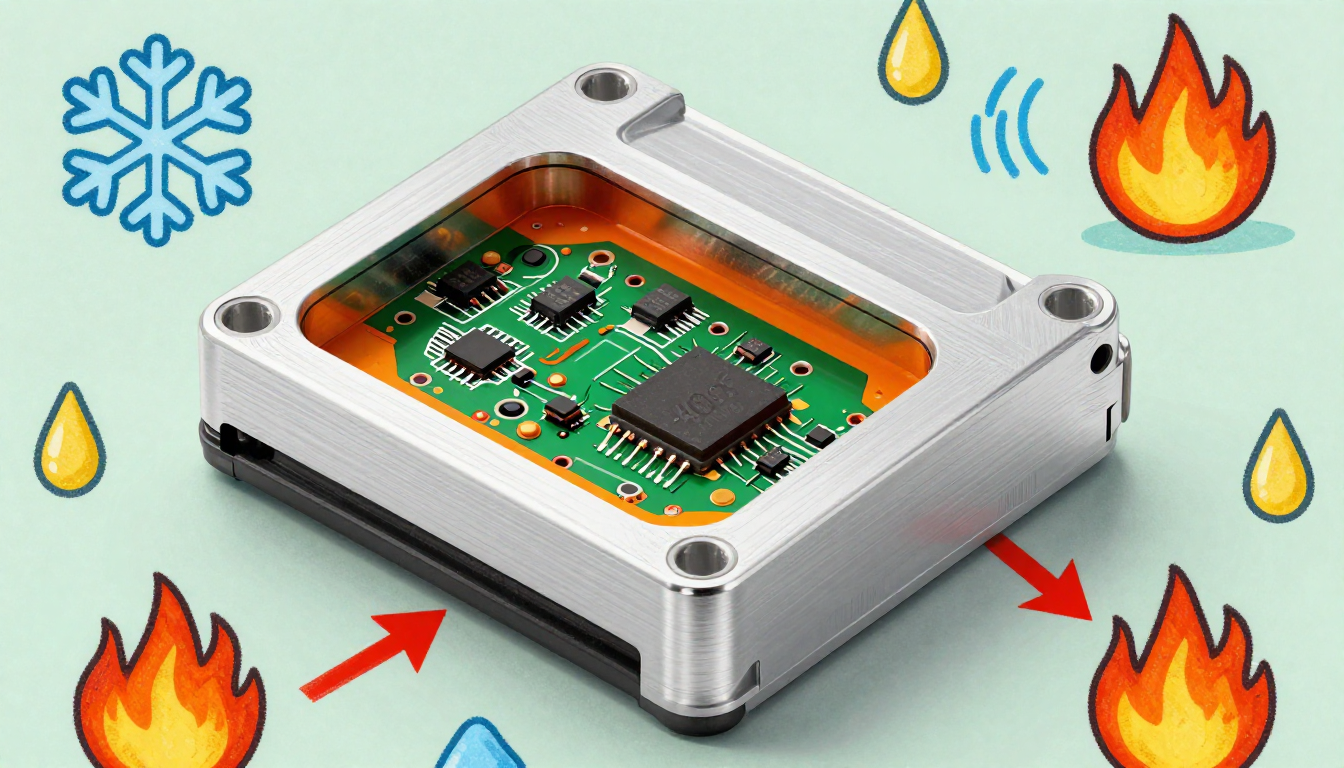
An automotive ECU operates in one of the most punishing environments for electronics: directly exposed to extreme temperatures, constant vibration, and chemical contaminants. The Thermal Interface Material (TIM) that cools its power-hungry processors must be engineered not just to transfer heat, but to survive and perform reliably for the vehicle’s 15-year lifespan.
The Automotive TIM Qualification Gauntlet:
- Extended Temperature Cycling: From -40°C cold starts to +125°C (or 150°C) under-hood peaks, for thousands of cycles. This tests for pump-out, delamination, and cracking.
- Vibration & Mechanical Shock: Simulates driving on rough roads and potholes. The TIM must maintain constant contact pressure without tearing or fatiguing. Soft, compliant gap fillers often excel here.
- Fluid Compatibility: Exposure to engine oil, coolant, brake fluid, and cleaning solvents. The TIM must not swell, degrade, or leach chemicals.
- Long-Term Thermal Aging: Continuous operation at high temperature must not cause the TIM to dry out, harden, or lose its thermal properties.
- AEC-Q200 Qualification: This is the baseline automotive electronics component reliability standard. A TIM claiming “automotive grade” should have test reports proving compliance.
Design Strategies for ECU Cooling:
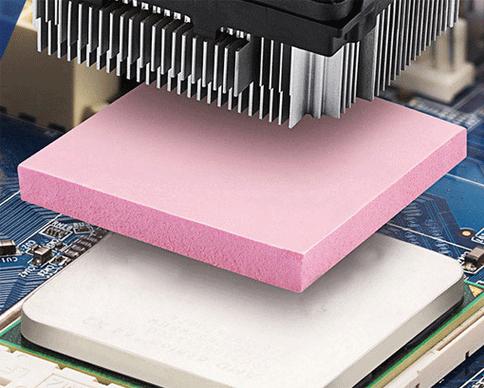
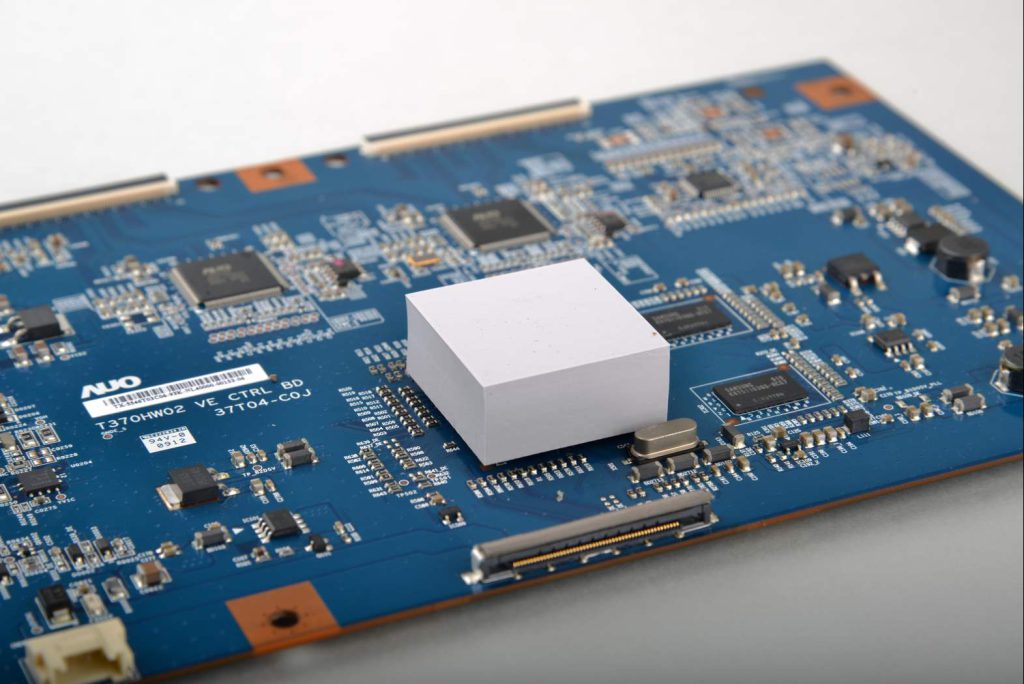
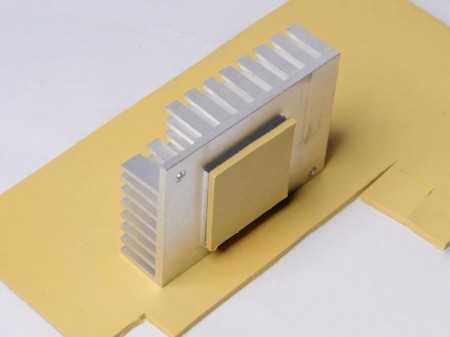
- Direct-to-Housing: The most common method. A thermally conductive gap filler or pad is placed between the critical ICs on the PCB and the ECU’s aluminum housing, which acts as the primary heatsink. The TIM must fill gaps from components, PCB warp, and housing casting irregularities.
- Lid/Heat Spreader Attachment: For high-power processors, a metal lid is attached to the chip package. A high-performance, stable thermal grease or phase change material is used here, often dispensed automatically for precision.
- Potting/Encapsulation: For harsh environments, entire assemblies are potted with thermally conductive epoxy or silicone, which provides cooling, structural support, and environmental sealing in one step.
Selecting an automotive TIM is a reliability engineering decision, not a thermal optimization one. The priority is a material with a proven track record under stress, backed by the rigorous data required by Tier 1 suppliers and OEMs.