Thermal Energy Storage: TIMs for Phase Change Material Systems
Phase Change Material technology represents a paradigm shift from simply moving heat to intelligently managing it over time. By absorbing and releasing large amounts of latent heat during phase transitions, PCMs act as thermal buffers for electronic systems, smoothing temperature spikes and delaying the onset of active cooling. The effectiveness of these systems, however, is critically dependent on the thermal interface between the heat source and the PCM matrix—an area often overlooked in passive thermal design.
Overcoming the PCM’s Inherent Low Conductivity
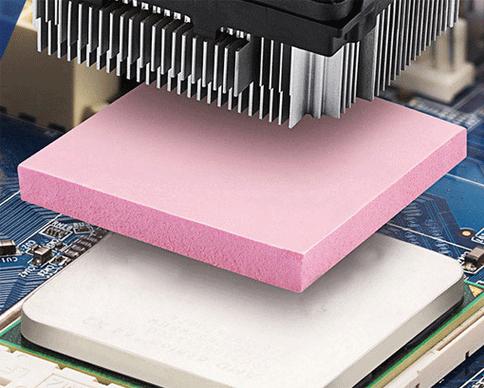
Most organic or salt-based PCMs have low intrinsic thermal conductivity, creating a bottleneck for heat flow into and out of the storage medium. Simply encapsulating PCM next to a chip is ineffective. The solution involves creating a high-conductivity pathway into the PCM volume. This is where advanced TIM strategies come into play, focusing on minimizing interface resistance to latent heat storage units.
Interface Strategies for Enhanced Performance
- Conductive Matrix Integration: One approach embeds the PCM within a metal foam or graphite matrix. Here, the TIM’s job is to create a seamless thermal bridge from the component to this conductive matrix. Thermal greases or soft, conformable pads that can fill the irregular surface of metal foam are ideal for transferring heat to composite PCM heat sinks.
- Direct-Contact Encapsulation: In designs where the PCM is contained in a thin package or pouch directly contacting the component, the TIM is the pouch material itself or a layer between it and the component. Materials must be flexible to accommodate PCM volume change during melting/freezing and have high thermal diffusivity.
- Extended Surface Interfaces: For larger systems, heat is often transferred to the PCM via heat pipes or vapor chambers. The TIM at the condenser section of a heat pipe embedded in PCM must ensure efficient coupling, often using cured thermal compounds or soldered interfaces for permanence and low resistance.
Application Scenarios: From Peak Shaving to Time-Shift Cooling
- Telecom Cabinets & Outdoor Electronics: PCM buffers absorb heat from 5G radio units during peak traffic, preventing shutdown until backup cooling activates or ambient temperatures drop at night.
- Portable Electronics: Integrated PCM can absorb burst CPU loads in rugged handheld devices, delaying thermal throttling during critical operations.
- Battery Thermal Management: PCM packs combined with TIMs help maintain optimal temperature in EV battery modules by absorbing heat from fast charging or high discharge rates.
Designing for Cyclic Stability
A key consideration is TIM performance under repeated phase cycles. The interface must withstand the mechanical stress of the PCM’s expansion/contraction without degrading, delaminating, or developing voids. Selecting materials with low compression set and high adhesion strength ensures the long-term reliability of passive thermal buffering systems. By expertly managing this crucial interface, engineers can leverage PCM technology to create more resilient, energy-efficient, and compact thermal solutions for applications with intermittent or unpredictable heat loads.