
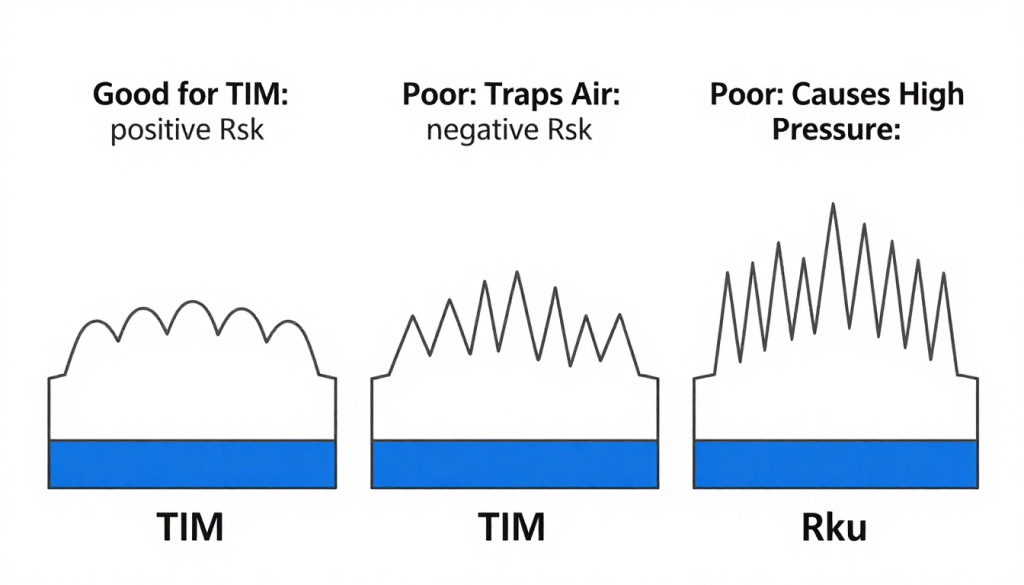
Surface Topography and TIM Performance: Why a 3D Surface Map is More Important Than Ra
Every engineer knows surface roughness affects TIM performance, but the common specification of “Ra < 1.6 µm” is dangerously insufficient. Ra is […]
Every engineer knows surface roughness affects TIM performance, but the common specification of “Ra < 1.6 µm” is dangerously insufficient. Ra is […]
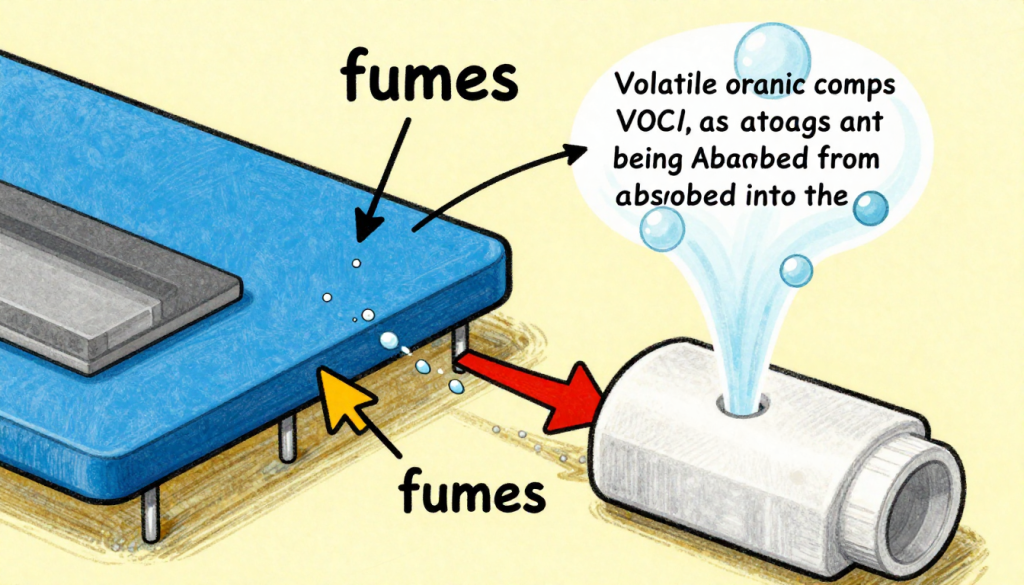
Not all TIM failures are thermal or mechanical. Some of the most insidious are chemical, arising from silent interactions between the
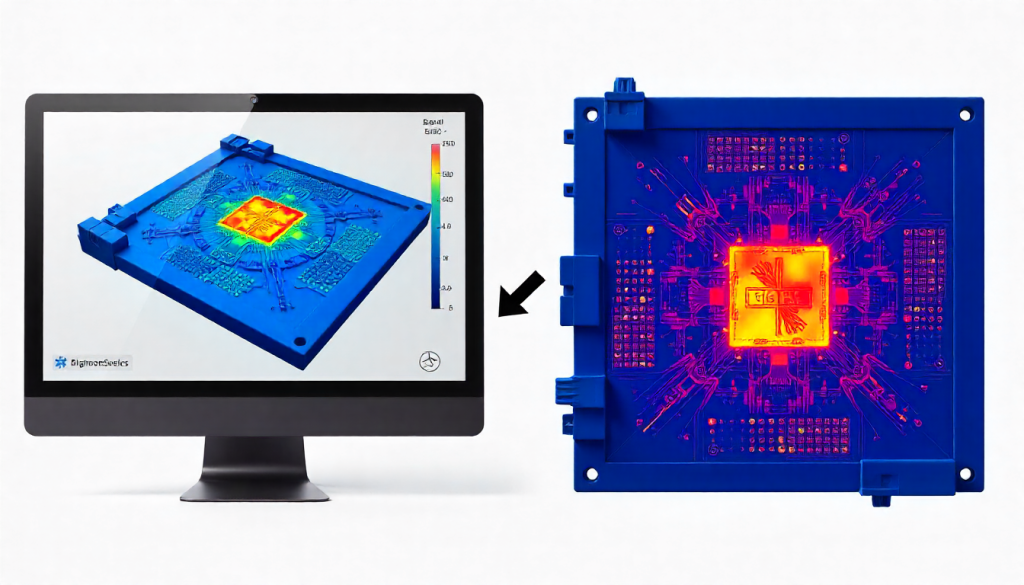
Computational Fluid Dynamics (CFD) is a powerful tool for thermal design, but its accuracy hinges on the quality of input
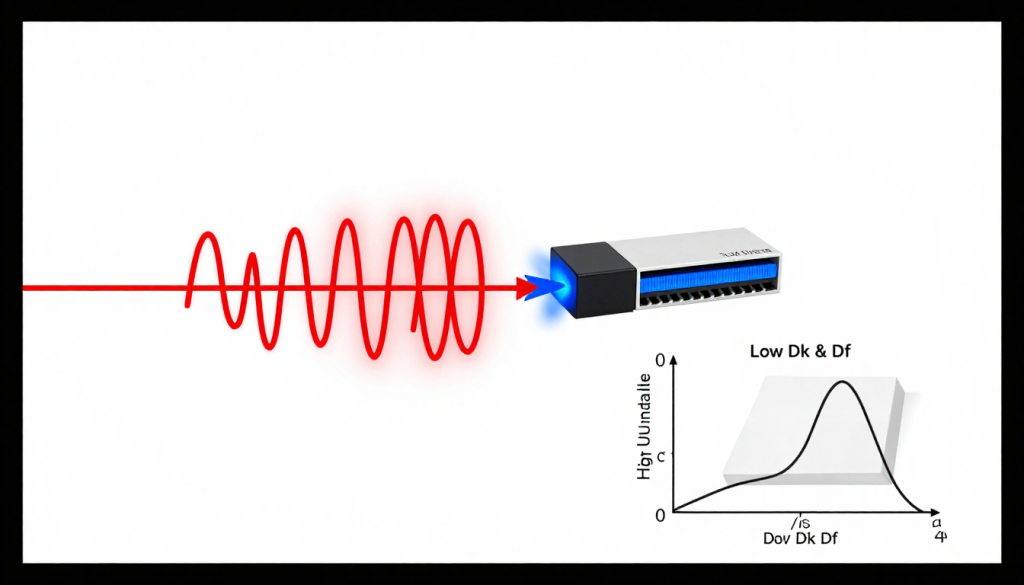
In high-frequency electronics, the Thermal Interface Material is not just a thermal pathway—it becomes part of the electromagnetic environment. A TIM
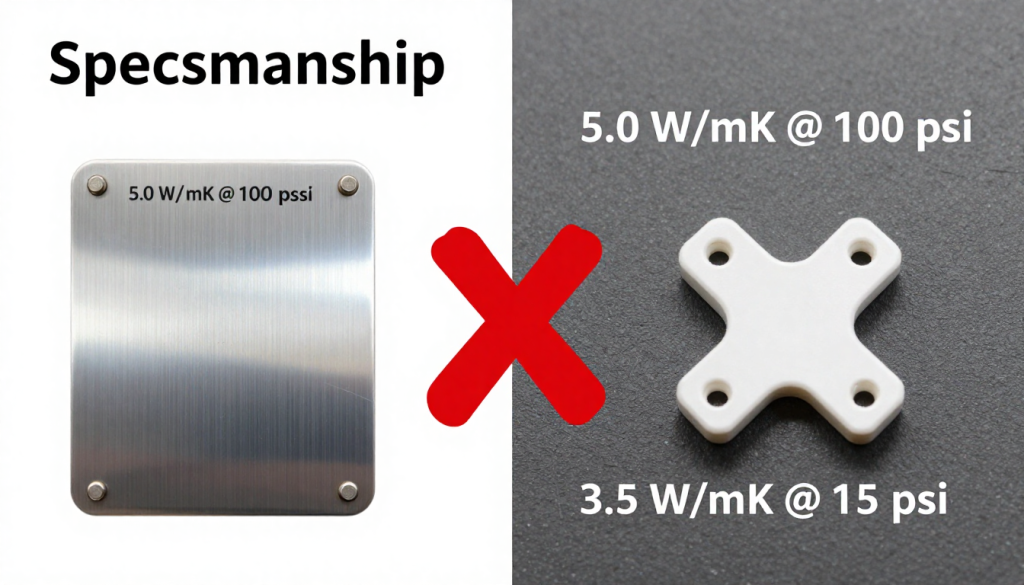
A common and costly pitfall in thermal design is directly comparing the thermal conductivity (k-value) of two TIMs from different

The push for sustainable electronics rightly extends to every component, including TIMs. However, the narrative is often oversimplified. A truly

As system complexity increases, a single Thermal Interface Material (TIM) often can’t address all thermal demands: managing a high-flux GPU
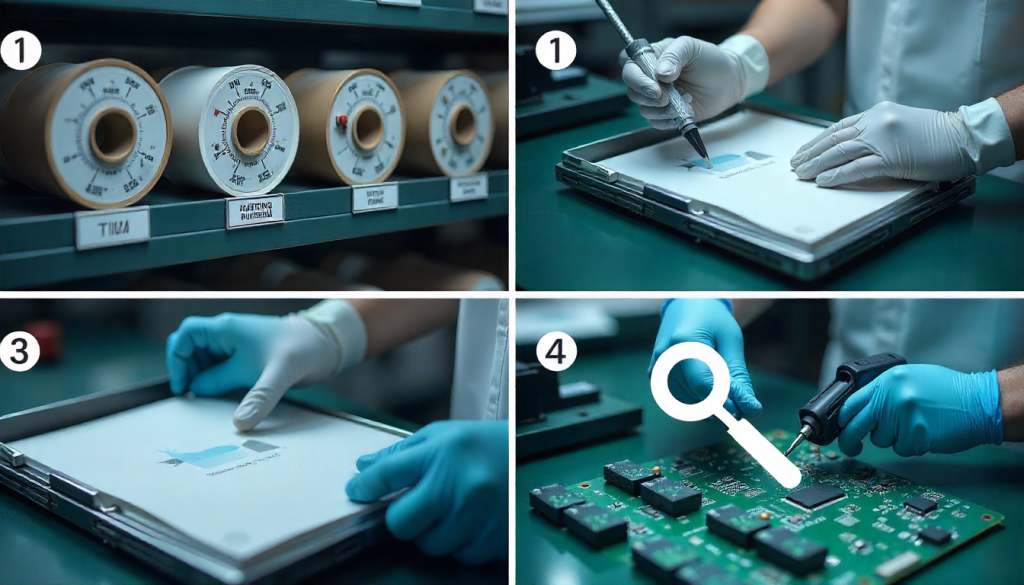
You’ve specified the perfect Thermal Interface Material (TIM). Yet, field failures occur. The culprit may not be the material, but
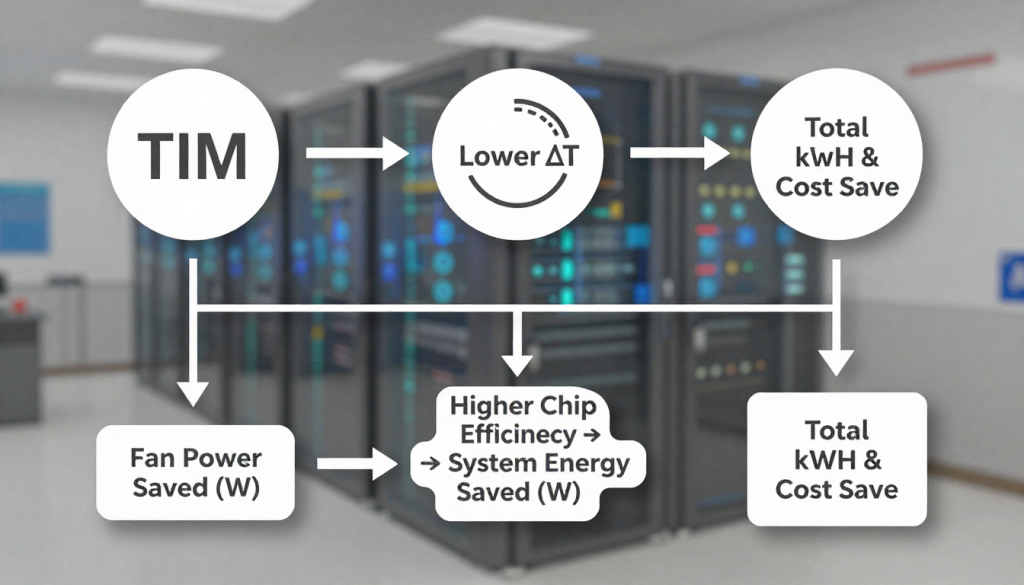
Discussions about Thermal Interface Material (TIM) performance often focus on degrees Celsius. To make a compelling business case, we must
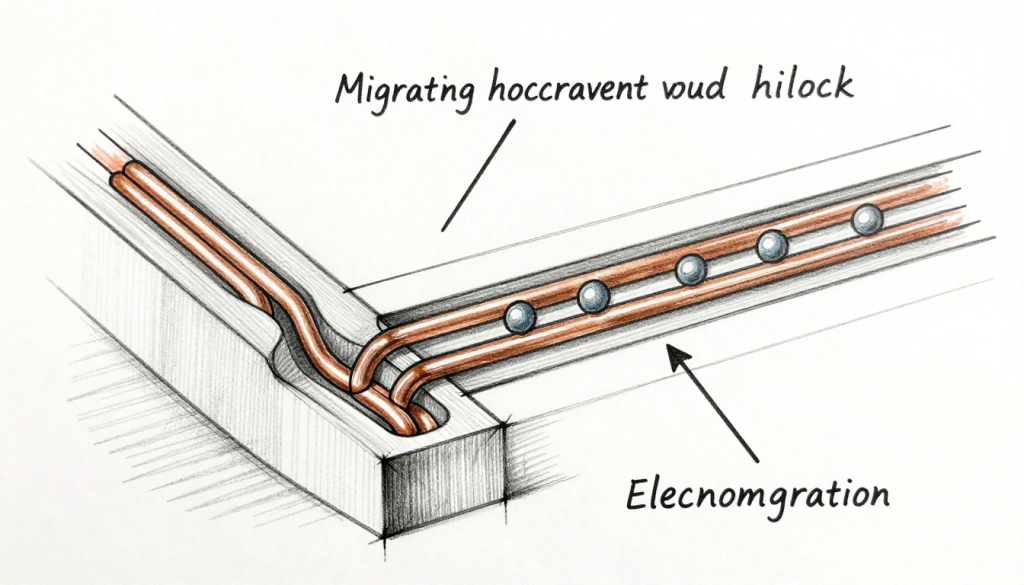
While catastrophic thermal shutdown grabs attention, a more insidious threat exists: silent, cumulative degradation leading to premature semiconductor failure. A key but

The journey of a simple thermal pad is a global story of chemistry, mining, and logistics. Understanding this value chain
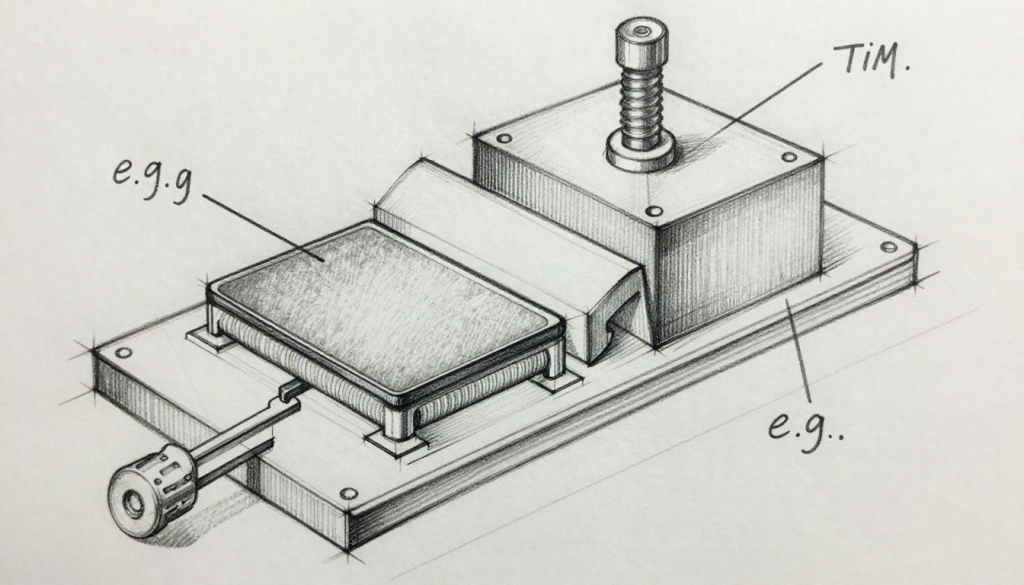
Claims about thermal conductivity are meaningless without context. A fair benchmark requires controlling variables that dramatically affect results: pressure, surface