

Smart TIMs for Hybrid Cooling: Adaptive Interfaces in Next-Gen Systems
The evolution of cooling technology is moving toward hybrid systems that intelligently combine multiple cooling methods—air, liquid, and phase change—based […]
The evolution of cooling technology is moving toward hybrid systems that intelligently combine multiple cooling methods—air, liquid, and phase change—based […]
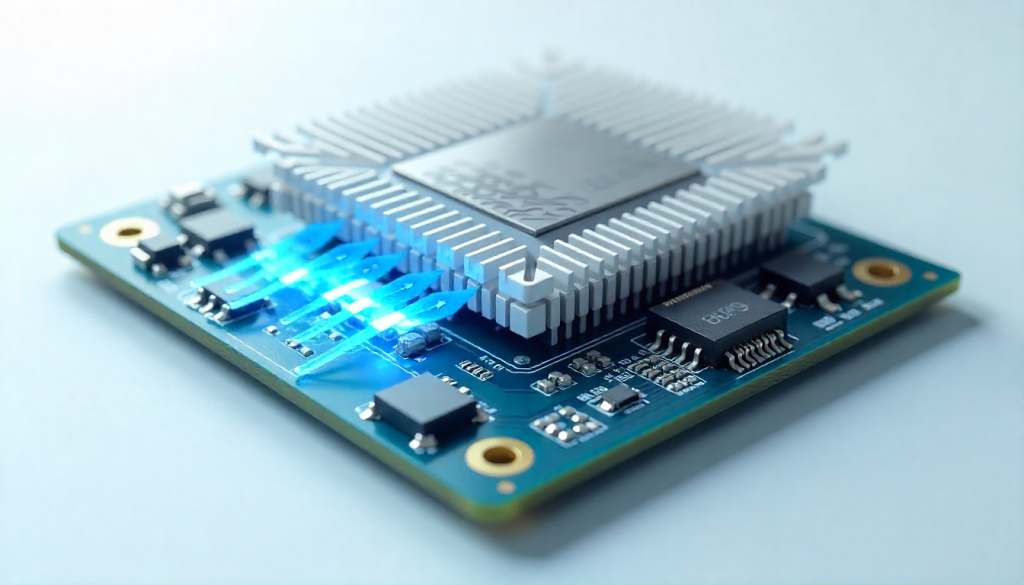
What if a Thermal Interface Material could sense a hotspot and physically tighten its own contact pressure at that exact
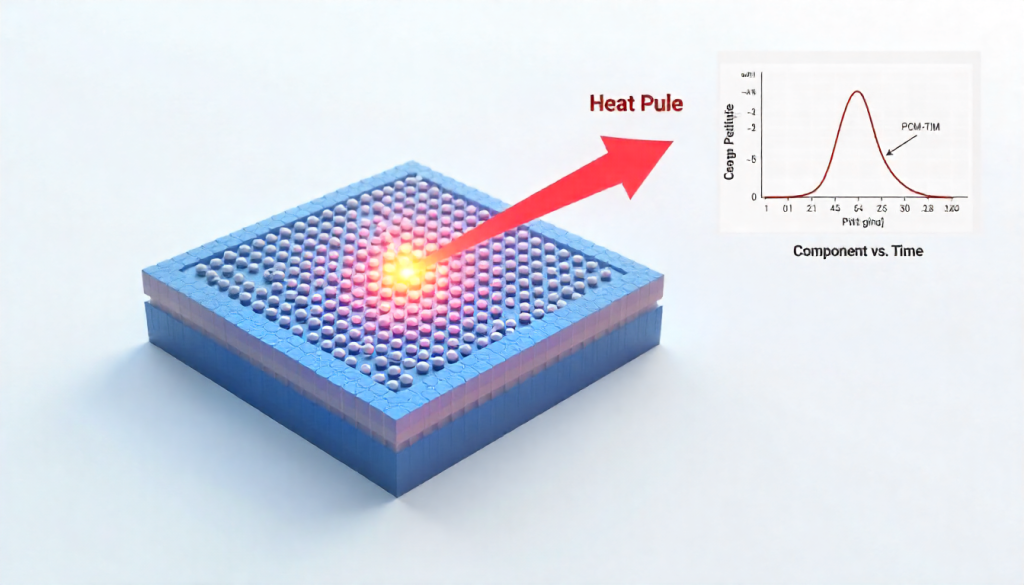
Modern electronics face a critical challenge: brief, intense power bursts that exceed the steady-state cooling capacity, causing thermal throttling or

When the Thermal Interface Material (TIM) itself is a metal—such as solder, indium foil, or sintered silver—a different class of
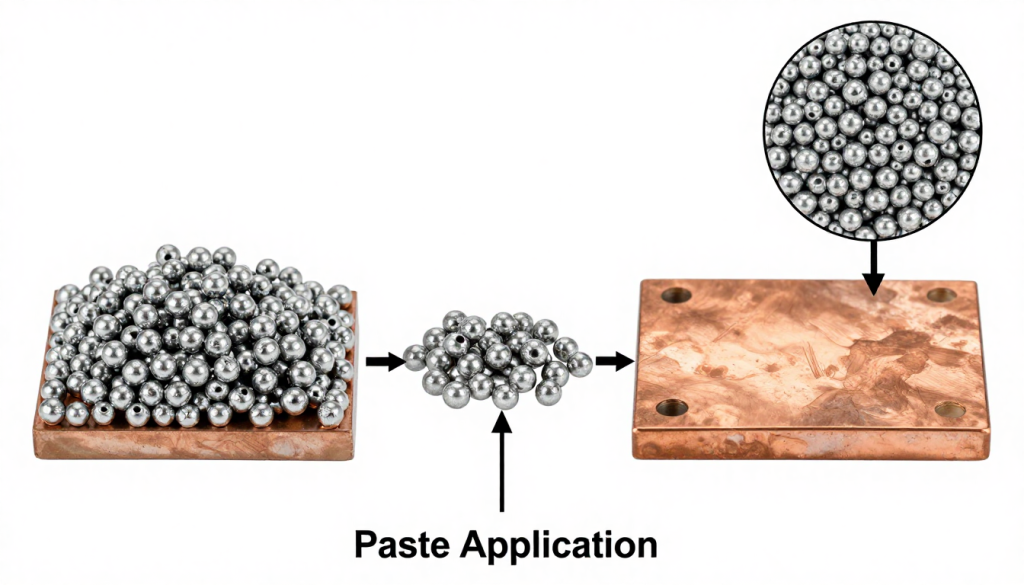
When heat fluxes exceed 500 W/cm² and absolute thermal resistance must be minimized, polymer-based TIMs—even the best phase change pads
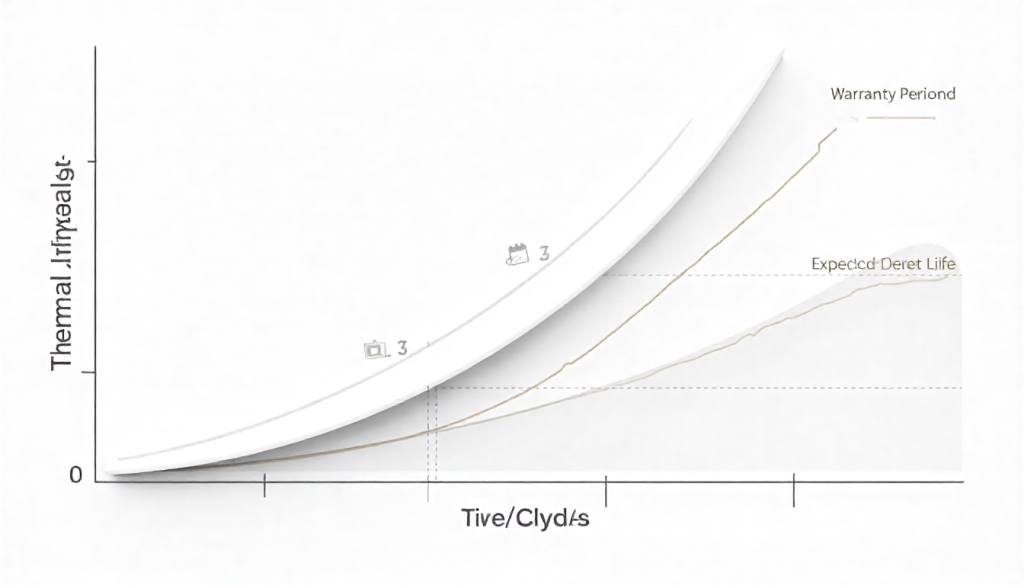
A thermal design validated at time zero is not guaranteed for the life of the product. All Thermal Interface Materials
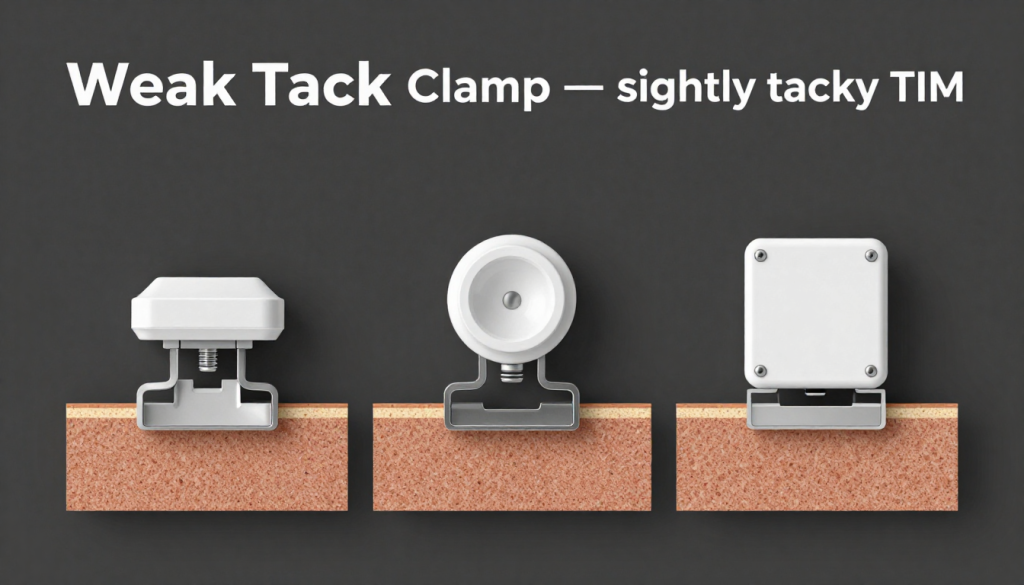
Adhesion is the silent partner to thermal conductivity in a Thermal Interface Material’s performance. Too weak, and the TIM may

Thermal design is a system optimization problem. The performance of the Thermal Interface Material doesn’t exist in a vacuum; it
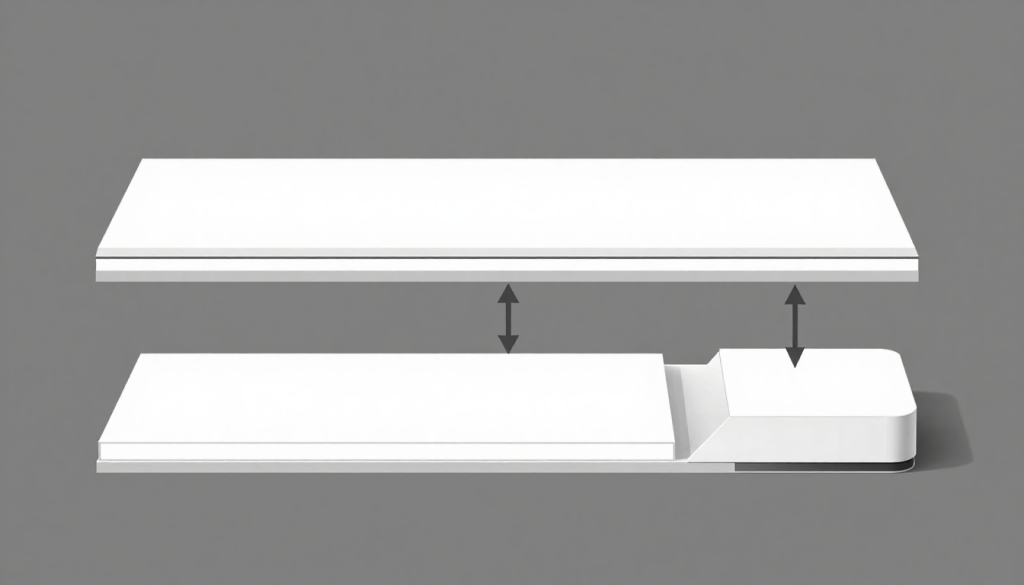
In the quest for thinner devices, a logical assumption is to specify the thinnest possible Thermal Interface Material (TIM). However,

In medical electronics—from portable diagnostics to implanted devices—thermal management must adhere to a paradigm where patient safety is paramount. This moves
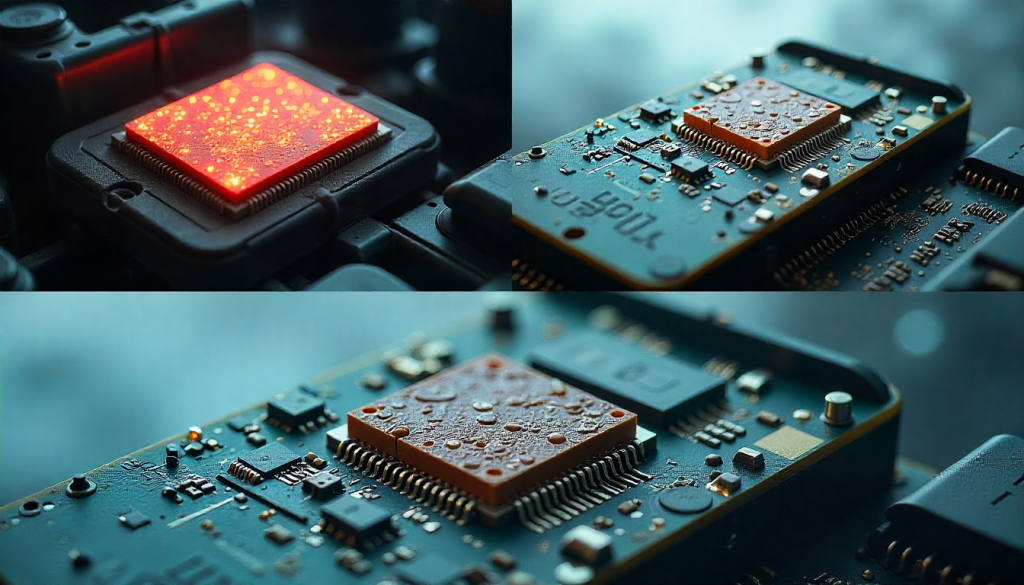
A thermal interface material might perform perfectly on a lab bench. But what happens inside a vibrating agricultural vehicle, a
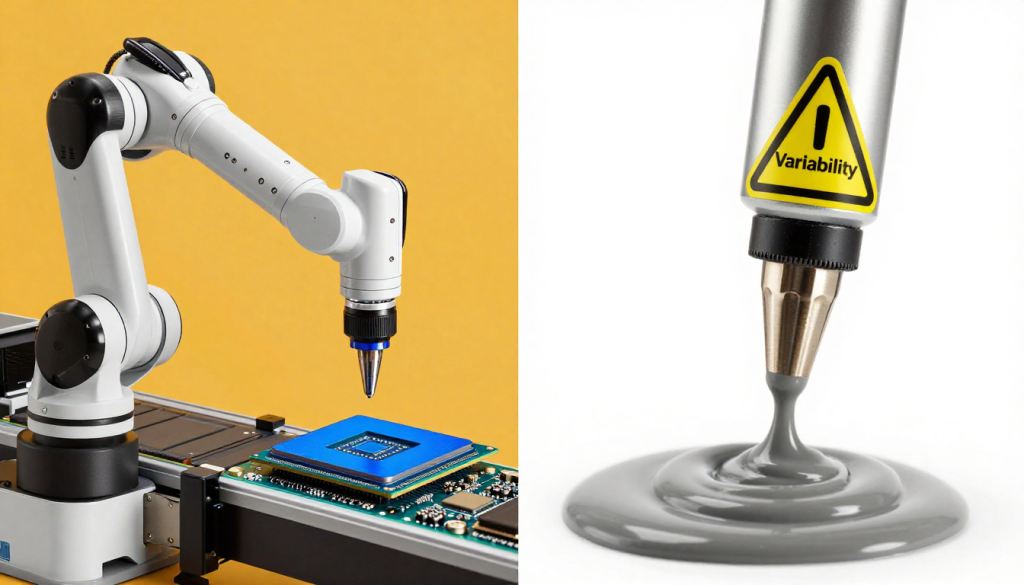
On the Surface Mount Technology (SMT) line, every second and every component placement counts. The choice between dispensing thermal grease and using pre-formed