Directional Heat Flow: Leveraging Anisotropic Thermal Pads for Lateral Spreading vs. Vertical Transfer
Most Thermal Interface Materials are isotropic—they conduct heat equally in all directions. However, a powerful subclass exists: anisotropic TIMs. These materials have a deliberately engineered structure that makes them highly conductive in one plane (usually through-plane, or Z-axis) while being less conductive or even insulating in the orthogonal plane (in-plane, or XY). This property unlocks unique thermal management strategies.
Material Types and Structures:
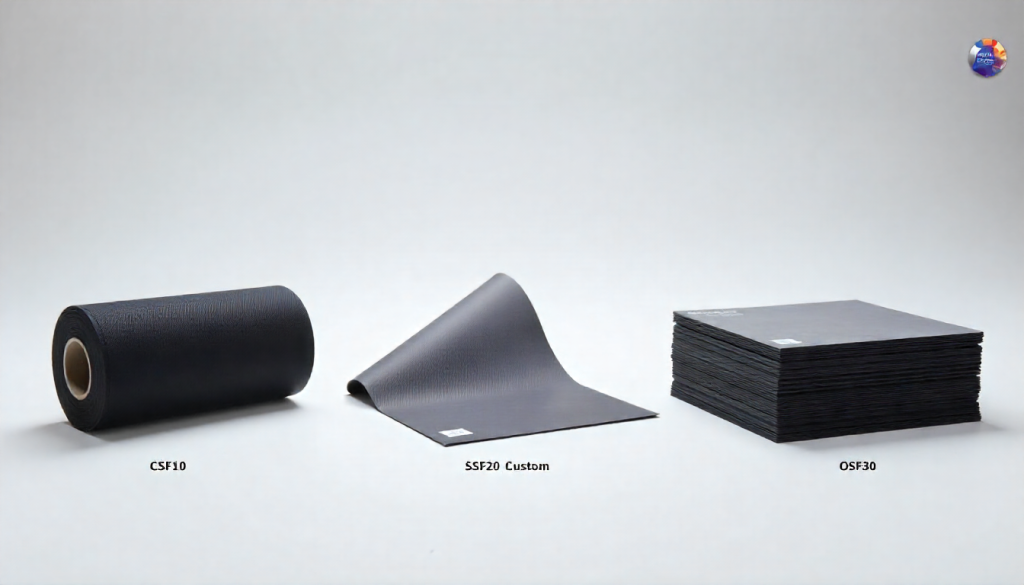
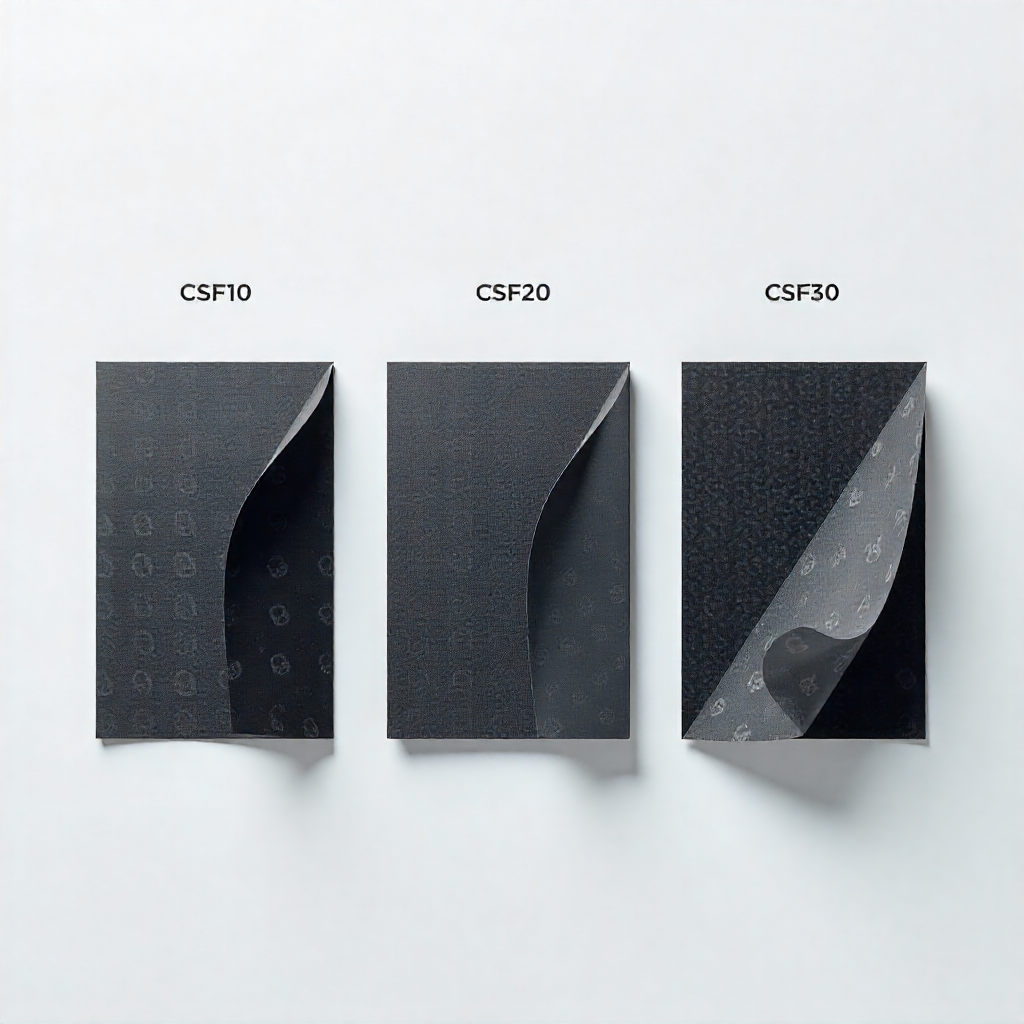
- Graphite-Based Pads: Composed of compressed exfoliated graphite flakes aligned parallel to the pad surface. They exhibit extremely high in-plane conductivity (often 150-1700 W/m·K) but relatively low through-plane conductivity (5-20 W/m·K). They are also soft and conformable.
- Aligned Fiber or Wire Composites: TIMs with fibers (e.g., carbon, ceramic) aligned in the Z-direction to create vertical thermal highways, while the matrix material provides electrical insulation.
Strategic Applications:
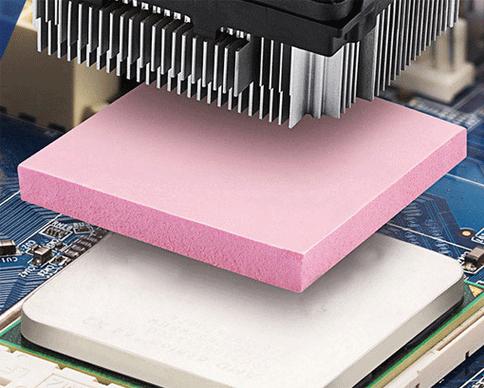
- Hotspot Spreading (Graphite Pads): Place a graphite pad directly on a high-flux component (CPU, GPU). Its phenomenal in-plane conductivity rapidly spreads the heat laterally, creating a larger, cooler effective heat source for the primary heatsink to manage, preventing localized thermal throttling.
- Directed Heat Paths & Thermal Isolation: Use a Z-axis conductive pad to create a preferential vertical heat path from a component to a chassis, while minimizing lateral heat spread to adjacent temperature-sensitive sensors or ICs.
- Replacing Metal Heat Spreaders: A thin graphite sheet can often replace a thicker, heavier, and more expensive aluminum spreader inside compact modules, improving weight and space efficiency.
Critical Design Considerations:
- Electrical Conductivity: Most high-performance graphite pads are electrically conductive in-plane. They must be used with insulating layers or careful placement to avoid short circuits.
- Handling and Cutting: Graphite pads are fragile and can flake; they often require a protective polyimide film and careful die-cutting.
- Pressure Sensitivity: Their through-plane performance is highly dependent on applied pressure to ensure good contact with the flake edges.
Understanding anisotropy allows you to orchestrate heat flow, not just facilitate it. We provide both graphite-based spreading solutions and insulating Z-axis pads to enable these advanced thermal architectures.