Predicting the Inevitable: Modeling TIM Performance Degradation Over Product Lifetime
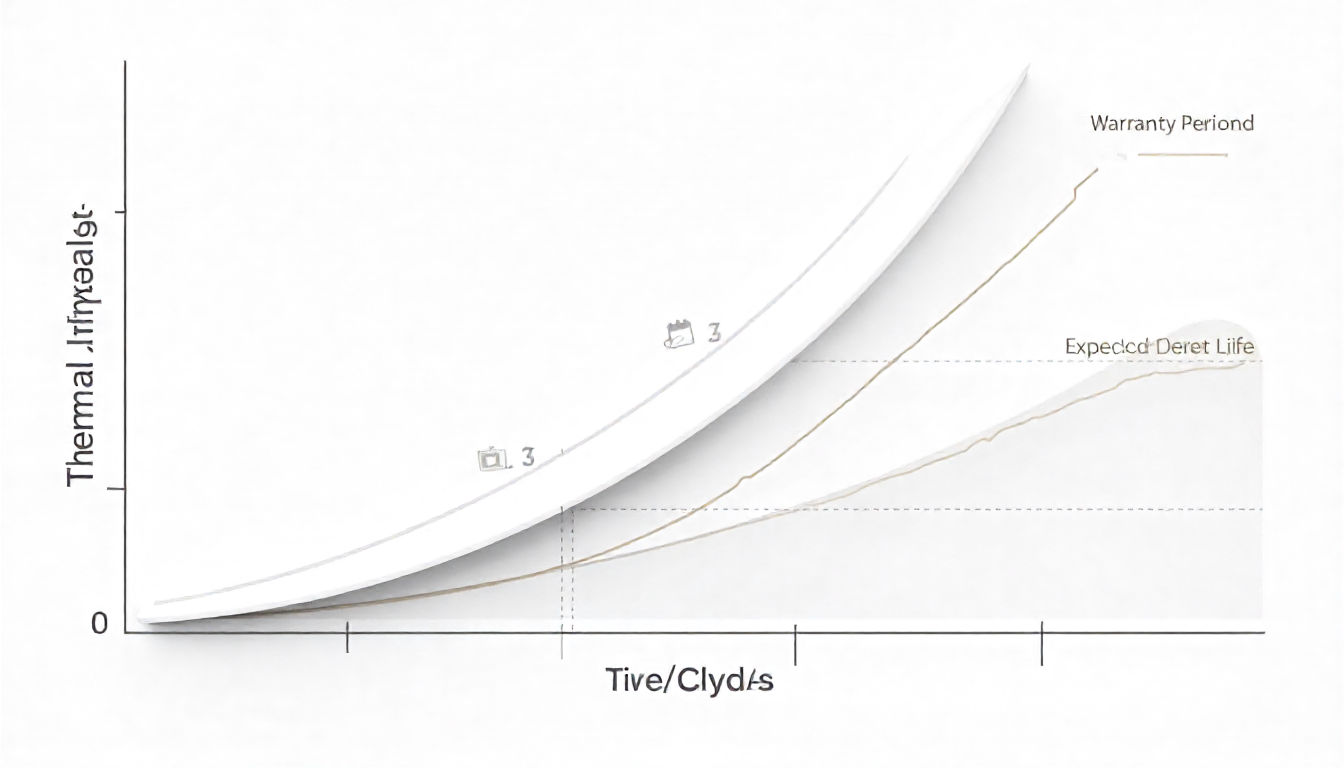
A thermal design validated at time zero is not guaranteed for the life of the product. All Thermal Interface Materials degrade, but the rate and mechanism vary. Moving from hoping for the best to predicting the worst-case requires building a degradation model into your thermal analysis.
Common Degradation Models and Inputs:
- Thermal Cycling-Induced Pump-Out/Delamination:
- Model: Empirical or physics-based models relate the number of thermal cycles (ΔT, rate) to an increase in thermal impedance. Data from supplier tests (e.g., “10% increase after 1000 cycles”) provides the key input.
- Use: Predict the thermal resistance (θ_tim) at year 1, 5, or 10 based on estimated daily power cycles.
- High-Temperature Aging & Dry-Out:
- Model: The Arrhenius equation is often used to accelerate aging. Supplier data from high-temperature storage tests (e.g., 150°C for 1000 hours) can be used to extrapolate degradation at your lower, continuous operating temperature.
- Use: Estimate the long-term stability of the TIM material matrix itself, especially for always-on devices.
- Stress Relaxation and Loss of Contact Pressure:
- Model: For compliant gap pads, compressive stress relaxation data shows how much holding force the pad loses over time. This can be coupled with the TIM’s impedance-vs-pressure curve to model increasing θ_tim.
- Use: Critical for spring-loaded or low-pressure assemblies where the pad’s own rebound provides the contact force.
Implementing the Model:
Integrate these time-dependent or cycle-dependent θ_tim values into your system thermal model. Run simulations at “End-of-Warranty” and “End-of-Life” conditions. This allows you to:
- Set Realistic Performance Specifications: Ensure the product meets its thermal targets not just at launch, but throughout its intended service life.
- Guide Maintenance Schedules: For serviceable equipment, predict when TIM re-application might be necessary.
- De-Risk Warranty Claims: Quantify the safety margin, reducing the risk of field failures due to gradual thermal performance loss.
Proactive degradation modeling transforms TIM selection from a static choice into a dynamic lifecycle management strategy.